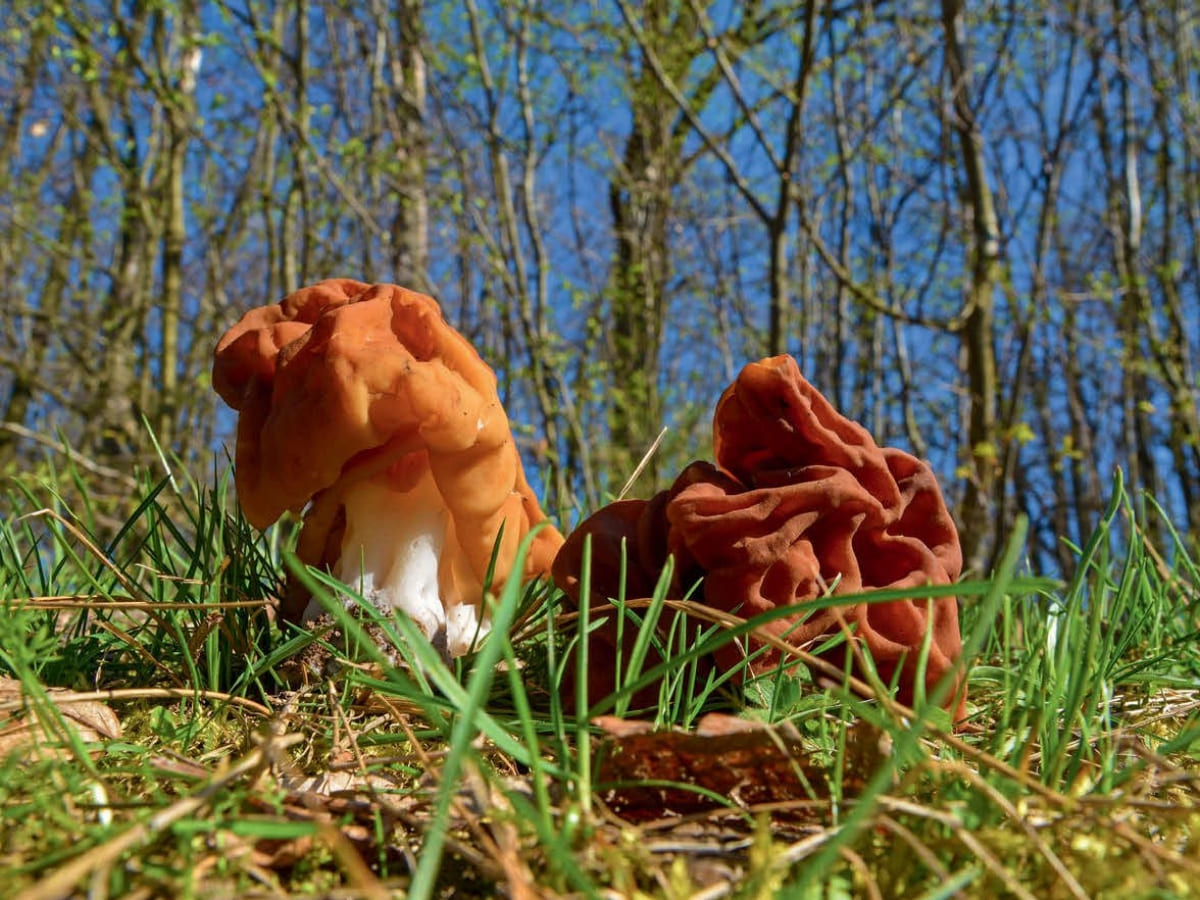
A small Alpine village in France has become the unlikely centre of a medical mystery: a cluster of Lou Gehrig’s disease cases (amyotrophic lateral sclerosis, or ALS) traced back to the consumption of a toxic mushroom known as the false morel. After more than a decade of investigation, researchers believe they’ve identified the culprit.
An alarming cluster in the French Alps
In 2009, a local doctor in Montchavin, a village near the La Plagne ski resort in Savoie, noticed something unusual. For the third time, she had diagnosed ALS, a rare and fatal neurodegenerative disease, in one of her patients. Concerned, she alerted specialists, sparking a full-scale investigation.
Between 1991 and 2013, 14 cases were identified in the village — an extraordinarily high concentration for such a rare condition. The patients, aged between 39 and 75, all knew each other but shared no family ties, ruling out a genetic cause.
Environmental suspicion
Given the cluster, researchers looked for a possible environmental trigger. They tested for bacterial toxins in water, radon gas in homes, heavy metal contamination, pesticides, and air pollution — but came up empty-handed.
The breakthrough came when toxicologist Peter Spencer from Oregon Health & Science University joined the study. Spencer had previously investigated high ALS rates on the island of Guam, where the seeds of the cycad plant, once used in local cooking, were linked to the disease.
Instead of cycads, Spencer pointed to the giant false morel (Gyromitra gigas), a mushroom that grows in the region and contains toxins acting in a similar way.
The false morel connection
Interviews revealed that all 14 patients had eaten false morels multiple times in past years, often alongside true morels during festive meals. Some even recalled episodes of severe illness after such feasts.
Though banned from sale in France since 1991 due to their toxicity, false morels are still consumed elsewhere. In Finland, for example, the mushroom is considered a delicacy — and intriguingly, higher ALS rates have been reported in regions where it remains popular.
Lessons from Guam
The parallel with Guam is striking. Once cycads were banned from local diets, cases of ALS in the region dropped sharply. Scientists believe a similar dietary link may explain Montchavin’s troubling cluster, further strengthening the case against the false morel.
For researchers, the findings are a reminder that dietary habits can sometimes hide long-term neurological risks. And for the rest of us, it’s a cautionary tale: when it comes to wild mushrooms, even a dish shared among friends can carry consequences decades later.