

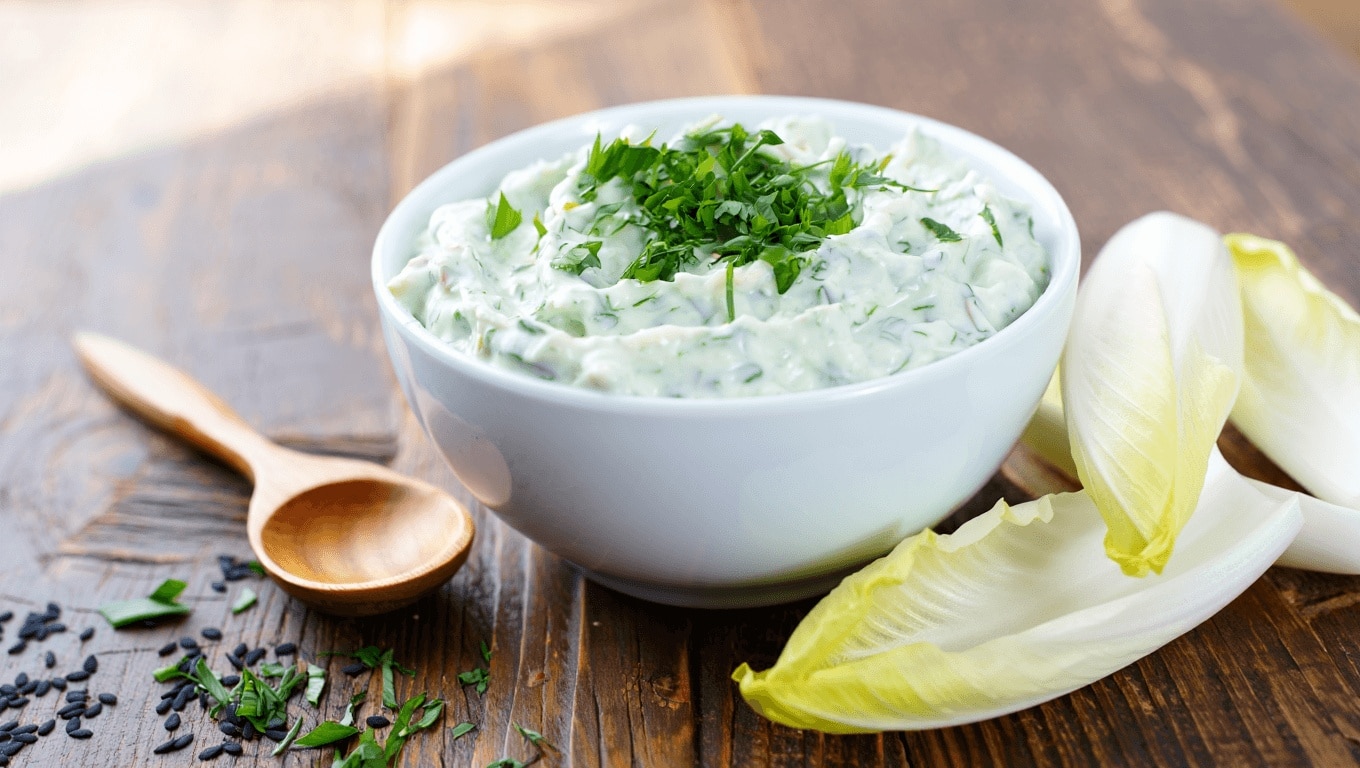
The sun is back across much of France, but winter vegetables still shine. Swap cucumber for a crisp, slightly bitter leaf and you get a surprising twist on a classic dip. This version of tzatziki uses crunchy endive with creamy yogurt, garlic and herbs. It’s fresh, unexpected and perfect for late-winter appetizers.
Why swap cucumber for endive in tzatziki
Using endive turns the familiar tzatziki into a seasonal dish. Endive brings structure and a hint of bitterness.
This choice celebrates seasonal vegetables and keeps a familiar creamy texture while offering new flavors.
Ingredients for two people — simple and pantry-friendly
- 1 drained yogurt (plant-based or Greek)
- 2 medium endives
- 2 garlic cloves, peeled and minced
- A small handful of fresh chives, chopped
- Several mint leaves, torn
- 1–2 tablespoons extra virgin olive oil
- A light splash of balsamic vinegar
- Salt and freshly ground pepper to taste
How to make endive tzatziki — clear step-by-step
- Place the yogurt in a fine sieve or cloth. Let it drain 10–20 minutes to firm up. Drain well.
- Trim the stem of each endive. Slice the leaves thinly across the grain for tenderness.
- Remove the garlic germ for milder flavor. Crush or finely mince the cloves.
- Combine the yogurt, sliced endive, garlic, chives and mint in a bowl.
- Add olive oil and a small splash of balsamic. Stir gently to combine.
- Season with salt and pepper. Taste and adjust acidity or oil as needed.
- Chill 20–30 minutes for flavors to meld, or serve immediately for extra crunch.
Quick variations to adapt the recipe
- For a tangier dip, add a teaspoon of lemon juice or white wine vinegar.
- Swap mint for dill to echo traditional tzatziki notes.
- Mix in grated cucumber if you want a hybrid cucumber-endive version.
- Make it vegan by using thick plant-based yogurt and olive oil.
Serving suggestions and pairing ideas
- Serve with crudités: carrots, radishes and bell peppers work well.
- Use as a spread on toast or in sandwiches with roasted vegetables.
- Pair with grilled fish or chicken for a light main course.
- Offer as part of a mezze board alongside olives and warm pita.
Tips to tame bitterness and heighten flavor
- Choose pale endives; they’re less bitter.
- Remove the core to reduce harshness.
- A pinch of sugar or a drop of honey balances bitterness.
- High-quality olive oil and fresh herbs lift the final taste.
Storage and make-ahead advice
- Keep the dip refrigerated in a sealed container for up to 3 days.
- Stir before serving; the texture may slightly separate.
- Avoid freezing. Fresh herbs and raw endive lose texture if frozen.
Nutrition and seasonal benefits at a glance
Endive adds fiber, vitamins and a low-calorie crunch. Using a strained yogurt gives protein and a creamy base. This recipe is light, fresh and aligns with seasonal eating.
Similar Posts:
- No-cook cucumber soup: refreshing, effortless and perfect for sweltering days
- Crispy gnocchi salad: trendy, indulgent and perfectly balanced for summer
- Family-Friendly Freshness: This Cucumber Tart Recipe is Perfect for the Season!
- PSG vs Arsenal final: 7 ultra-fresh 10-minute snacks to beat the heat and match nerves
- Brocamole: light, original broccoli guacamole recipe you need to try