
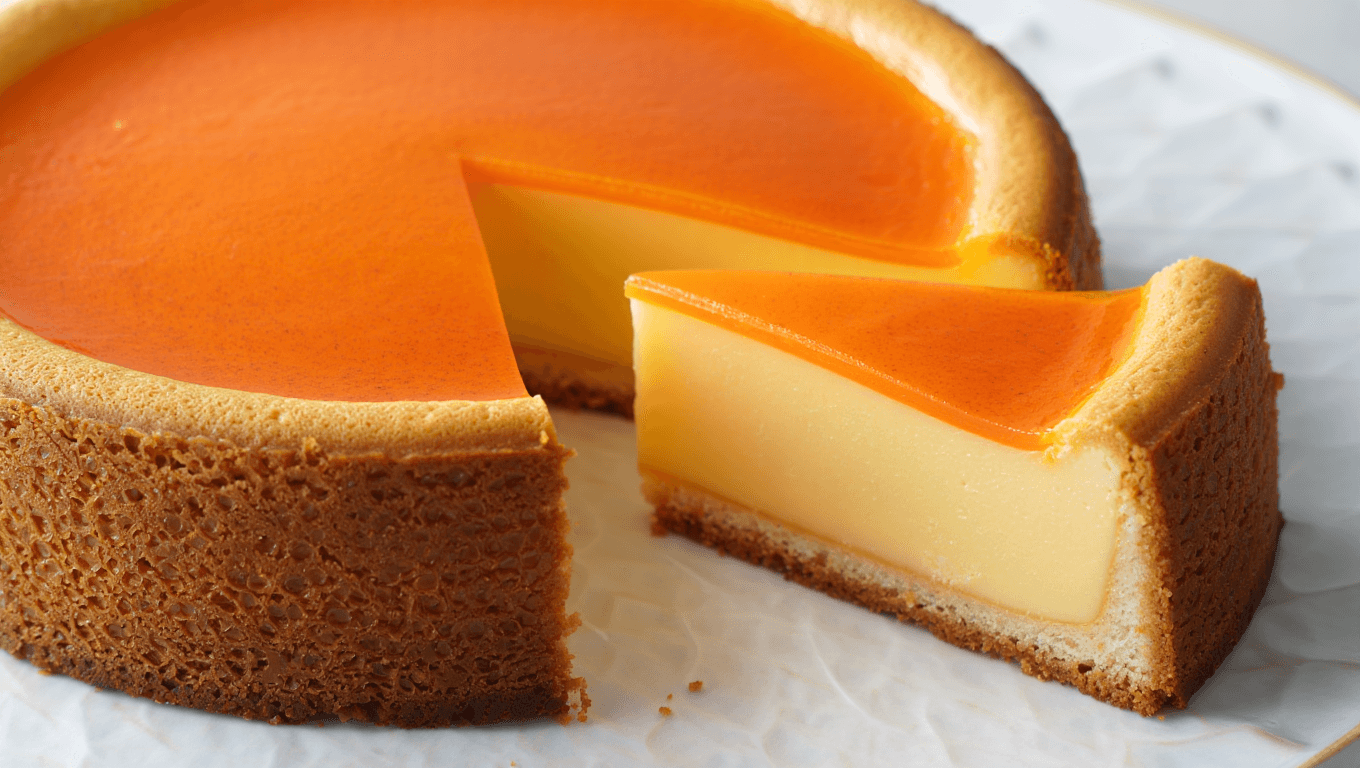
Bright, tangy orange transforms a simple one-batter dessert into a layered custard cake that feels like a summer miracle. This treat bakes into three distinct textures: a delicate cake top, a silky custard center, and a dense custard base. Read on for a clear, kitchen-friendly guide to making this orange custard magic cake at home.
What makes this orange custard magic cake special
This recipe starts with a single batter and ends with three layers. The contrast in textures is the signature. The flavor comes from fresh orange juice and grated zest. The result is aromatic, lightly sweet, and perfect for warm-weather menus.
- Top layer: light and cake-like.
- Middle layer: creamy, custard-like softness.
- Bottom layer: denser, almost flan-like custard.
Ingredients for a 8×8-inch orange custard cake
Gather these items before you begin. Using fresh oranges makes a big difference.
- 4 large eggs, separated, at room temperature.
- 1 1/4 cups powdered sugar.
- 1/2 cup unsalted butter, melted and slightly cooled.
- 1 teaspoon vanilla extract.
- 1 cup sifted all-purpose flour.
- 1/2 cup freshly squeezed orange juice.
- Zest from 1 large orange.
- 1 1/2 cups milk, lukewarm.
- Optional: a few drops of orange food coloring.
- Powdered sugar for dusting.
Step-by-step baking method for reliable layers
Follow these stages in order to get the three-layer separation. Small details change the texture.
- Preheat oven to 325°F (160°C). Line an 8×8-inch pan with parchment and grease the sides.
- Beat the egg whites until they hold stiff peaks. Set aside.
- Whisk the egg yolks and powdered sugar until the mixture lightens in color.
- Add melted butter, vanilla, and the orange zest. Mix until smooth.
- Stir in orange juice, then fold in the sifted flour until combined.
- Slowly whisk in the lukewarm milk. The batter will be very thin — that is normal.
- Gently incorporate the egg whites by hand. Do not fully eliminate small lumps. Those lumps will rise and form the top cake layer.
- Pour the batter into the prepared pan and bake for 40–60 minutes. Start checking at 35 minutes.
- The cake is done when the top feels set and the center is just slightly jiggly. Avoid overbaking.
- Cool completely in the pan before removing and dusting with powdered sugar.
Baking tips and common pitfalls
Small adjustments help preserve the custard center and overall texture.
- Room-temperature eggs: colder whites won’t whip as well.
- Don’t overmix: folding too aggressively deflates the whites.
- If the top browns too fast, tent with aluminum foil for the remaining time.
- Oven times vary. The center should wobble slightly when you rotate the pan.
- Overbaking produces a rubbery result and eliminates the custard middle.
Serving suggestions and storage
Serve chilled or at room temperature. Bright garnishes complement the orange notes.
- Dust with powdered sugar just before serving.
- Add fresh orange segments or a dollop of lightly sweetened whipped cream.
- Store leftovers in the refrigerator in an airtight container for up to 3 days.
Quick troubleshooting guide for perfect results
If your cake didn’t separate into layers, check these factors.
- Egg whites not whipped long enough will prevent a distinct top layer.
- Overbaking will firm up the center and remove custard texture.
- Too-cold milk or eggs can change how the batter sets.
- If the top collapsed, the oven temperature may have been too high.
Similar Posts:
- Lemon custard cake recipe: easy, creamy showstopper
- Chocolate magic custard cake: make a dreamy three-layer dessert in 30 minutes
- Vanilla custard cake: simple 5-ingredient magic dessert that wows
- Strawberry custard cake: easy homemade recipe that melts in your mouth
- Custard cupcakes: irresistible vanilla magic in every bite

Health advocate and wellness researcher, Dr. Monroe brings clarity to confusing health trends with science-backed advice. Her mission is to help readers live vibrantly, from the inside out.