

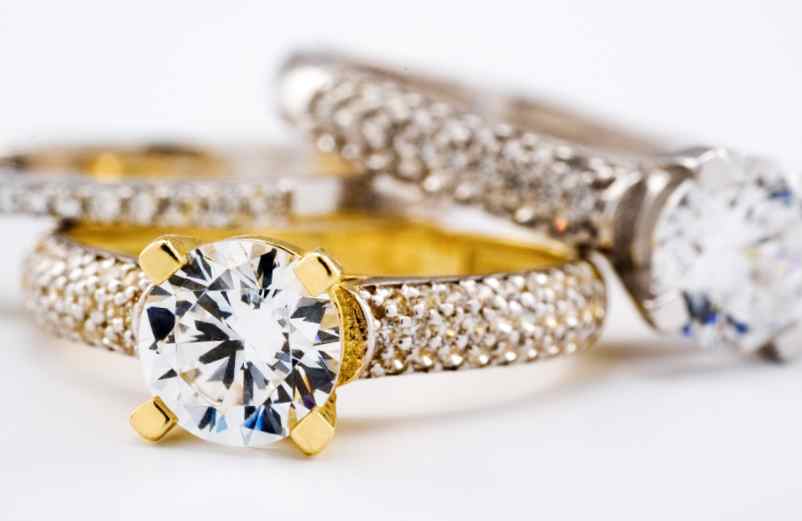
In 2024, lab-grown diamonds accounted for more than half of the center stones in US engagement ring sales, up from 12% in 2019 and 1% in 2015. The takeover has moved at the pace of a fast industry restructuring of a category that operated on the same supply economics for over 70 years, and the producers, retailers, and certification bodies have all adjusted to the new picture within the last five years. The forces driving the change are concrete: lower pricing at equivalent quality, identical optical performance, fewer ethical concerns at the supply level, and a generational buyer that asks different questions than the one before it.
Pricing Differential at Equivalent Quality
The price gap is the single biggest driver. A 1-carat lab-grown round brilliant at D color and VS1 clarity sold for around $1,000 retail in 2024. The natural equivalent at the same specs sold for around $4,200. The 70 to 80% gap holds at most carat sizes, and at the 2-carat range the difference widens further, with lab-grown pricing at $3,500 to $5,000 against $15,000 to $20,000 for natural.
The math drives buyer behavior. A couple with a $10,000 budget shopping natural pulls a 1.2 to 1.5 carat round at decent specs. The same budget in lab-grown pulls a 3 to 4 carat round at higher specs. The size and quality jump is visible to the eye, and most buyers report they would not be able to tell the difference between the two stones in normal viewing conditions.
Optical and Physical Identity
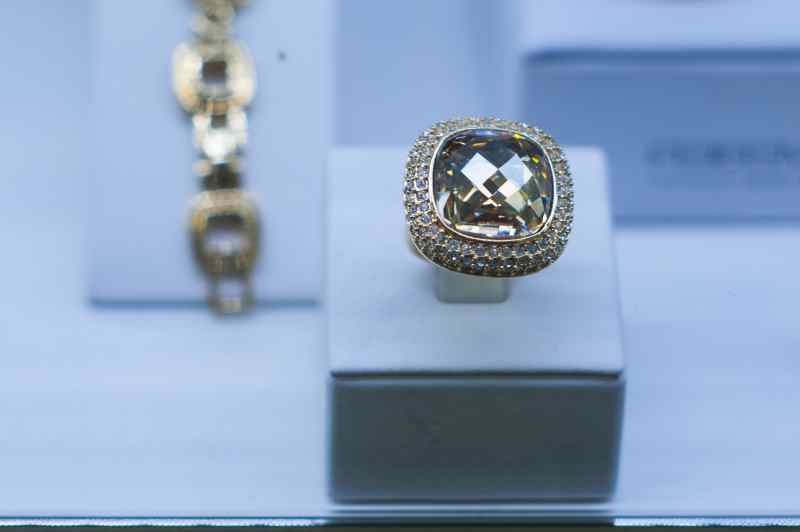
Lab-grown stones are chemically and optically identical to natural diamonds. Both consist of carbon atoms arranged in the same lattice structure. Both have the same hardness (10 on the Mohs scale), refractive index, and dispersion. Standard 10x jeweler loupes cannot distinguish between the two, and the differences only appear under spectroscopic equipment in gemological labs.
The Gemological Institute of America has graded lab-grown diamonds since 2007 using the same 4Cs framework. The reports include identification language confirming the stone is laboratory-grown, but the optical grades (cut, color, clarity) follow the same scales used for natural diamonds. A D color VVS1 grade means the same thing on either stone.
Diamonds Created in a Laboratory and Buyer Confidence
Industry surveys from 2024 show that 70% of buyers now consider diamonds created in a laboratory acceptable for engagement rings, up from 32% in 2019. The change is concentrated in buyers under 35, where lab-grown selection rates exceed 70% in some markets. Older buyers still favor natural at higher rates, but the generational replacement on this question has already happened in the under-35 bracket.
Ethical and Environmental Considerations
The traditional diamond supply chain carries a complicated reputation. The Kimberley Process, established in 2003, was designed to prevent conflict diamonds from entering the market, but the certification covers state-funded armed conflict only and does not address human rights abuses, environmental damage, or labor practices outside of war zones.
Lab-grown stones avoid the geopolitical and labor questions associated with mining. The trade-off is energy use. CVD reactors run continuously for 3 to 4 weeks at high temperature, and the carbon footprint per carat depends entirely on the producer’s electricity source. A reactor running on coal-fired grid power has a higher per-carat carbon footprint than a reactor running on solar or hydroelectric power.
Several large lab-grown producers have moved to fully renewable grids, and the resulting stones carry independent carbon-tracking certifications. Buyers who care about the environmental angle should check the producer’s energy source rather than assume the lab-grown label answers the question on its own.
Supply and Production Economics
Natural diamond supply is constrained by geology and the pace of mining. The major mines (Argyle in Australia closed in 2020, Mir and Udachnaya in Russia, Catoca in Angola, Diavik and Ekati in Canada) produce a fixed annual rough output that ranges from 110 to 130 million carats globally. The supply curve cannot expand quickly to meet demand spikes.
Lab-grown supply scales with reactor capacity. New CVD reactors come online at a rate measured in months rather than the decade-plus timelines for new mines. Production capacity grew over 300% between 2020 and 2023, and the resulting wholesale price compression (74% drop since 2020) is a direct function of the supply expansion.
The supply elasticity has implications for retailers. Lab-grown stones do not require the same long-term inventory commitments as natural rough, and the carrying cost of inventory is lower. This frees retail capital for service expansion, custom design, and other margin opportunities that the rigid natural diamond supply chain has limited.
Retailer and Industry Response
The major mined-diamond marketing organization (the Natural Diamond Council) has restructured its messaging to emphasize natural stone provenance and rarity rather than competing on size or price. De Beers closed its Lightbox lab-grown subsidiary in 2025 and redirected the budget toward natural diamond marketing campaigns aimed at differentiating the categories.
Retailers in the bridal segment now stock both categories openly, with lab-grown often presented as the larger-stone option and natural as the heritage option. The clean separation has reduced consumer confusion and increased basket sizes in both categories, since couples who choose natural for the center stone often add lab-grown side stones at minimal additional cost.
Certification and Disclosure
Disclosure rules are now strict at the regulatory level. The Federal Trade Commission updated its Jewelry Guides in 2018 to remove the word “natural” from the definition of a diamond, treating both natural and lab-grown as diamonds proper, and requiring all advertising to disclose the origin clearly. Stones sold without origin disclosure now violate FTC guidance and can trigger enforcement.
Grading reports from major labs (GIA, IGI, GCAL) include origin language on the front page of the report. Stones sold without grading reports remain in lower-end retail channels, and the bridal segment now routinely requires reports for any stone above 0.50 carats, regardless of origin.
Generational Buyer Differences
Buyers under 35 ask different questions at the counter. Carat size relative to budget, ethical sourcing, and the per-dollar visual return are the top factors. Tradition and resale value, which were dominant factors for buyers over 50, rank lower for the under-35 cohort.
The generational pattern explains the speed of the change. The buyers who would have rejected lab-grown for traditional reasons aged out of the engagement ring purchase window between 2015 and 2025, while the buyers entering the window during the same decade had no inherited preference for natural diamonds. The replacement happened in one demographic cycle.
Closing Thoughts on the Industry Shift
The lab-grown takeover of the engagement ring category is structural rather than cyclical. The price gap, the optical equivalence, the supply scalability, the regulatory clarity, and the generational buyer pattern all point in the same direction, and none of these factors is reversible at the industry level.
The natural diamond market will continue to exist for the heritage segment, the resale-conscious buyer, and the high-end collector market that values provenance over size. But the bulk middle of the engagement ring market has already moved, and the lab-grown segment will continue to grow as production capacity expands and prices stabilize at the cost-plus level the category is approaching.
Similar Posts:
- Cristiano Ronaldo’s $5M Engagement Ring to Georgina Rodriguez: Experts Reveal Its True Value!
- Jackie Kennedy’s dual-stone engagement ring from JFK: inside the surprising story
- Coco Jones Reveals Dazzling Engagement Ring from Donovan Mitchell: See the New Laneige Photos!
- Thousands of house-sellers frozen out of market this summer: how to avoid being one
- House prices slump to six-month low: average home loses nearly £1,800 in December