

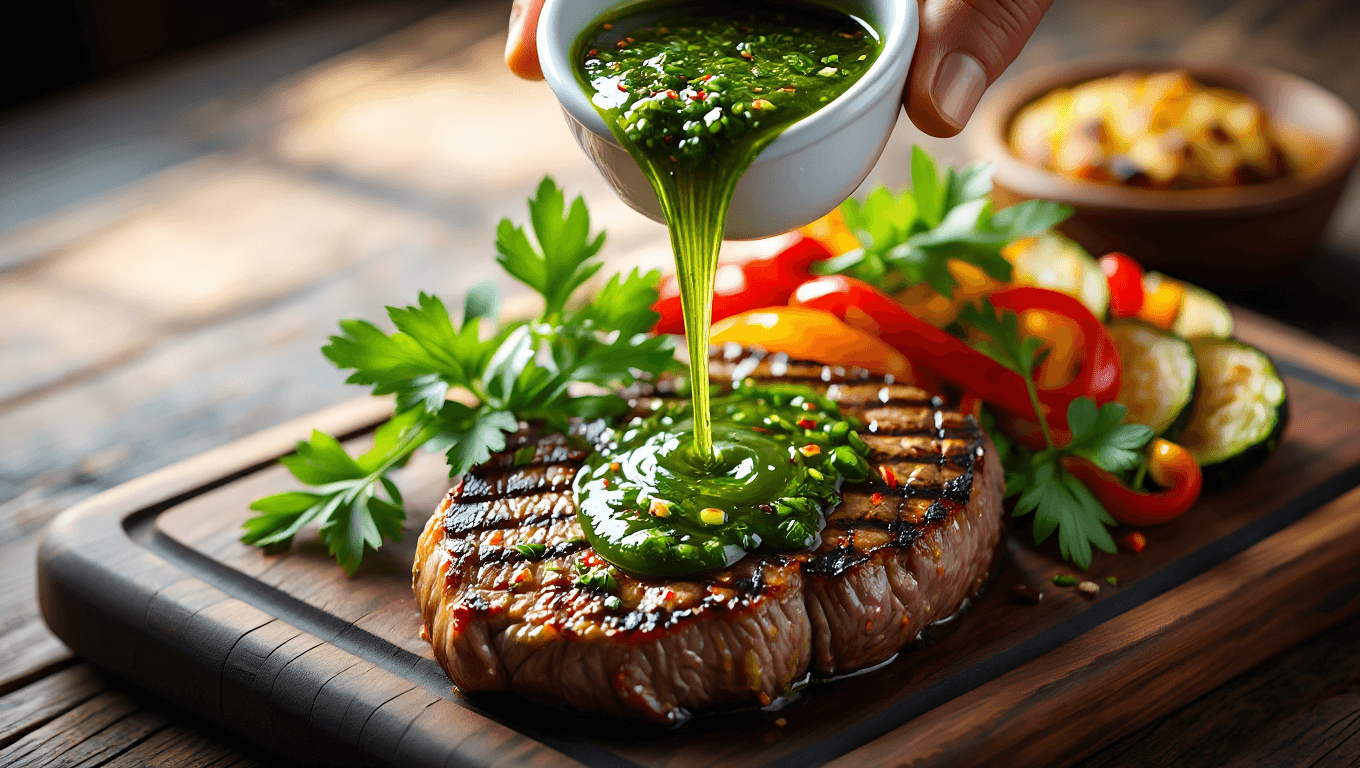
Chimichurri arrives bright and green on the plate, ready to lift grilled meats, roasted vegetables, fish, and baked potatoes with a sharp, herb-forward kick. This Argentine-born sauce is quick to make and instantly transforms ordinary dishes into something more vibrant.
Where chimichurri got its name and why it matters
Stories about the name of chimichurri vary. Some link it to the Basque word tximitxurri, meaning a mixed assortment. Others tell of an Irish fighter, Jimmy McCurry, whose name locals adapted into “chimichurri.” Whatever its origin, the sauce has become a staple across kitchens.
Its appeal is simple: a few fresh herbs, garlic, acid, and oil create a mixture that heightens flavors without masking them. Chimichurri’s versatility is part of why it endures on tables from barbecues to weeknight dinners.
Ingredients to make one generous bowl of chimichurri
- 1/2 bunch flat-leaf parsley
- 1/2 bunch fresh cilantro
- 2 shallots
- 4 garlic cloves
- 1 red chili pepper
- 2 tbsp dried oregano
- 1/2 cup white wine vinegar
- Juice of 1 lime
- 2 tbsp extra-virgin olive oil
- Salt to taste
- Black pepper to taste
How to prepare fresh chimichurri, step by step
- Wash and dry the herbs. Finely chop parsley and cilantro by hand for texture.
- Peel and mince garlic; add it to the herbs so its aroma blends early.
- Split the chili pepper lengthwise. Remove seeds for milder heat, then dice finely.
- Thinly slice the shallots and mix them with the chili and herbs in a bowl.
- Crush the dried oregano lightly in a mortar or between spoons to release oils.
- Season with salt and pepper, then pour in the vinegar, lime juice, and olive oil.
- Stir thoroughly until the ingredients are well combined.
- Chill the sauce for about one hour so the flavors marry before serving.
Simon Auscher’s practical tips for an impeccable chimichurri
- Remove chili seeds to keep the sauce bold, not blistering.
- Use pepper sparingly; the chili already delivers heat.
- Roll the lime on the counter before juicing to extract more juice.
- Let the sauce rest in the fridge for an hour; it deepens the flavor.
- Lightly pound dried oregano to soften the texture and awaken its aroma.
- Serve with pan-grilled cauliflower, a tip recommended by Simon Auscher for a simple, effective pairing.
Ways to use chimichurri beyond the barbecue
- Spoon over grilled steaks or chicken as a finishing sauce.
- Toss with roasted vegetables for a herby lift.
- Drizzle on baked potatoes or boiled new potatoes.
- Use as a bright topping for seared fish or shellfish.
- Stir into grain bowls or use as a marinade for tofu and meats.
For a quick test, pan-roast cauliflower and dress it with chimichurri just before serving. The contrast of char and fresh herbs makes each bite sing.
Similar Posts:
- Secret ingredient transforms sauces: the simple trick that makes all the difference
- Chili sin carne: the perfect meat-free dish you’ll crave
- Competition-winning mayonnaise: chef Eric Fréchon unveils his secret recipe
- Italian pasta salad: easy, no-fail recipe for a fresh, flavorful side
- Spring rolls: Gaudry and expert reveal how to make an unforgettable treat