
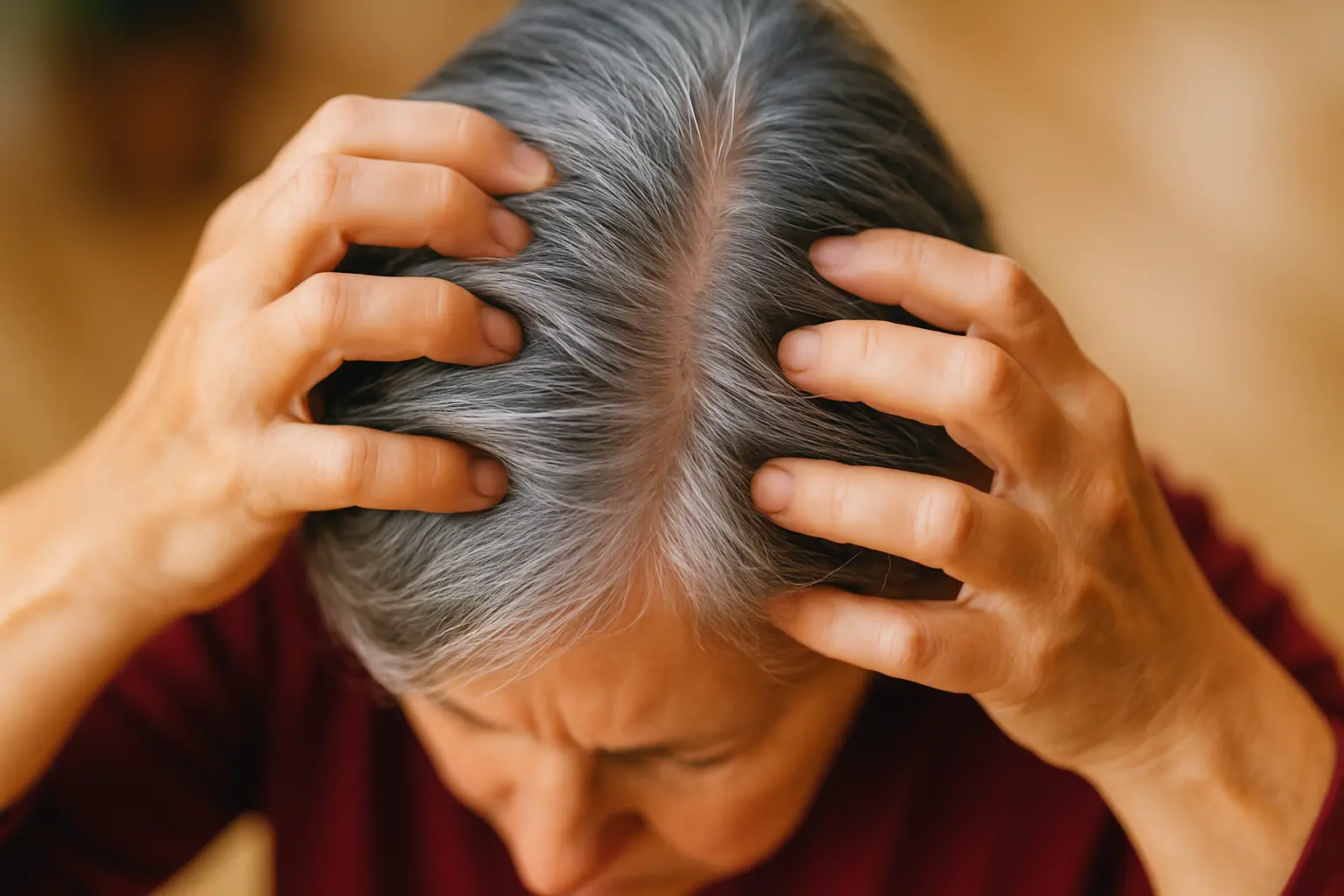
You rinse your hair, only to discover a new white streak staring back at you in the mirror. Sound familiar? Unless you’re among the perpetually lucky (or still under 20), white hair sneaks up on most of us, usually somewhere between 40 and 50. But don’t pull it out in dismay: white hair isn’t just a cosmetic milestone—it’s a story written in your roots about aging, health, and a pinch of (un)fortunate genetics. Let’s unravel what your white hair might be trying to tell you—minus the melodrama and with a good dash of science.
The Aging Process, Genetics, and the Myth of Sudden White Hair
Let’s start with the unavoidable truth: as we age, our hair gets lighter, and, eventually, turns white. This transformation goes by the fancy name of canities. What’s happening behind the scenes? It all boils down to melanocytes—the cells responsible for giving your hair its color. Over time, these pigment-producing cells stop making melanin. Your hair doesn’t stop growing, but without pigment, what emerges is white or gray. It’s like your hair’s gone into retirement, minus the tan.
And while most people notice the first sprouting of white hair in their 40s or 50s, some experience it much earlier. In fact, a few unlucky souls can find their first white hairs popping up in their twenties. But before you blame your smartphone addiction, blame your DNA. As Sébastien Barbarot, dermatologist at CHU de Nantes, puts it: “It’s a matter of genetics.” And if you’ve ever heard tales of waking up after a fright or heartbreak only to find your hair completely white, rest assured—according to Barbarot, that’s just a myth. Even the scariest horror movies only raise your pulse, not blanch your hair overnight. So the next time a white hair appears, look back at your family tree—not your last stressful meeting.
White Hair and the Heart: A Surprising Connection?
Could those silvery strands be whispering about more than just age? According to a 2017 study from the European Society of Cardiology—an organization uniting thousands of cardiology professionals worldwide—the answer is: possibly. Their findings suggest that men with more gray or white hair may face a greater risk of developing atherosclerosis, a disease impacting the arteries, regardless of their age. In short, the more gray hairs present, the higher the risk factor seemed to be.
As Dr. Irini Samuel, cardiologist at Cairo University and co-author of the study, explains: “Aging is an unavoidable cardiovascular risk factor, and it is associated with dermatological signs that can point to an increased risk of heart disease.” In this study, participants already affected by atherosclerosis were also more likely to have gray hair. It’s a reminder that our body sometimes drops subtle hints—on our heads, no less—about our overall health.
But let’s not panic and reach for the hair dye just yet. Sébastien Barbarot also emphasizes that cardiovascular risk—gray hair or not—increases with age. Further studies are needed to confirm whether there’s a direct relationship between white hair and heart disease. For now, white hair remains an interesting clue, not a diagnostic tool.
Nutritional Clues and Underlying Conditions
Before you imagine a magic food that keeps your hair eternally dark, here’s the real scoop: your diet can play a role, but it’s not the whole story. Dr. Karthik Krishnamurthy, Director of Dermatology at Montefiore Medical Center in New York, explains that low levels of vitamin B12 can lead to reduced pigmentation in hair. In other words, a deficiency can result in premature or increased whitening of your hair.
That said, according to Sébastien Barbarot, this generally only happens in cases of malnutrition or a very unbalanced diet—scenarios that are rare in Western countries. So, while you might want to keep an eye on your vitamin intake, your daily diet is unlikely to be the main culprit for your new highlights unless your eating habits are truly off the rails.
But there’s more: certain medical conditions can result in white hair. Vitiligo, an autoimmune disorder, is famous for causing pale patches on the skin, but it can also lead to depigmentation of hair or facial hair, another point made by Barbarot. The same holds true for another condition called alopecia areata—a disorder where the immune system attacks hair follicles, leading to patchy hair loss. As hair regrows, it can come back as white, making the scenario more complex than a simple case of aging or genetics.
Embracing the White: What It All Means
In the end, spotting white hair isn’t a sign to panic or book an urgent doctor’s appointment. Most of the time, it’s nature’s way of marking a new era—one that everyone enters sooner or later, genetics permitting. Aging, as they say, beats the alternative. Nevertheless, if you spot a rapid change, an unusual pattern, or other symptoms, it never hurts to check in with a professional.
- White hair is mostly a natural, genetic part of aging.
- Sudden overnight whitening is a myth.
- There may be a link between white hair and heart health, but further studies are needed.
- Nutritional deficiencies and medical conditions like vitiligo or alopecia areata can also play a role.
So the next time you see a new white hair, smile—your body just might be quietly keeping you informed, with style.
Similar Posts:
- Cannabis Danger: Study Reveals Doubling in Cardiovascular Death Risk!
- Early menopause increases heart disease risk by 40%: experts warn
- New Study Reveals: Women’s Heart Health More Sensitive to Lifestyle Choices Than Men’s
- Living with heart disease: 5 women reveal what they wish you’d know
- Heart Attacks Dethroned: Discover the New Leading Cause of Death in the U.S.

Theo is a dynamic fitness coach who brings energy, realism, and flavor to healthy living. His content is about strong bodies, positive minds, and meals that fuel both.