
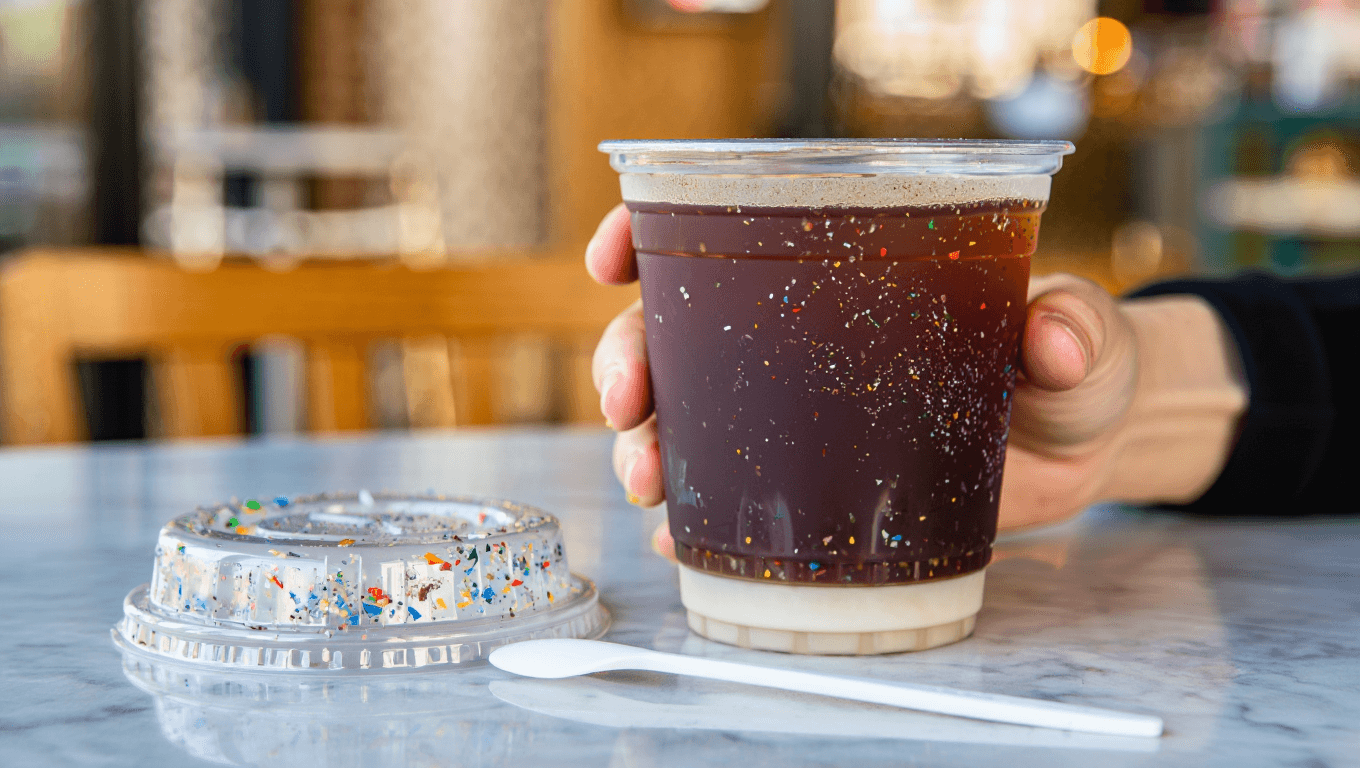
Recent studies reveal a surprising source of microplastic pollution: the cups many of us use daily for takeout coffee. Hot beverages, lids and stirring can release tiny plastic particles into drinks. The discovery raises questions about everyday habits and offers a chance to change how we drink on the go.
What scientists are finding about disposable cup microplastics
Researchers tested popular disposable cups and reported that hot liquids can liberate large numbers of microplastic fragments. The exact counts vary by cup type and temperature. But most items released particles when exposed to heat and agitation.
- Paper cups often carry a thin plastic lining. That lining can fragment under heat.
- Polystyrene and polypropylene lids also shed particles when stressed.
- Bioplastic or compostable linings are not immune to particle release.
How plastics enter your hot drink
Microplastics are generated through physical and chemical processes. Heat softens linings. Stirring and sipping create friction. These actions break the lining into tiny pieces that end up in the beverage.
Common triggers for particle release
- Pouring extremely hot liquid directly into the cup.
- Vigorous stirring or shaking in transit.
- Using abrasive lids or reusable straws with rough edges.
What the health implications might be
Evidence about long-term effects is evolving. Scientists worry that ingested microplastics could carry chemicals or trigger inflammation. Tiny particles may interact with gut tissue and the immune system.
- Chemical concern: Plastics can leach additives and contaminants.
- Physical concern: Particles could irritate tissues or act as carriers for microbes.
- Unknowns remain: Dose, particle size, and long-term outcomes need more study.
Simple steps to cut your exposure to microplastics
You can reduce contact with microplastics without giving up coffee. Small habit changes often make a big difference.
- Bring a reusable cup made of stainless steel, glass, or ceramic.
- Avoid plastic-lined paper cups when possible.
- Let very hot drinks cool for a few minutes before transferring.
- Minimize stirring and avoid rough or rigid straws.
- Opt for lids with smooth edges or cup sleeves instead of extra plastic.
Choosing safer reusable cups and lids
Not all reusable cups are equal. Materials and maintenance matter for both safety and flavor.
- Stainless steel: Durable and heat-resistant. Choose food-grade options.
- Glass: Inert and easy to clean. Use a protective sleeve to avoid breakage.
- Ceramic: Good for home and office coffee. Less practical for rough commuting.
- Avoid cracked or scratched liners; they trap residue and may release particles.
Practical hygiene and care tips for reusable mugs
Proper cleaning keeps reusable cups safe and reduces wear that can create particles.
- Wash daily with mild detergent and warm water.
- Avoid abrasive scrubbers on coated surfaces.
- Inspect lids and seals regularly for wear.
- Replace silicone gaskets or lids when they show damage.
What cafés and businesses can do to lower risk
Cafés have options to reduce customer exposure and waste.
- Offer discounts to customers who bring reusable cups.
- Provide stainless steel or glass options for onsite drinks.
- Test alternative lid designs to reduce friction and shedding.
- Educate staff on filling practices to avoid overheating and splashing.
Practical choices for different situations
Match your cup choice to how you travel and drink.
- Commuting: Use leakproof stainless-steel mugs with smooth lids.
- Office: Keep a personal ceramic or glass cup for desk use.
- Quick takeaway: Ask for beverages in a porcelain or reusable cup when available.
Questions scientists still need to answer
Researchers must map real-world exposures and health outcomes. Key gaps remain in measuring long-term risks from low-level ingestion.
- How many particles reach internal tissues after regular consumption?
- Which additives or contaminants pose the greatest danger?
- Do alternative linings reduce particle release in realistic use?
Similar Posts:
- Revealed: Chewing Gum May Unleash Countless Microplastics Into Your Saliva, Study Shows
- Healthiest Organic Keurig Coffee Pods for Daily Use
- Esophageal cancer risk: hot coffee may raise it
- No oven, no scale, no dishes: chef reveals express chocolate cake recipe
- Coffee: 2-3 cups a day could slash stress and boost mental health

Cole is a passionate vegan dessert artist with a knack for turning indulgent classics into plant-based masterpieces. His sweet creations are where flavor meets conscious living.