
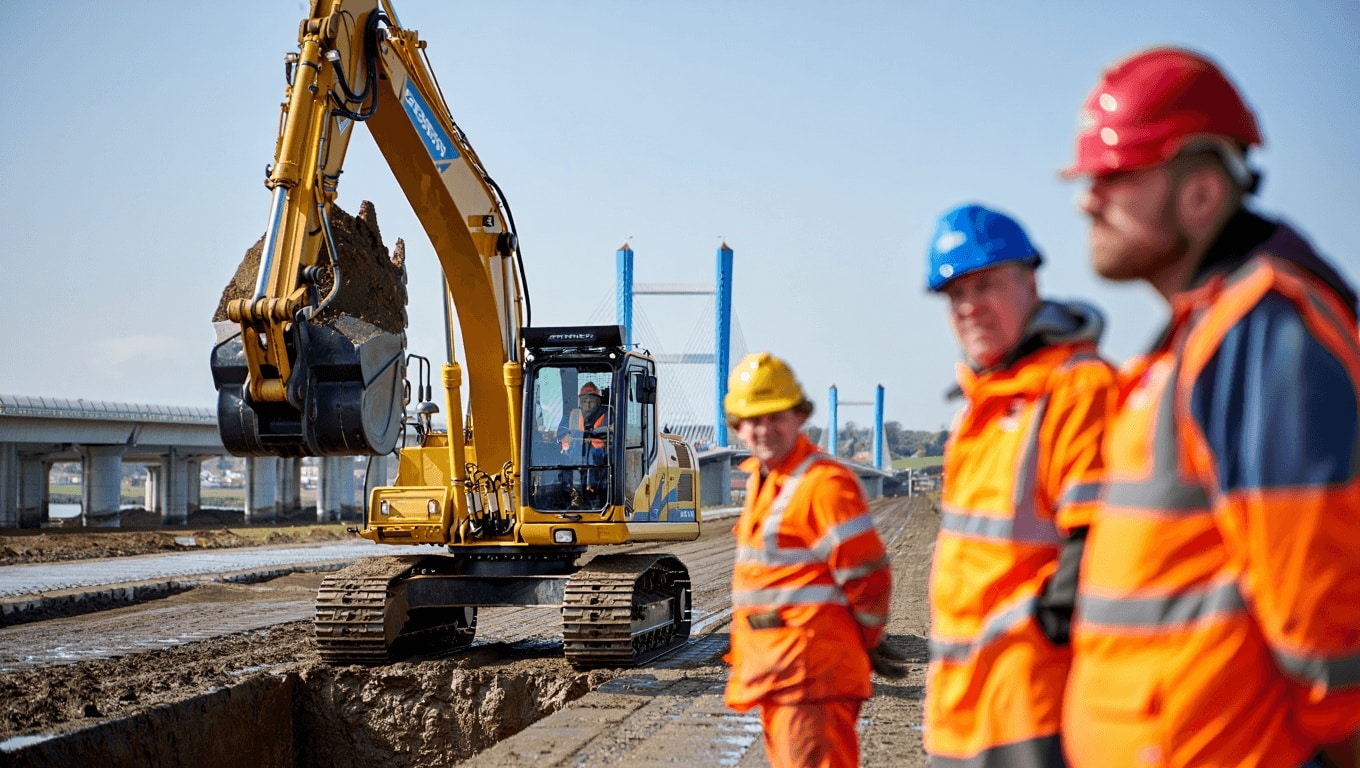
Preparatory work has begun on the long-planned Lower Thames Crossing, a major road scheme aimed at easing chronic congestion east of London. Early site works are now under way across Essex and Kent, with tunnelling scheduled to start in 2028 and the new route expected to open in the early to mid 2030s.
How the project aims to relieve pressure on the Dartford Crossing
The Lower Thames Crossing is designed to reduce congestion on the Dartford Crossing. Today that crossing carries far more traffic than it was built for. It handles well over 150,000 vehicles each day, despite an original design capacity far lower.
- Heavy goods vehicles make up a large share of the traffic, increasing wear and delays.
- The scheme will nearly double river-crossing capacity on the eastern approaches to London.
- Planners say the new link will create a more reliable route for freight between ports in the South East and hubs in the Midlands and North.
Transport officials argue this will cut delays and help commerce. Congestion at the crossing currently costs the economy hundreds of millions each year in lost time.
What work is happening now in Essex and Kent
Before tunnelling begins, teams are carrying out groundworks to protect utilities, habitats and historic sites. Compounds are being set up near East Tilbury in Thurrock and at Thong outside Gravesend. These will house equipment, machinery and worker facilities.
- Survey and protection of underground utilities.
- Ecology teams creating new ponds, trees and hedgerows across local villages.
- Archaeologists excavating sites around Coalhouse Fort to record finds before construction.
About 50 archaeologists are reported to be working on digs in Essex to preserve local heritage. Meanwhile, early construction compounds already host hydrogen generators and electric drilling rigs.
Funding, permission and the construction timeline
The scheme cleared a major funding hurdle at the Autumn Budget when the Chancellor provided final public support. That announcement unlocked private sector investment for long-term construction and operation.
- More than £1 billion of public funding has been confirmed to advance the project.
- Planning permission was granted last year, allowing work to move ahead.
- Tunnelling work is targeted to start in 2028.
- Opening is expected in the early to mid 2030s.
National Highways will oversee delivery with private partners managing later stages of operation and maintenance.
Jobs, training and local skills hubs
The project promises jobs and training for residents along the route. Organisers plan to open permanent Skills Hubs in Gravesham and Thurrock.
- Free construction training for local people.
- Opportunities in engineering, plant operation and environmental management.
- Longer-term roles in maintenance and monitoring after opening.
Project leaders say the hubs will leave a lasting legacy of skills and employment in the area.
Environmental measures and biodiversity commitments
Environmental mitigation is central to early work. Teams are establishing new green space and protecting wildlife corridors.
- Creation of new habitat, including ponds and hedgerows.
- Measures to shield vulnerable species during construction.
- Design features intended to reduce carbon impact during delivery.
Around 1,000 hectares of habitat is planned as part of mitigation and enhancement measures. Officials also say the construction phase will aim to be carbon neutral.
On-site activity: what residents will see
Local communities will notice increased activity as compounds are established. Expect more traffic from plant, equipment and deliveries around work sites.
- Temporary access roads and storage areas.
- Monitoring of noise, dust and environment by contractors.
- Public communications about any closures or lane changes.
Authorities say they will protect utility supplies and archaeological areas while keeping disruption as limited as possible.
Why this crossing was chosen and the strategic case
Planners selected this alignment to provide a more direct, resilient route east of London. The area currently has only one major river crossing on that side, compared with many crossings to the west.
- The new crossing seeks to reduce reliance on a single bottleneck.
- It will link major freight corridors and support national trade flows.
- Decision-makers argue improved resilience will benefit businesses and commuters.
Transport ministers have emphasised faster journeys for drivers and smoother routes for the freight industry. They frame the scheme as both an economic and an infrastructure priority.
Similar Posts:
- Major road upgrade approved by Labour: set to ease crippling congestion
- M20 closed after crash and car fire: major route shut for hours
- M5 motorway drivers hit with 50mph limits for three years
- Major road set to open in weeks: bridge demolition impacted thousands
- Cycle lane scrapped to favour drivers: residents slam road-first proposals

Naomi is a clean beauty expert passionate about science-driven skincare and natural remedies. She demystifies ingredients and shares routines that empower readers to glow — naturally.