
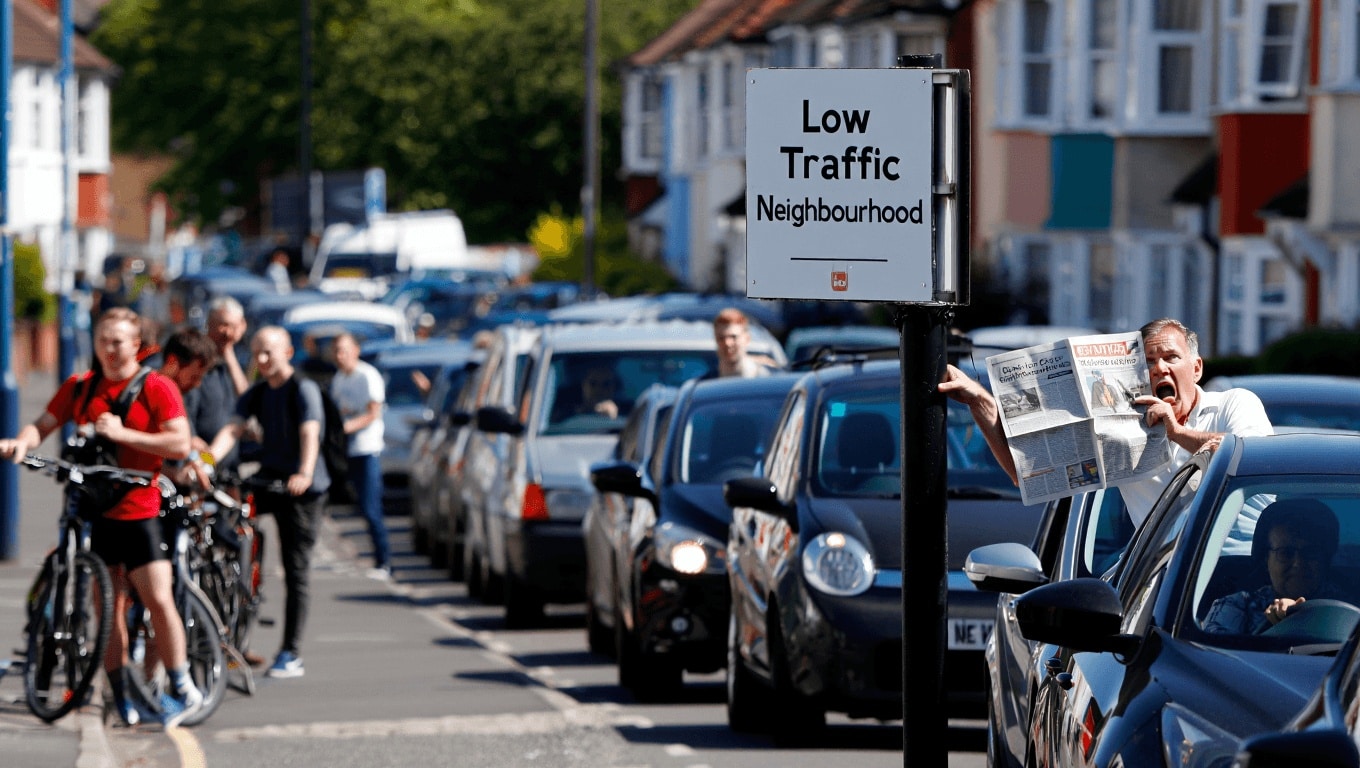
The High Court has found that six low-traffic neighbourhoods put in place by Croydon Council were unlawful, after judges concluded the schemes were driven more by a need for cash than by public safety or environmental goals. The ruling throws into doubt months of enforcement activity, millions in fine revenue and raises questions about how local authorities balance budgets with traffic policy.
Why the court struck down the LTNs
The judge examined the council’s decision to make the traffic restrictions permanent and found that financial considerations played an outsized role. Rather than prioritising health or road-safety evidence, the authority’s actions suggested a stronger focus on protecting income from enforcement cameras.
The orders creating the schemes were quashed after the court judged the council had used its powers for an improper purpose.
How the schemes were enforced and the sums involved
Automatic number-plate recognition (ANPR) cameras monitored access to the restricted streets. Motorists who breached the rules received penalty charge notices.
- Standard penalty: £160.
- Discounted payment if paid early: £80 within 14 days.
- Evidence of heavy enforcement: Freedom of Information responses showed fines totalling £1.4 million in a single month.
The enforcement regime proved highly lucrative for the council while it remained in a difficult financial position.
Croydon’s finances and the council’s expectations from LTNs
Croydon has faced severe budget challenges over recent years, including effectively declaring bankruptcy multiple times. That context shaped political and administrative choices.
The council itself forecast that the schemes could generate more than £10 million over four years. At the same time it has proposed large future budgets that leave little flexibility.
Responses from campaign groups and local activists
Local campaigners welcomed the judgment and urged immediate action. Their demands included:
- Stopping all enforcement tied to the six LTNs.
- Removing the physical or legal measures underpinning the schemes.
- Establishing how motorists who paid fines can seek refunds.
Campaigners argued the decision underlines the need for transparent, evidence-led local policy, not measures driven by revenue shortfalls.
Broader legal context and similar cases across London
The ruling is part of a string of legal challenges to low-traffic neighbourhoods in the capital. Courts have previously found faults in other council schemes when proper consultation or justification was lacking.
Legal actions in Lambeth and Tower Hamlets show a trend of scrutiny over how councils authorise and justify restrictions on local roads.
Timeline and key facts at a glance
- Number of schemes affected: six LTNs.
- Initial introduction: most schemes were trialled during the pandemic in 2020.
- Made permanent: early 2024.
- High Court decision: judges found the permanence orders unlawful and quashed them.
- Reported enforcement revenue: £1.4 million in one month; council projected over £10 million across four years.
Practical implications for residents and councils
The court’s order puts pressure on the council to pause enforcement and reassess the legal basis for the schemes. Drivers who received penalties may seek refunds or legal redress.
For other local authorities, the judgment signals that financial motives cannot be the primary justification for traffic controls. Councils will likely need stronger evidence and clearer public justification when proposing similar measures.
Similar Posts:
- Ambulance Crews Fined in Low Traffic Zones Despite Exemptions: A Shocking Oversight
- Low traffic neighbourhoods fail to reduce car use: TfL accused of serious omission
- £100 fine for parking: new crackdown pushes millions off pavements
- Parking law changes put millions at risk: new fines start this year
- £1,000 fines as AI traffic cameras expand across UK: drivers face crackdown on major offences

Naomi is a clean beauty expert passionate about science-driven skincare and natural remedies. She demystifies ingredients and shares routines that empower readers to glow — naturally.