
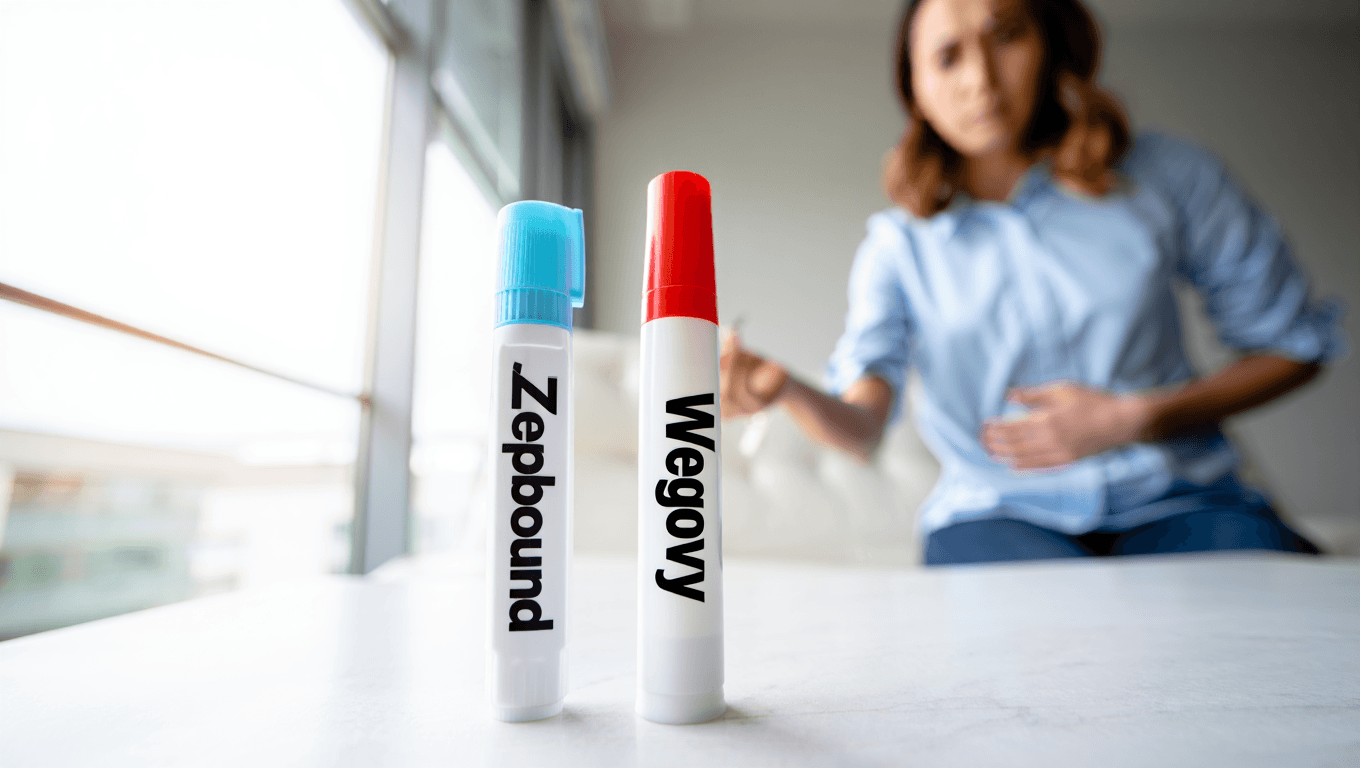
New injectable drugs are changing how people and clinicians approach long-term weight management. Two names come up most often: Zepbound and Wegovy. Both are given by weekly injection, but they work differently and produce different results for patients. This article breaks down the science, the results, and the practical trade-offs to help readers decide which option might fit their goals.
How each medication works: the biology behind the brands
Wegovy contains semaglutide, a GLP-1 receptor agonist. It mimics a gut hormone that helps reduce appetite, slows gastric emptying, and improves insulin response.
Zepbound contains tirzepatide. It targets two hormones at once: GLP-1 and GIP. That dual action can affect appetite and metabolism in complementary ways.
Key differences in mechanism
- Semaglutide focuses on GLP-1 receptors to curb hunger and reduce caloric intake.
- Tirzepatide adds GIP activity, which may enhance insulin signalling and metabolic adaptation.
- Both drugs are given by weekly subcutaneous injection and require a gradual dose increase.
Weight loss performance: what clinical data and real-world reports show
Clinical trials and clinical use suggest both drugs lower body weight significantly. Head-to-head data are limited, but available studies indicate a pattern.
- Zepbound (tirzepatide) has shown very large average weight reductions in trial populations, often greater than single-hormone GLP-1 drugs.
- Wegovy (semaglutide) consistently produces substantial weight loss and has a well-established track record in obesity treatment.
- Individual results vary. Factors include starting weight, adherence, lifestyle changes, and dose reached.
What to expect week to week
- Weight loss tends to be gradual over months, with the biggest changes in the first six months to a year.
- Both drugs pair best with dietary changes and activity for sustainable results.
Side effects and safety considerations to know
Gastrointestinal effects are the most common complaints for both medicines. They usually occur early in treatment and often improve with dose adjustments.
- Nausea, vomiting, diarrhea, and constipation are commonly reported.
- Some people report fatigue, dizziness, or injection-site reactions.
- Rare but serious issues such as pancreatitis or gallbladder disease have been reported; immediate medical evaluation is recommended for severe abdominal pain.
- People with a personal or family history of certain thyroid cancers or endocrine syndromes should consult specialists because warnings exist in prescribing information.
How dosing and treatment start-up differ
Both medications use a dose-escalation schedule to improve tolerance. Providers typically begin at a low dose and increase every several weeks.
- Weekly self-administered injections simplify schedules.
- Titration reduces GI side effects and helps patients reach an effective dose.
- Clinicians may adjust the timeline based on side effects and treatment response.
Cost, insurance coverage, and access realities
Price and coverage vary widely. Out-of-pocket cost can be high without insurance support.
- Some private insurers and employer plans cover medications for chronic weight management, but policies differ.
- Manufacturer assistance programs can help eligible patients afford therapy.
- Availability may be limited in some regions or subject to prior authorization requirements.
Choosing between Zepbound and Wegovy: factors to weigh
There is no one-size-fits-all answer. Consider clinical goals, side-effect tolerance, and cost.
- Weight-loss priority: If maximal percent weight loss is the main goal, some evidence favors tirzepatide.
- Track record and long-term data: Semaglutide has longer real-world use for obesity treatment.
- Diabetes management: Both help glycemic control, but individual responses differ.
- Side-effect sensitivity: Try lower starting doses and slow titration to reduce GI effects.
- Access and cost: Insurance rules or copays can steer the choice for many patients.
Practical tips for patients starting a GLP-1 or dual agonist
- Work with your clinician to create a stepwise titration plan.
- Report persistent severe side effects right away.
- Combine medication with nutrition and activity goals for best results.
- Schedule regular follow-ups to monitor weight, blood work, and any adverse effects.
- Plan for maintenance and understand the potential for weight regain if treatment stops.
Questions to discuss with your clinician before starting therapy
- How much weight loss is realistic for me?
- Which side effects should prompt urgent care?
- How long will I need to stay on the medication?
- Does my insurance cover this drug, and what are out-of-pocket costs?
- Are there any personal health risks that would make one drug less suitable?
Similar Posts:
- Shocking Study Reveals: GLP-1 Weight Loss Results Fall Short in Real-World Settings!
- GLP-1 microdosing may still cause weight loss: low-dose Wegovy and Zepbound explained
- Semaglutide higher doses lead to faster, greater weight loss: study
- Ozempic, Wegovy: can fewer injections keep weight off?
- Heart failure: weight loss drugs slash hospitalization and death risk by 40%

Cole is a passionate vegan dessert artist with a knack for turning indulgent classics into plant-based masterpieces. His sweet creations are where flavor meets conscious living.