
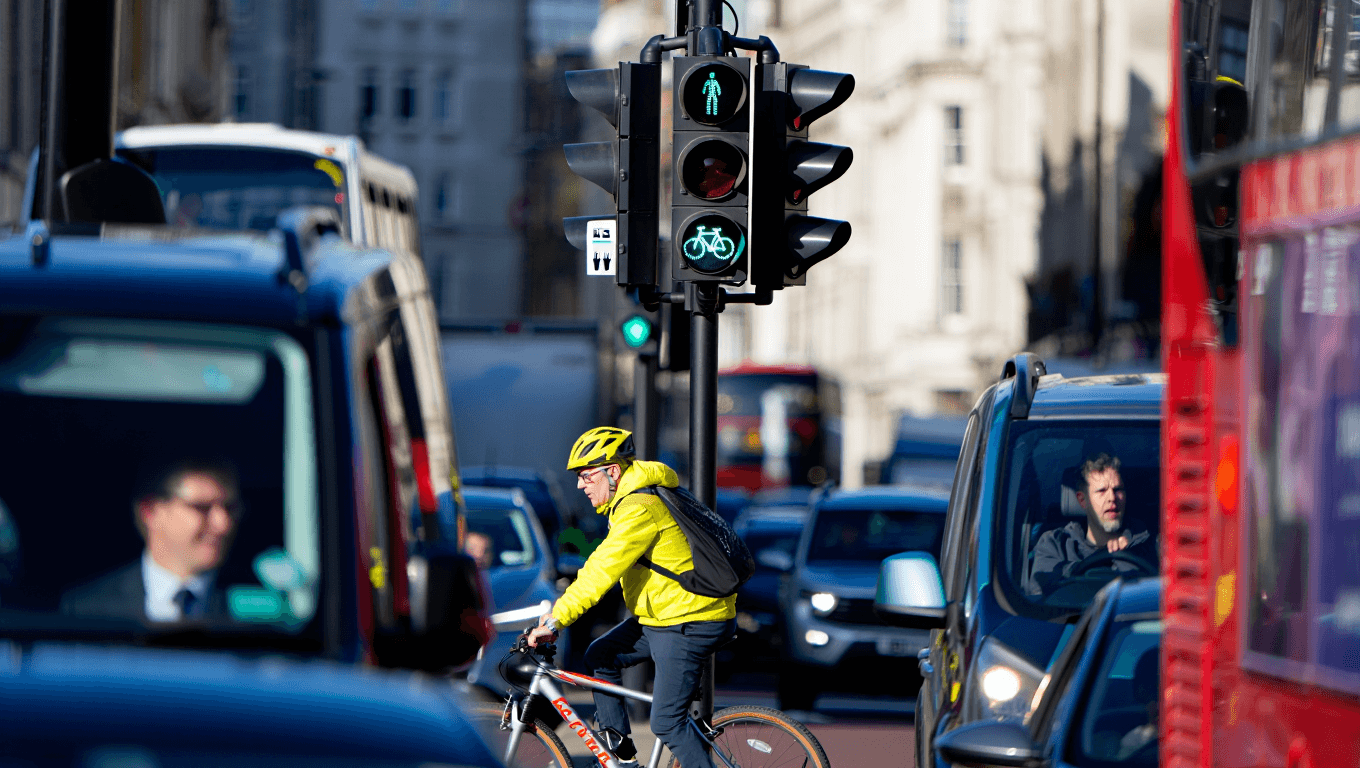
City planners and cycling advocates are pushing a bold change to London’s road rules: traffic lights that automatically turn green for cyclists. The proposal, backed by a dockless bike hire firm, aims to cut collisions and smooth journeys as two-wheeled trips surge across the capital.
What the rule change would mean for cyclists and other road users
The idea is simple: when sensors detect a bike approaching, the signal sequence shifts to favour the rider. Proponents say this would reduce red-light running and improve safety.
- Automated green phases for bikes would reduce stops and starts.
- Priority sequencing could be triggered by cycle lanes, sensors, or connected devices.
- Implementation would require updates to traffic-controller software and junction hardware.
Supporters argue the change could help everyone. They say smoother bike flows relieve congestion and cut risky manoeuvres.
Green wave technology: how it works and where it’s proven
“Green wave” systems synchronise signals so vehicles moving at a steady speed meet green lights in sequence. Cities like Amsterdam and Copenhagen have used versions of this for decades.
Key mechanics
- Timetabled signal offsets to create continuous green corridors.
- Speed guidance that nudges cyclists to maintain safe, consistent pace.
- Low-cost sensors and timing adjustments rather than full junction redesigns.
Advocates claim these systems improve journey times and behaviour at a modest cost. Evidence from Dutch and Danish cities is used to justify trials in London.
Riding numbers and network growth driving the debate
London cycling levels have climbed rapidly. Recent transport data shows a substantial increase in daily bike trips since 2019, a fact proponents use to press for infrastructure and policy updates.
- Journeys up 26 per cent versus pre-pandemic figures, with roughly 1.3 million daily cycle trips reported.
- The strategic cycle network now spans more than 400km, a major rise from 2016.
- The Mayor’s targets aim to extend local access and boost active travel broadly.
Those figures feed into the Mayor’s Transport Strategy, which aims to bring the majority of Londoners within short walking distance of cycle routes and to increase trips made on foot, by bike, or on public transport.
TfL’s wider signal and bus-priority changes
Transport for London has its own programme to reconfigure signals across the city.
- Buses set to gain priority at 3,500 signals by the decade’s end.
- These changes are part of a push to speed up public transport and reduce reliance on cars.
- Any new cyclist-priority logic would need to be aligned with bus priority schemes.
Coordination matters: giving one mode precedence can ripple across junctions, affecting journey times for others.
Arguments for and against the cyclist-priority plan
The proposal has split opinion. Backers frame it as a pragmatic safety fix. Critics warn of unintended effects.
Reasons offered by supporters
- Reduces red-light infringements by providing predictable signal patterns.
- Encourages safer cycling speeds through positive reinforcement.
- Can be relatively inexpensive compared with building new infrastructure.
Main concerns from opponents
- Some experts say it would not ease congestion and might complicate traffic flow.
- Taxi and driving groups claim rental-bike users can behave riskily due to pricing incentives.
- A few critics describe the idea as impractical or even “farcical”, arguing it won’t fix London’s slow traffic.
Opponents point to road-speed data showing the city’s central traffic moves very slowly. A global mobility study put central London at the top of the list for slow average speeds.
Voices from the streets and the industry
Industry spokespeople and campaigners weigh in from different angles.
- A bike-hire policy director suggested the change would protect vulnerable road users.
- Licensed drivers’ representatives warned that cycling campaigns sometimes press to remove cars indiscriminately.
- Urban planners highlight the need for careful trials before rolling out any citywide rule change.
Those debates will shape whether pilots move forward and how they are designed.
Practical steps to trial and measure success
Experts recommend testing the system in limited areas first. Clear metrics are essential to judge impact.
- Choose corridors with heavy cycle traffic and manageable junction complexity.
- Monitor safety outcomes, journey times, and effects on buses and cars.
- Engage local communities and road-user groups before wider rollout.
Careful, data-led pilots could reveal whether automated green phases reduce harm without worsening congestion.
Similar Posts:
- Highway Code rule changes leave millions unaware: Sadiq Khan launches urgent campaign
- Cycle lane scrapped to favour drivers: residents slam road-first proposals
- M23 motorway closed near Gatwick: police shut road for hours as drivers face Easter chaos
- M25 major crash sparks five-mile tailbacks: emergency services rush to scene
- Motorists on M20 and M6 warned of severe delays near major UK airports this weekend

Naomi is a clean beauty expert passionate about science-driven skincare and natural remedies. She demystifies ingredients and shares routines that empower readers to glow — naturally.