

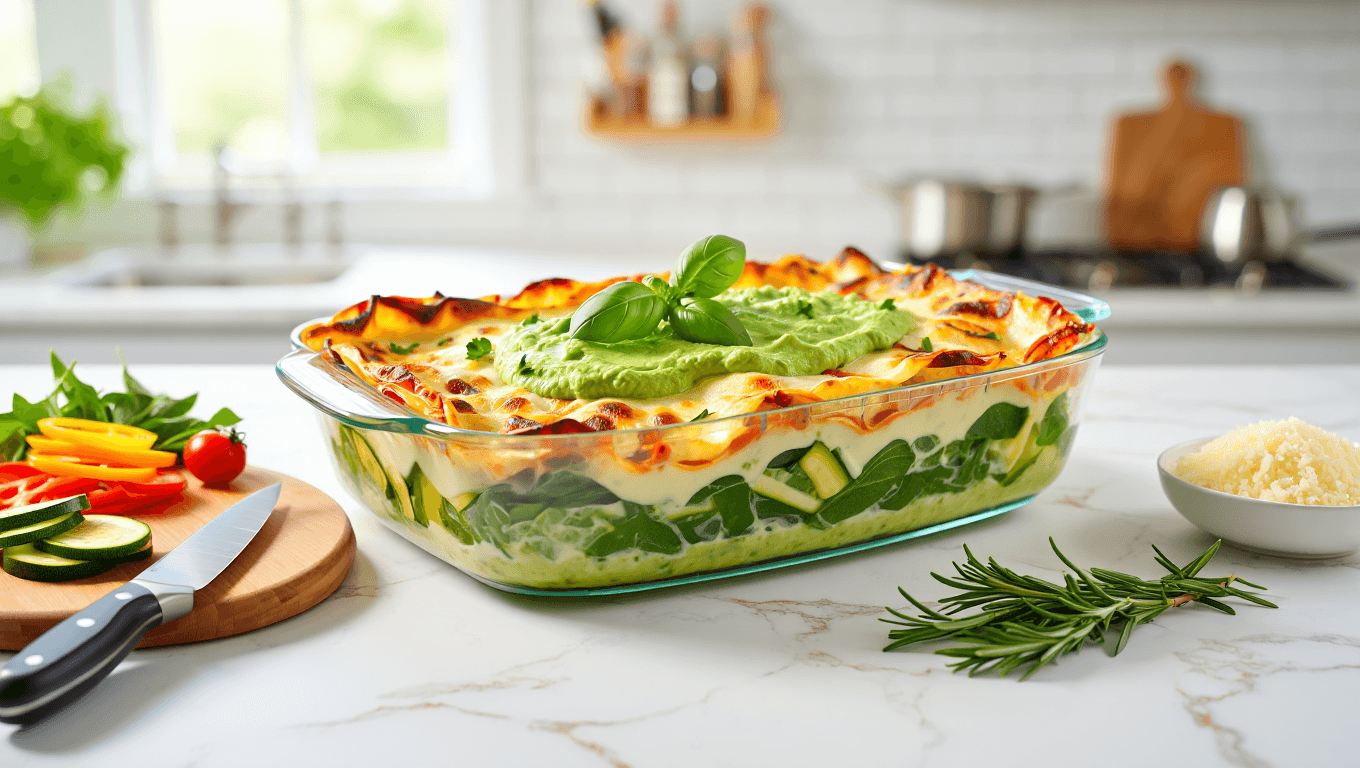
Bright, herb-scented and packed with spring greens, this summer lasagna reinvents an Italian classic. Chef Danilo Cortellini shared a fresh take on Instagram that swaps the usual heavy sauce for a vibrant, green béchamel made from seasonal vegetables. The result is comforting, colorful, and easy to adapt to what’s in your fridge.
What makes this summer lasagna different: green béchamel and seasonal produce
This version highlights local vegetables and a béchamel blended with herbs and cheese. It keeps the familiar layers of pasta and cheese but lightens the overall profile. Think silky béchamel infused with basil and grated Grana Padano, plus blanched peas, tender chard, asparagus tips and delicate zucchini flowers. The idea is simple: classic structure, modern flavors.
Ingredients for a summer vegetable lasagna
- 250 g lasagna sheets (no-boil or regular)
- 15 asparagus spears, woody ends removed
- 200 g cooked peas
- 200 g Swiss chard leaves, ribs trimmed
- 150 g zucchini flowers, cleaned
- 150 g Grana Padano, grated
- 2 garlic cloves, peeled
- 2 tbsp extra-virgin olive oil
- Salt and black pepper, to taste
- Butter, for greasing the baking dish
For the green béchamel
- 750 ml milk, warmed
- 30 g all-purpose flour
- 30 g unsalted butter
- Salt and freshly grated nutmeg
- 150 g grated Grana Padano
- 50 g fresh basil leaves, washed
Step-by-step: preparing the vegetables and béchamel
Prep the vegetables
- Rinse all produce. Trim asparagus and remove thick chard ribs. Gently open zucchini flowers and set aside.
- Warm a large skillet with olive oil and lightly brown the garlic. Add the prepared greens and asparagus.
- Sauté the vegetables until tender and slightly caramelized. Season with salt and pepper.
- Blanch peas briefly if raw, then drain and combine with the other cooked vegetables. Reserve a portion for folding into the béchamel.
Make the basil béchamel
- Melt butter in a saucepan over medium heat. Stir in the flour and cook to form a pale roux.
- Slowly whisk in the warm milk. Keep whisking to prevent lumps and bring to a gentle simmer.
- Season with salt and a pinch of nutmeg. Cook until sauce thickens to a creamy consistency, about 4–6 minutes.
- Remove from heat and blend the sauce with grated Grana Padano, basil leaves, and one quarter of the cooked vegetables. Use a hand blender for a smooth, green béchamel.
- Adjust seasoning and set the sauce aside.
Layering, baking, and plating the lasagna
- Preheat oven to 160°C. Butter a large baking dish.
- Place a layer of lasagna sheets in the dish. Spoon a generous amount of green béchamel over the pasta.
- Scatter a mix of the sautéed vegetables and some grated Grana Padano. Repeat layers until ingredients are used.
- Finish with a top layer of béchamel, more cheese, and a decorative arrangement of zucchini flowers.
- Cover with parchment paper and bake at 160°C for about 30 minutes.
- Remove the parchment, raise heat to 180°C and brown the top for 8–12 minutes until golden.
- Let the lasagna rest for 15 minutes before slicing to keep the layers intact and the béchamel set.
Chef tips, variations and storage suggestions
- Substitute ricotta or mozzarella for a different texture. Keep Grana Padano for a nutty finish.
- Use no-boil sheets to save time; increase baking time slightly if using dried pasta.
- For a vegan version, swap milk and butter for plant-based options and use nutritional yeast for umami.
- Leftovers keep well in the fridge for 2–3 days. Reheat covered in the oven for best results.
- Play with herbs—tarragon or mint can brighten the béchamel in summer.
Similar Posts:
- Autumn mushroom lasagna: ultra comforting dinner idea for October 9
- Lasagna alternative: faster, cheaper and just as delicious
- Vegetarian lasagna: autumn twist and easy recipe
- Zucchini and mozzarella lasagna: Laurent Mariotte’s indulgent recipe to try in September
- Raclette lasagna: quick mountain-style alternative to tartiflette