
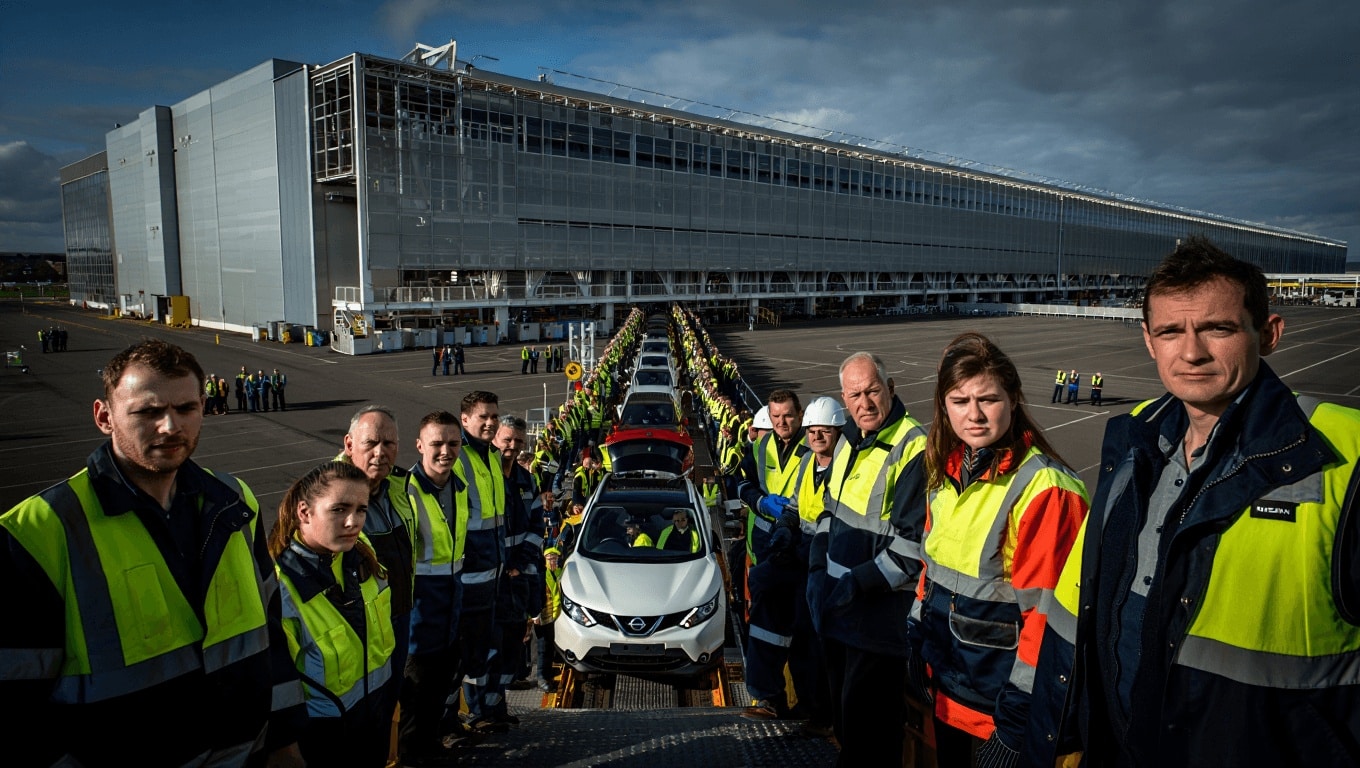
Nissan has sounded a stark warning about the long-term future of its Sunderland assembly plant after new European Union rules tightened definitions for what counts as “Made in EU”. The carmaker says the changes could force it to reconsider production in the UK unless London and Brussels reach a workable agreement. This dispute now sits at the centre of a larger debate over trade rules, electric vehicle policy and the post‑Brexit economic relationship between the UK and the EU.
What the Industrial Accelerator Act means for carmakers
The EU’s Industrial Accelerator Act aims to shield European industry from rising global competition. It sets clearer criteria for products to qualify as EU-made. Lawmakers say the goal is to preserve critical supply chains and support domestic manufacturing growth.
- Rules tighten origin requirements for vehicles and components.
- New provisions target corporate fleet sourcing and incentives for small electric cars.
- Exceptions and carve-outs will apply in some cases, but criteria vary.
Industry groups warn the wording could be interpreted in ways that exclude UK-built cars from EU schemes.
Nissan’s warning: Sunderland under threat
Nissan has told officials it could be forced to scale back or even halt production in Sunderland if UK models fail to meet the new EU definitions. Sunderland is one of Europe’s largest car plants and a key hub for Nissan’s electric lineup.
Nissan says uncertainty over the rules creates an “existential” business risk for its UK operations.
- Production of the latest Leaf model began at Sunderland last year.
- The site now builds multiple electric models on the same lines.
- Any exclusion from EU incentives could alter sourcing and sales decisions.
Reaction from the UK automotive sector and government
The industry’s main trade body has reacted strongly. The Society of Motor Manufacturers and Traders (SMMT) criticised the new approach and urged urgent talks.
Mike Hawes of the SMMT warned the rules could disadvantage UK manufacturers and called for rapid cooperation between London and Brussels.
A government spokesperson stressed the UK remains a close European partner and said both sides should work together to protect jobs and supply chains.
How the new rules affect electric vehicles and corporate fleets
The legislation introduces detailed conditions aimed at EVs and the vehicles bought for corporate fleets. The changes influence which cars qualify for regulatory credits or preferential procurement.
- Corporate fleet vehicles may need to be assembled within the EU to get certain benefits.
- Small electric cars face a separate “super-credit” regime with its own origin tests.
- Some manufacturers have temporary exemptions, but these are limited.
Manufacturers say differing definitions for fleets and super credits add complexity and raise compliance costs.
Implications for Nissan’s EV strategy in the UK
Sunderland recently started producing Nissan’s third-generation Leaf as part of an EV expansion plan. Local ministers have called the plant the “heartbeat” of Britain’s car industry.
- The Leaf benefits from national incentives that make the UK-built model more affordable.
- Government grants reduce retail prices for qualifying EVs by thousands of pounds.
- Any shift in cross-border rules risks fragmenting the market for zero-emission cars.
Industry leaders stress that protecting consumer choice and maintaining supply resilience are essential for EV uptake.
Immediate business concerns
- Unpredictable market access could trigger supply chain retooling.
- Investments in UK production lines could be delayed or moved.
- Jobs at plants like Sunderland could be put at risk if incentives change.
Where negotiations stand and next steps for companies
Both sides have signalled a willingness to talk, but time is short. Manufacturers want clarity on how the rules will be applied and whether the UK can secure practical exceptions.
Executives and trade groups are pushing for:
- Immediate dialogue between EU and UK regulators.
- Clear, transitional arrangements to avoid market disruption.
- Harmonised definitions that reflect modern EV supply chains.
For now, the future of Sunderland will hinge on political diplomacy and whether the new rules can be framed to accommodate close trading partners.
Similar Posts:
- Nissan keeps major UK presence despite Sunderland changes: jobs still at risk
- Most reliable used cars in the UK: Ford, BMW, Audi top the list
- £70bn car industry at risk: Labour urged to strike deal with EU before new Brexit rules
- Brexit rules to hit Britons: made in Europe plans threaten UK car sector
- Electric cars in UK: 170 models to choose from as new ones arrive every two weeks

Naomi is a clean beauty expert passionate about science-driven skincare and natural remedies. She demystifies ingredients and shares routines that empower readers to glow — naturally.