
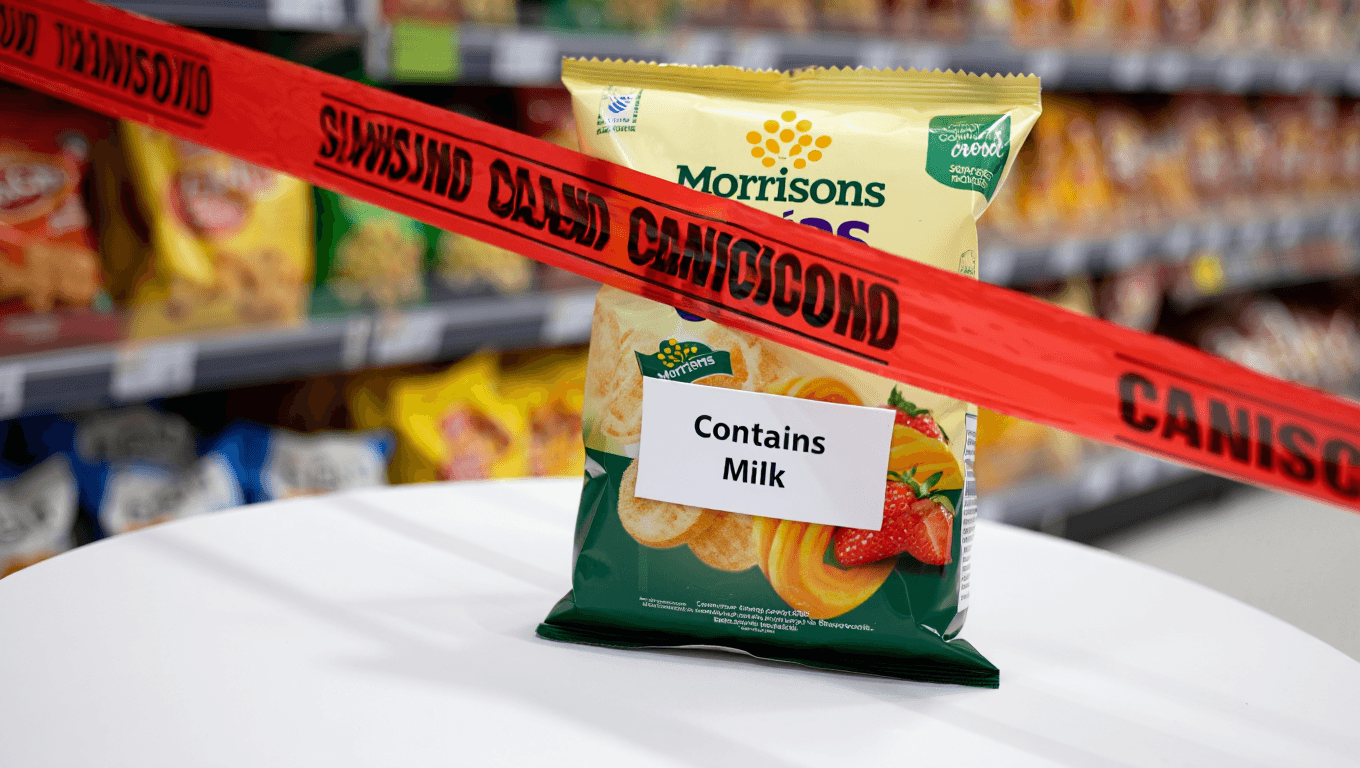
Morrisons has pulled one of its branded snacks from shelves after discovering some bags were filled with a different product that contains milk. The mix-up creates a serious risk for people with milk allergies and arrives amid a wider wave of supermarket food warnings this week.
Which product is affected and why it was recalled
The recall covers Morrisons’ Maple & Bacon Back of the Net crisps in 140g packets. Inspectors found certain packs contained an item that lists milk as an ingredient, even though the packet labelling does not.
The affected snacks carry a best before date of 22 August 2026. Morrisons says it has informed allergy support organisations and placed notices in its stores to alert shoppers.
Advice for shoppers: what to do if you bought the crisps
- Do not eat the product if you have a milk allergy or intolerance.
- Return the unopened pack to any Morrisons store for a full refund.
- If you have eaten the crisps and develop allergy symptoms, seek medical help immediately.
How this fits into recent food-safety alerts
This recall comes days after the Food Standards Agency announced a separate withdrawal of ready-to-eat fruit pots and snack packs.
Supplier PrepWorld removed multiple products after tests found Salmonella in apples and kiwi used in those items. The FSA warning covered packs sold in major UK supermarkets.
Which retailers were affected by the fruit recall
- Tesco: four products withdrawn
- Sainsbury’s: three products withdrawn
- Marks & Spencer: three products withdrawn
- Morrisons: one product withdrawn
- Asda: one product withdrawn
- Waitrose: items also affected
What Salmonella is and who is most at risk
Salmonella is a common cause of foodborne illness. Typical symptoms include fever, diarrhoea and stomach cramps.
While the bacterium is often linked to undercooked meat, poultry or eggs, fresh produce can also become contaminated during processing.
Young children, people aged 65 and over and those with weakened immune systems face higher chances of serious illness from Salmonella exposure.
How retailers and consumers can respond
- Retailers should continue to publish clear recall notices in stores and online.
- Shoppers should check product packaging for batch and best-before details.
- Keep receipts and return affected items for refunds rather than consuming them.
Similar Posts:
- Festive drink warning for Britons: may cause rashes, vomiting and abdominal pain
- Dangerous cereal alert: shoppers must act now
- Asda shoppers warned: do not eat items containing plastic or metal fragments
- Tesco and Asda milk pulled from shelves: regulator warns shoppers may have reactions
- Morrisons Issues Urgent Recall: Plastic Contamination Makes Meat Product Unsafe

Naomi is a clean beauty expert passionate about science-driven skincare and natural remedies. She demystifies ingredients and shares routines that empower readers to glow — naturally.