
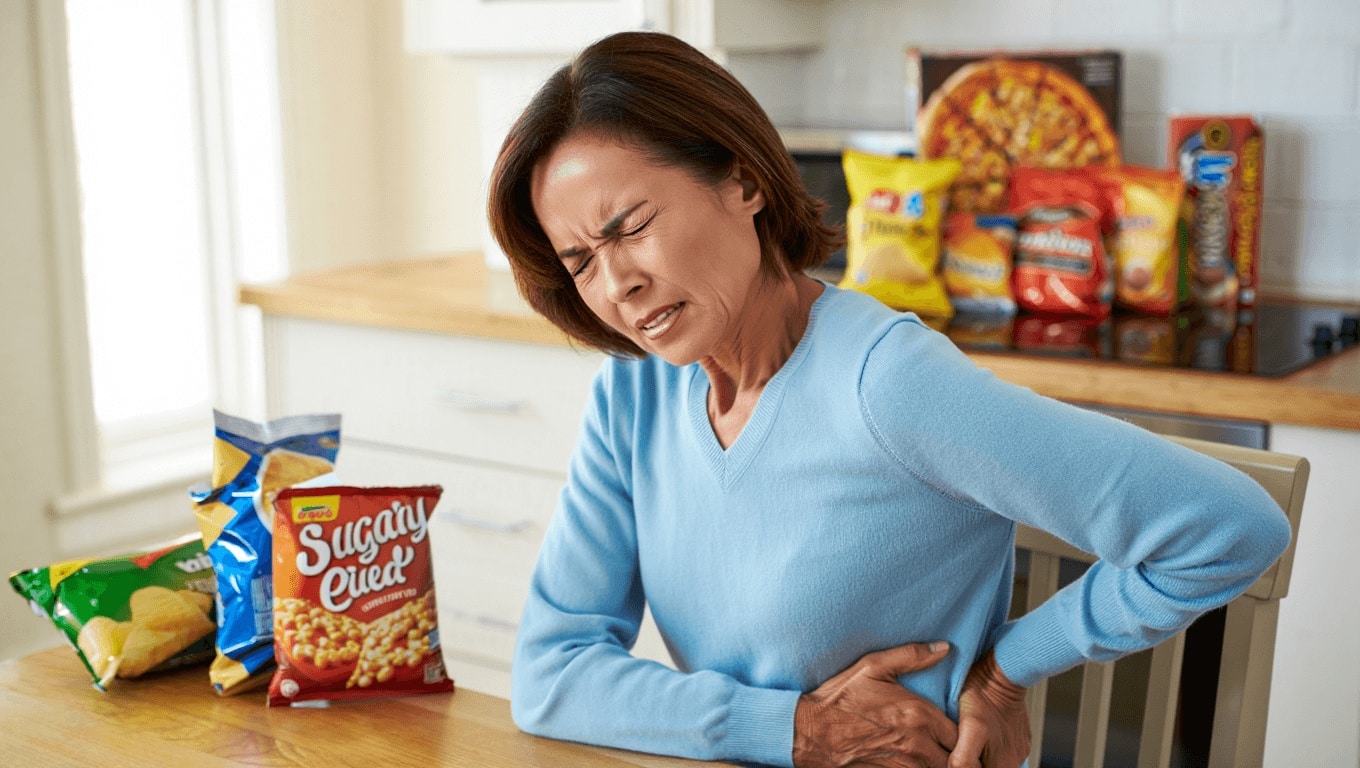
New research links rising consumption of ultra-processed foods to weaker bones and higher fracture risk. The trend of quick meals and packaged snacks has health costs beyond weight gain or diabetes. Scientists are now pointing to additives, nutrient gaps, and inflammation as drivers of bone loss in people who rely heavily on these products.
What counts as ultra-processed food and why it matters for bones
Ultra-processed foods are industrial formulations. They often contain many ingredients you would not use in a home kitchen.
- Examples include soft drinks, packaged snacks, instant noodles, and ready meals.
- They are high in added sugars, unhealthy fats, and salt.
- They also contain preservatives, emulsifiers, and phosphate additives.
These products are convenient but often lack key nutrients needed for bone maintenance.
How these foods can damage bone health
Multiple pathways may link processed foods to weaker bones. Researchers highlight three main mechanisms.
1. Nutritional deficiencies
Ultra-processed diets tend to be low in calcium, vitamin D, magnesium, and protein.
- Calcium and vitamin D are central to bone mineralization.
- Protein supports bone structure and repair.
- Missing these nutrients reduces bone density over time.
2. Excess salt, sugar and phosphates
High salt intake increases calcium loss in urine. Added sugars can disturb hormone balance.
Phosphate additives, common in processed meats and sodas, may upset the calcium-phosphate balance.
Too much phosphate without enough calcium can accelerate bone resorption.
3. Chronic inflammation and metabolic effects
Ultra-processed diets promote low-grade inflammation. That inflammation can increase bone breakdown.
They also elevate risk factors like obesity and insulin resistance. Both affect bone quality.
What studies are finding about fracture risk
Population studies show a link between ultra-processed food intake and weaker bones.
- People who eat the most processed products tend to have lower bone mineral density.
- Some studies report higher rates of fractures among heavy consumers.
- Results are not from randomized trials, but patterns are consistent across cohorts.
These associations suggest a clear public health concern.
Practical steps to protect your bones
Small, consistent dietary changes can reduce risk and support stronger bones.
- Prioritize whole foods: fruits, vegetables, legumes, dairy, fish, and lean meats.
- Choose minimally processed grain products and whole grains.
- Limit sodas, processed meats, and packaged snacks high in phosphate additives.
- Ensure adequate calcium and vitamin D through food or supplements if needed.
- Keep protein intake steady across meals to support bone repair.
Simple swaps that make a difference
Replacing a few items can shift nutrient intake substantially.
- Swap sugary drinks for water or unsweetened tea.
- Choose plain yogurt and add fruit instead of flavored yogurt cups.
- Buy whole grain bread instead of ultra-processed loaves.
- Prepare simple meals from fresh or frozen ingredients rather than microwave dinners.
Who is most at risk and when to seek advice
Certain groups are more vulnerable to bone loss from poor diets.
- Older adults, especially postmenopausal women.
- People with low dietary calcium or vitamin D intake.
- Individuals with chronic conditions that affect absorption.
If you have concerns about bone health, discuss them with a healthcare provider. They may recommend bone density testing or targeted supplements.
Policy and public health implications
Researchers call for stronger dietary guidelines and clearer labeling of additives.
Public health measures could reduce consumption of ultra-processed products and improve population bone health.
- Nutrition education in schools and communities.
- Regulating phosphate additives and clearer ingredient lists.
- Encouraging food environments that make whole foods accessible and affordable.
Areas where scientists are still investigating
Open questions remain about the exact impact of additives versus nutrient shortfalls.
Future trials will explore whether reducing processed food intake improves bone markers.
Ongoing research aims to untangle dietary patterns, additive exposure, and long-term fracture risk.
Similar Posts:
- Ultra-processed foods may raise risk of early-onset colorectal cancer in women
- Ultra-processed foods linked to diabetes risk: 3 diet facts you need to know
- Ultra-processed foods: spot the good ones and ditch the bad
- Ultra-processed foods tied to higher type 2 diabetes risk: how to cut them
- Ultra-processed foods raise death risk in cancer survivors: major study shows

Cole is a passionate vegan dessert artist with a knack for turning indulgent classics into plant-based masterpieces. His sweet creations are where flavor meets conscious living.