
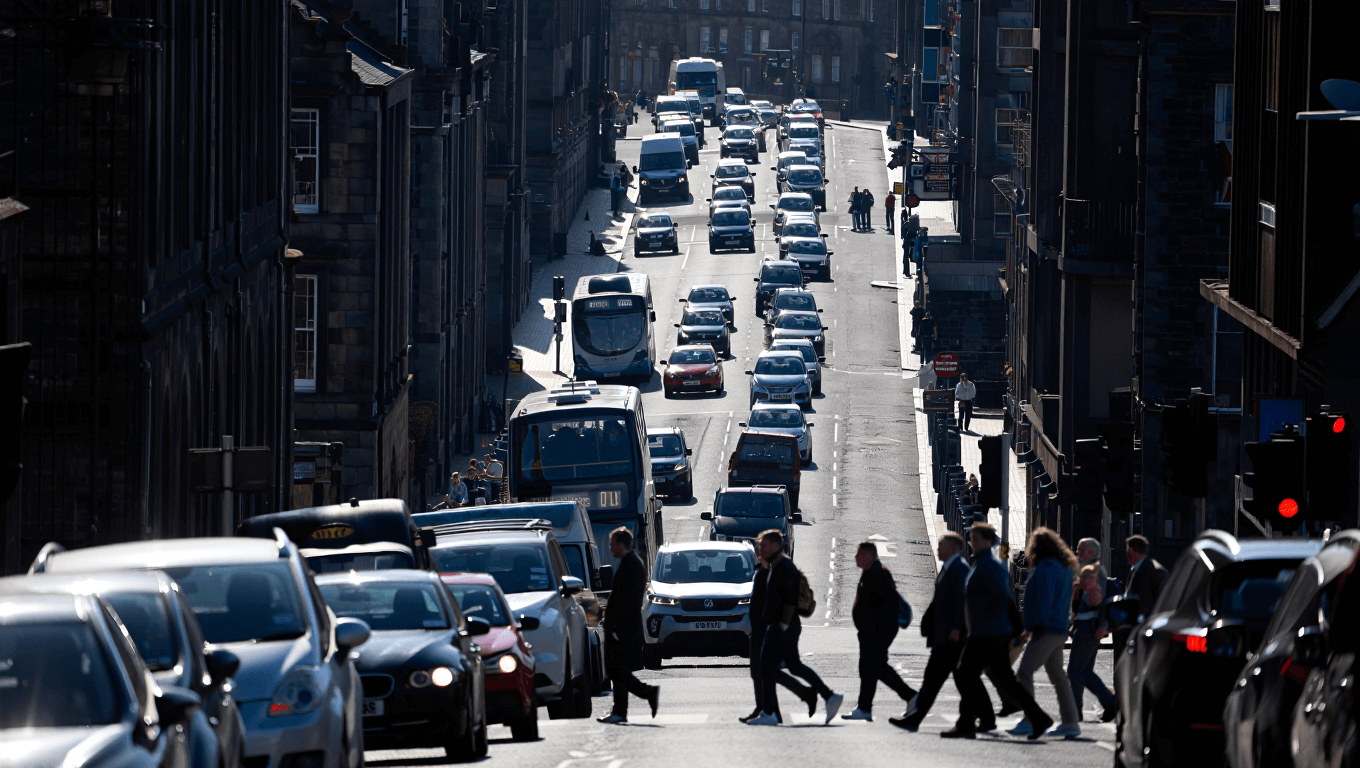
Edinburgh is weighing a new daily road charge aimed at cutting air pollution and easing traffic. The council has opened a consultation on bringing in a congestion toll, sparking debate among politicians, drivers and businesses as the city considers measures beyond its current Low Emission Zone.
What the council is examining and the reasoning behind it
Officials are exploring a scheme that would charge motorists for entering certain parts of the city each day. The move is framed as a way to reduce emissions from petrol and diesel vehicles and to address chronic congestion in busy corridors.
Council leaders say the proposal is part of a wider effort to find “evidence-led” solutions as the city grows. Opponents say a daily levy would hit households already struggling with living costs.
How this links to Edinburgh’s existing Low Emission Zone
Edinburgh already operates a Low Emission Zone (LEZ). The LEZ restricts the most polluting vehicles from entering central areas and enforces compliance through fines.
- Current penalty: £60 for non-compliant vehicles.
- Unpaid fines: Can rise to £120.
Introducing a congestion charge would be a separate policy tool from the LEZ, targeting the volume of traffic rather than only vehicle emissions.
How UK cities already use congestion charges
Several UK cities have adopted or trialled road-user charging to manage traffic and improve air quality.
- London: Longstanding congestion charge covering central zones with camera enforcement.
- Oxford: A more recent scheme, introduced last autumn, levies £5 per day at a number of camera-monitored points.
Proposals in Edinburgh would place it among a small group of UK cities using daily tolls to influence travel choices.
Local political reaction and public concern
Responses from politicians have been sharply divided.
Critics warn of a hidden tax
Some MSPs and councillors argue the scheme risks becoming a stealthy extra charge on drivers. They say a measure rejected by voters in 2005 should not be quietly revived without clear public endorsement.
Supporters call for bold, people-centred solutions
Other councillors point to investments made since 2020 to reduce car dependence. They highlight several initiatives delivered by the council:
- Major active travel projects for walking and cycling.
- A fully electric cycle hire programme.
- A regional partnership to expand electric vehicle charging.
- Rising tram and bus ridership.
Supporters say tackling congestion requires shifting away from a “car-first” mindset and combining incentives with infrastructure changes.
Legal and procedural steps: who decides next
The council is waiting on a regulatory review from Transport Scotland. That assessment will clarify whether Scottish law gives local authorities the power to implement congestion charging.
- Transport Scotland review: Its outcome will determine the legal route for any charge.
- Public consultation: The council has opened talks, but critics want a binding public vote.
- Next stages: Policy design, impact assessments and final approvals would follow any positive legal finding.
Potential effects for drivers and businesses
Introducing a daily toll could change travel patterns across the region. Stakeholders should expect:
- Increased costs for commuters who drive into charge zones.
- Pressure on businesses that rely on road access.
- Potential improvements in air quality and reduced traffic congestion if mode shift occurs.
- Need for exemptions, discounts or mitigation for low-income households and essential services.
At present no final decision has been made. The council frames the consultation as the start of a conversation about how to balance mobility, economy and public health as Edinburgh expands.
Similar Posts:
- Congestion charge hike for London drivers confirmed by Sadiq Khan: starts in 2026
- Sadiq Khan’s Road Charges Could Penalize Key Workers: Support for Popular Vehicles at Risk!
- Parking charges for SUVs and large cars to be voted on in UK city: it’s only fair
- New VAT Fuel Rates Launch May 1: Drivers Face Up to £2,314 in Charges
- Major Milestone: British Motorists to Experience Key Changes on A-Roads and Motorways

Naomi is a clean beauty expert passionate about science-driven skincare and natural remedies. She demystifies ingredients and shares routines that empower readers to glow — naturally.