
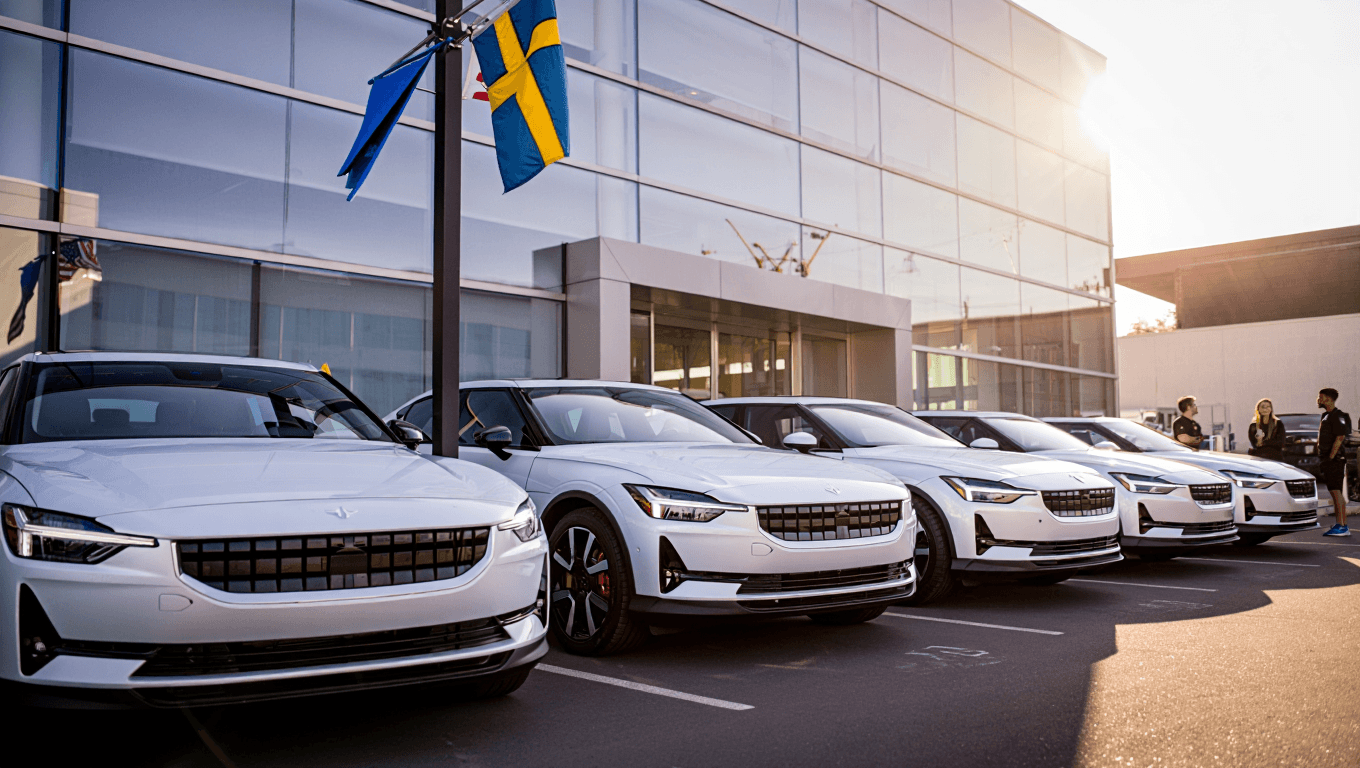
Polestar has revealed a major shift in its global plans after US authorities refused to clear the brand to sell cars in America under new security rules. The Swedish electric carmaker says it will double down on Europe and other regions as it adapts to fresh trade and tech restrictions tied to countries deemed security risks.
Why the United States blocked Polestar sales
The US Department of Commerce’s Bureau of Industry and Security declined to grant Polestar an authorisation to sell vehicles in the United States from 2027. This follows new legislation aimed at cutting tech and vehicle ties to certain foreign powers. The move falls under the Connected Vehicle Security Act and related rules. The ban targets connected systems and devices linked to specific nations.
What the Connected Vehicle Rule actually restricts
The new law imposes wide limits on hardware and software used in vehicles. Key categories affected include:
- Microcomputers and onboard control units
- Bluetooth and Wi‑Fi modules
- Satellite communications systems
- External antennas and certain telematics components
Officials have defined “foreign adversaries” to include China, North Korea, Russia and Iran. The rules focus on where items are made and who has jurisdiction over their production.
Polestar’s strategic response: Europe first
Polestar says Europe will be its primary market going forward. About 80% of the firm’s retail sales already come from European customers. CEO Michael Lohscheller explained the company will lean into regional strengths and manufacture more models in Europe. Polestar intends to scale operations where it can grow without US market access.
Models, manufacturing and what sells where
Polestar outlined upcoming product plans and where they are built.
- Polestar 3: currently built in South Carolina for the US market.
- Polestar 4: manufactured in South Korea, with a second variant due later this year.
- Polestar 7: planned to be produced in Europe as the company expands its lineup.
Despite some models being assembled outside China, the new rules consider the country of origin and jurisdiction over components, not only final assembly.
Timeline of restrictions and future bans
The Commerce Department’s 2026 regulations take immediate effect for certain items and activities. From January 2030, the US will extend bans on the importation, manufacture, sale, resale or movement in interstate commerce of products from specified countries. These staged measures give manufacturers time to alter sourcing and production plans.
Other markets Polestar plans to push into
Polestar has named several regions where it will accelerate investment:
- Southeast Asia
- Eastern Europe
- Latin America
- Canada
The company says it remains committed to supporting existing US customers but will prioritise expansion in markets where trade and supply chains face fewer geopolitical obstacles.
Industry context: how this fits into global auto trends
Congress highlighted that China exports roughly eight million vehicles yearly, about twice the exports of any other nation. That scale helps explain the focus on supply chains and tech links. Automakers now face a growing pressure to regionalise production and secure software and communications systems.
Potential ripple effects for competitors and consumers
The rules may reshape where companies build cars and source electronic parts. Consumers could see different model availability across regions. Competitors with manufacturing bases considered outside the restricted jurisdictions may gain market share in the US. At the same time, producers reliant on contested supply chains must rework designs and suppliers to stay compliant.
What to watch next
Keep an eye on three developments:
- Regulatory clarifications from the Commerce Department on specific components.
- Polestar’s announcements on manufacturing shifts and new market launches.
- Responses from other automakers facing similar export or tech restrictions.
Similar Posts:
- Revolutionary Move: Leading Auto Brand Launches Battery Health Certificates for Pre-Owned EVs
- BYD recalls 115,000 electric cars: battery and design defects raise safety fears
- UK car production plunges again: major brands under intense pressure
- Iconic British car brand makes huge acquisition: automaker hails significant milestone
- Labour Blocks Chinese Car Brands From EV Grants: Beijing Issues Stern Warning

Naomi is a clean beauty expert passionate about science-driven skincare and natural remedies. She demystifies ingredients and shares routines that empower readers to glow — naturally.