
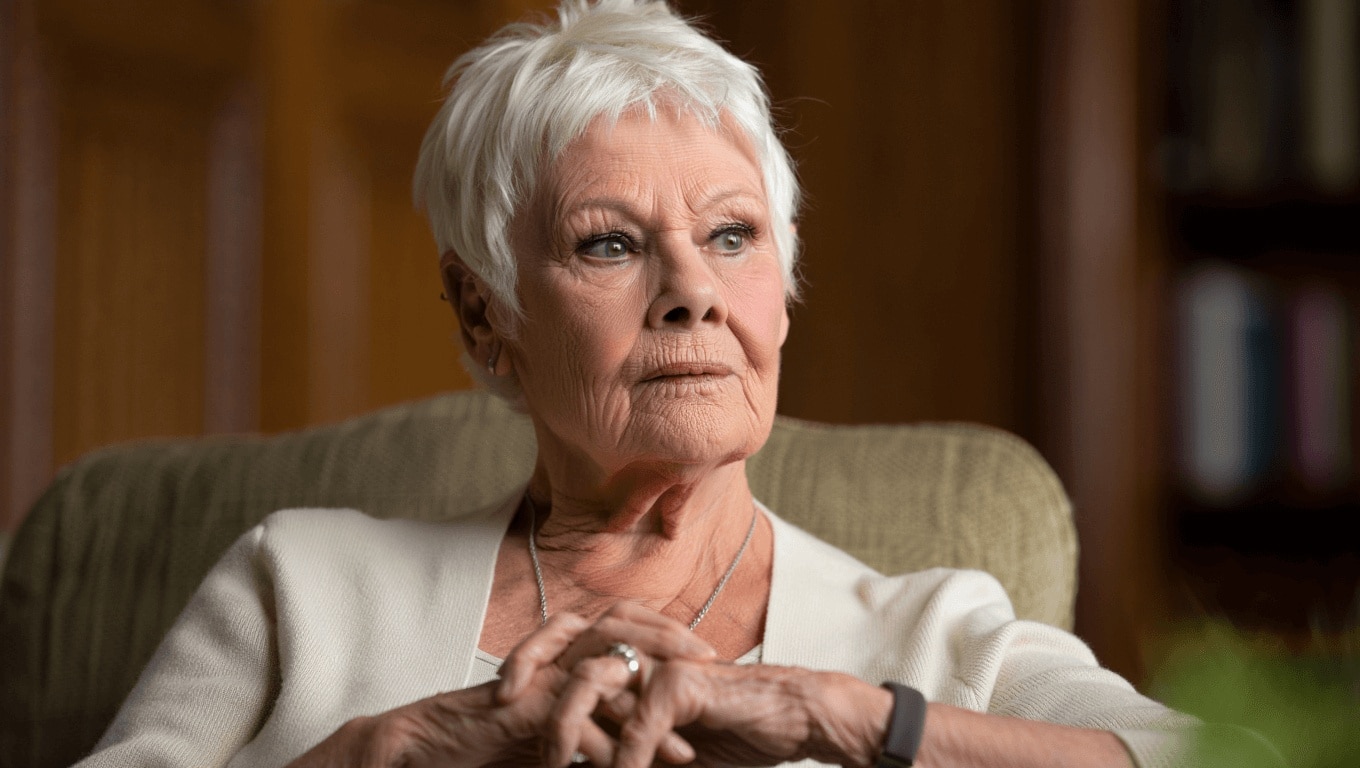
Judi Dench, now 90, has spoken candidly about how progressive vision loss has reshaped her life and work. In a recent interview she described serious difficulties with central sight, saying she can no longer read or watch television and often cannot make out faces. The revelation has drawn attention to the practical and emotional toll of age-related macular degeneration.
Her latest account: what she told ITV and companions on set
Dench confirmed she first disclosed the diagnosis more than a decade ago. In the new ITV conversation she described how blurred central vision has advanced. She said she often sees only shapes and outlines.
Actor Ian McKellen, who joined the interview, stood beside her. Dench explained she could perceive his silhouette and remember a familiar scarf, which helped her identify him.
She emphasized that facial recognition has become unreliable. That loss affects even casual encounters and familiar colleagues.
Everyday life: independence, safety and social moments
The condition has forced changes to daily routines and mobility. Dench has said she now avoids going out unaccompanied.
- Needs a companion for outings to reduce the risk of falls.
- Finds navigation and recognizing people difficult in public.
- Relies on friends and staff for practical support.
Being alone is harder now; she prefers not to risk walking into obstacles. That new reality shapes how she attends events and moves around her home.
How vision loss has impacted her acting career
Dench has long credited her strong memory for learning roles. Yet reading scripts and using written cues have become nearly impossible.
Adaptations for stage and screen
- Relying on friends to recite lines repeatedly.
- Using audio rehearsals and repetition to lock in dialogue.
- Exploring technology that could cue lines and indicate their position on a page.
On television, she spoke about the need for new methods to rehearse. She joked about inventing a device that would both teach her lines and tell her where they are printed.
Medical context: what macular degeneration means
Age-related macular degeneration (AMD) damages central vision while often leaving peripheral sight intact. The condition is common in people over 50 and can make reading, recognizing faces, and watching screens difficult.
AMD does not usually cause total blindness, but it changes how people interact with their world. Early diagnosis, monitoring and support can help manage daily life.
Practical aids, charities and coping tips
Those living with central vision loss often find help through technology and community services.
- Vision charities offering mobility training and counseling.
- Assistive devices: screen readers, large-print materials, and audio books.
- Home modifications to reduce trip hazards and improve lighting.
- Companionship from carers or friends during outings.
Dench has acknowledged the vital role of friends who repeat lines and support her preparations. Public campaigns and charities also raise awareness and provide resources.
Voices around her: friends, fans and fundraising efforts
Colleagues have responded with warmth and humor during interviews. When McKellen teased if she greets strangers as if they were old friends, she laughed and admitted that sometimes she does.
Her openness has highlighted sight-loss charities and generated public sympathy. Events and benefit conversations have helped spotlight practical needs and available services.
Recent public appearances and past disclosures
Dench first revealed issues with her eyesight in 2012, amid speculation and media attention. Since then she has spoken several times about how vision loss affects travel, rehearsals and daily tasks.
In podcast appearances earlier this year she described feeling anxious before events and explained why she no longer goes out alone. She has also taken part in charity discussions to raise awareness of sight loss.
Resources mentioned and places to learn more
Medical organizations and vision charities provide guidance for people with macular degeneration. Information covers diagnosis, treatment options, and assistive services.
- Mayo Clinic and similar institutions outline symptoms and management of AMD.
- Local sight-loss charities offer practical training and emotional support.
- Technology providers create adaptive tools for reading and navigation.
Awareness and early support can improve quality of life. Dench’s candid accounts have helped bring attention to those needs.
Similar Posts:
- Christina Applegate health update: what her MS diagnosis means
- Metformin may prevent age-related vision loss: a possible breakthrough to stop blindness
- GLP-1 Diabetes Drugs May Cause Vision Loss: New Study Links to Macular Degeneration
- Eric Dane dies on 20th anniversary of his Grey’s Anatomy debut as Mark Sloan
- Taye Diggs on losing both parents to cancer: the heartbreak that changed everything

Health advocate and wellness researcher, Dr. Monroe brings clarity to confusing health trends with science-backed advice. Her mission is to help readers live vibrantly, from the inside out.