
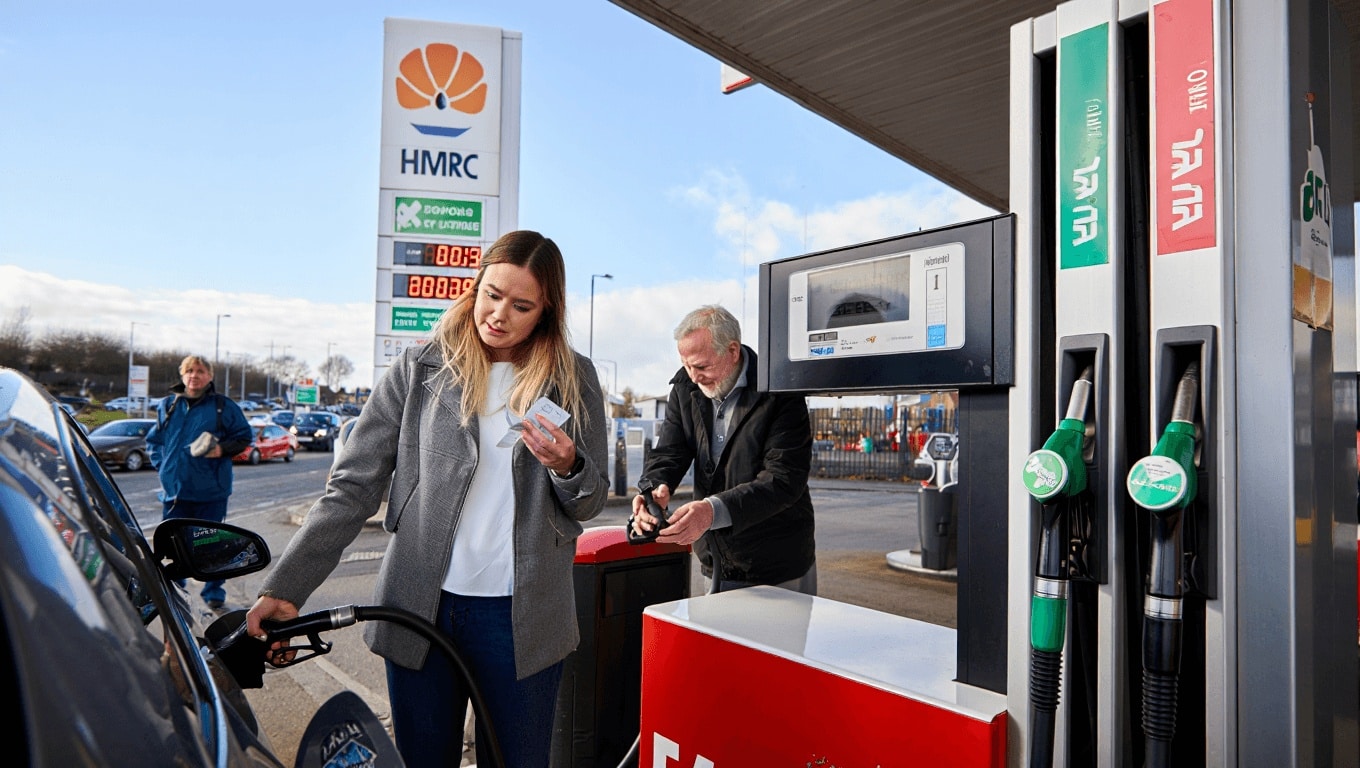
From today, thousands of UK drivers and businesses must factor in updated HMRC figures for VAT on road fuel. The refreshed road fuel scale charges come into force now and will shape how companies declare private fuel use for the next year.
New HMRC VAT road fuel scale charges for 2026–2027
These rates apply from 1 May 2026 until 30 April 2027. HMRC revises these charges annually to reflect changes in costs and emissions. The scale charges are used when a business reclaims VAT on fuel but needs to account for private mileage.
- 120g CO2/km or less — £657
- 125g/km — £983
- 130g/km — £1,051
- 135g/km — £1,114
- 140g/km — £1,182
- 145g/km — £1,245
- 150g/km — £1,314
- 155g/km — £1,377
- 160g/km — £1,445
- 165g/km — £1,508
- 170g/km — £1,576
- 175g/km — £1,640
- 180g/km — £1,708
- 185g/km — £1,771
- 190g/km — £1,839
- 195g/km — £1,902
- 200g/km — £1,971
- 205g/km — £2,034
- 210g/km — £2,102
- 215g/km — £2,165
- 220g/km — £2,233
- 225g/km or more — £2,297
Who needs to use these VAT fuel scale charges?
Any business that reclaims VAT on road fuel but allows private use of a company vehicle must account for that private portion.
- Employers reclaim VAT on fuel used for business.
- When staff or directors use a business vehicle privately, the company must include a fuel scale charge.
- Companies can apply the charge on a monthly, quarterly or annual basis.
How to work out the correct amount for your VAT return
HMRC expects firms to identify the correct CO2 band and then adjust the charge for the portion of the accounting period that covers private fuel use.
- Identify the vehicle’s CO2 emissions figure from its V5C or manufacturer data.
- Select the matching scale charge from the HMRC list above.
- Decide the accounting period you will use: annual, quarterly or monthly.
- Calculate the percentage of that period during which private use occurred.
- Apply that percentage to the scale charge, and include the result on the VAT return.
If CO2 figures are not available
Some older vehicles lack an official CO2 rating. In that case, HMRC allows a fallback using engine size.
- If the engine is 1,400cc or less, use the 140g/km band.
- If the engine is more than 1,400cc but less than 2,000cc, use the 175g/km band.
- If the engine is over 2,000cc, use the 225g/km or higher band.
Practical tips for fleets and sole traders
Small mistakes can lead to incorrect VAT reclaiming. These practical steps help reduce errors.
- Keep vehicle records up to date, including CO2 figures and registration documents.
- Choose a consistent accounting period for ease of reporting.
- Document how you calculated the private-use percentage.
- Consider specialist accounting advice for large fleets.
What to watch for in the coming weeks
Beyond the new scale charges, other motoring and tax developments could affect drivers.
- OEMs report accelerating interest in electric vehicles amid rising fuel costs.
- Traffic and roadworks updates may change driving patterns and business mileage.
- Enforcement activity and roadside checks continue to catch unusual breaches.
Similar Posts:
- New VAT Fuel Rates Launch May 1: Drivers Face Up to £2,314 in Charges
- Driving law changes in May: DVSA rule updates and new HMRC rates explained
- Rachel Reeves’ New Car Tax Plan May Cost Some Drivers £8,000 More: Who Will Be Hit Hardest?
- Drivers hit with new environmental tax on larger vehicles: expect bigger road charges
- Driving law changes in June: new MOT rules, HMRC hikes and DVSA updates

Naomi is a clean beauty expert passionate about science-driven skincare and natural remedies. She demystifies ingredients and shares routines that empower readers to glow — naturally.