

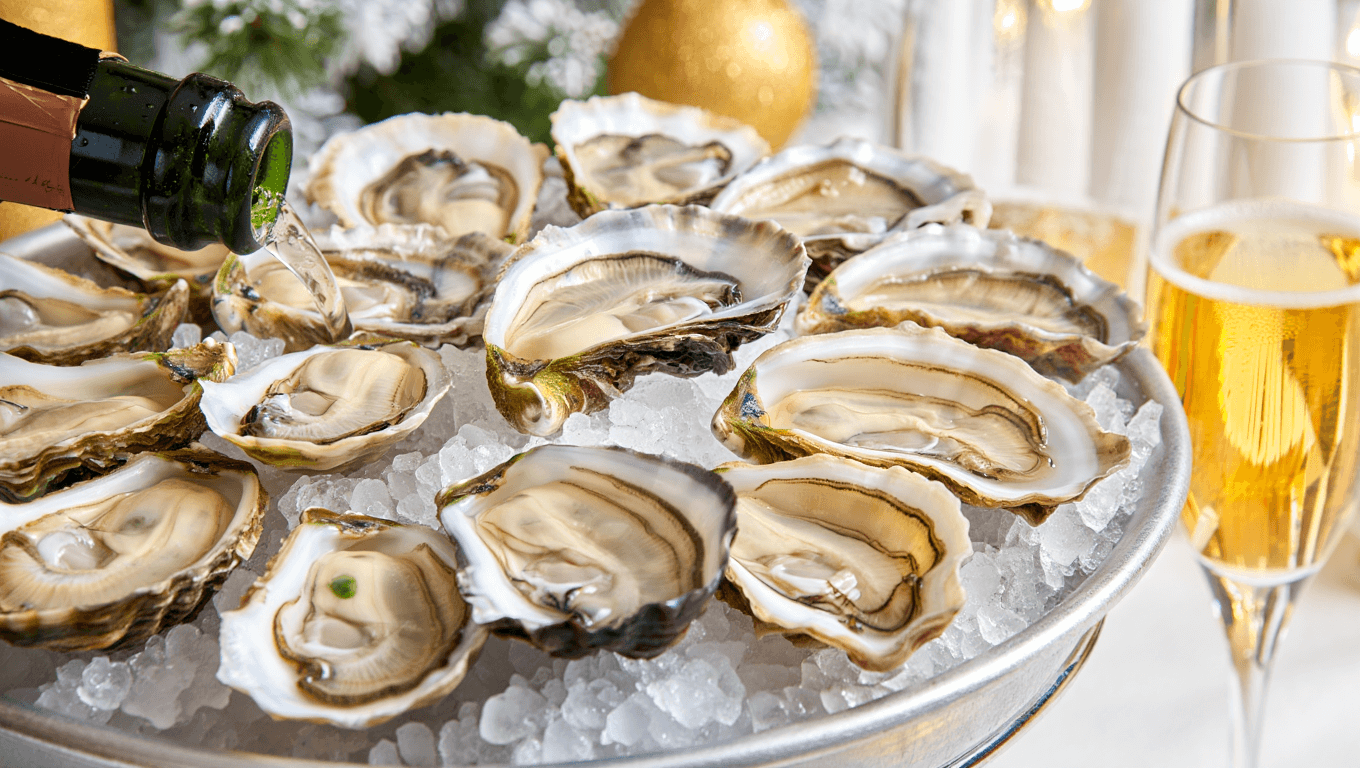
Oysters bring a touch of sea-sparkle to holiday tables, pairing perfectly with champagne and winter evenings. Before you shop, the big question is practical: how many oysters should you order for your festive gathering? Read on for clear, useful rules to plan portions, choose sizes, and deliver a memorable oyster experience.
Portion guide: how many oysters per person for each course
Decide the role oysters play in your menu first. Portions change dramatically between a pre-dinner bite and the main attraction.
- As an aperitif: plan 3–4 oysters per guest. Enough to tease the appetite.
- As a starter: allow 6–9 oysters per person, depending on size and what follows.
- As the main course: expect 12–18 oysters per diner for dedicated lovers.
These ranges are flexible. Match them to your other dishes to avoid waste and disappointment.
How oyster size affects portions and choices
Oysters are sized by calibre numbers. The number system informs both appetite planning and price.
- Small (n°5–n°4): ideal for aperitifs and crowds. You will need more pieces per person.
- Medium (n°3–n°2): a popular balance for starters and mixed menus.
- Large (n°1–n°0): preferred by aficionados and often chosen when oysters are the star.
When you buy, consider grouping sizes. Medium calibres suit mixed company and limit leftovers.
Account for appetite, guests, and menu composition
Guest habits matter as much as size. Some will taste one or two shells; others will eat through a platter.
- For mixed groups, add a cushion of 10–20% extra to your order.
- If you serve roast poultry or heavy mains later, reduce oyster portions.
- For light menus or seafood-focused meals, increase portions to satisfy hungry guests.
Does size change taste? What to expect on the palate
Yes. Size often reflects the oyster’s time in water and its flavor intensity.
- Smaller oysters: tend to be milder and appreciated by many.
- Larger oysters: usually offer stronger, more complex brine and texture.
- Origin matters: different beds yield distinct salinity, creaminess, and minerality.
Choose medium sizes for broad appeal. Pick a mix of origins to give guests tasting variety.
Simple serving ideas and recipes to inspire your menu
Oysters are versatile: raw, lightly dressed, or heated. Keep condiments fresh and minimal.
- Classic: serve raw on ice with lemon wedges and crushed ice.
- Vinaigrettes: offer a trio—shallot-vinegar, raspberry vinegar, and mignonette.
- Fresh twists: oyster tartare with mango or ceviche with lime and ginger.
- Cooked options: bacon-wrapped oysters, oven gratin, or warm buttered varieties.
Tip: Serve good crusty bread and cultured butter to complete the experience.
Practical tips for buying, storing, and shucking oysters
Buying and storage
- Purchase from a trusted fishmonger shortly before your event.
- Keep oysters cold and on a bed of ice. Use within 2–4 days depending on freshness.
- Label different origins to tell guests what they’re tasting.
Opening oysters quickly and safely
- Use a proper oyster knife and a thick glove or towel for protection.
- Insert the blade at the hinge, twist gently, then cut the muscle under the top shell.
- Practice on a few shells ahead of time to get comfortable with the motion.
If you want a fast demo, look for short how-to videos showing a 60-second shucking technique.
Menu pairing and final ordering checklist
Match oyster numbers to your planned sides and beverages for a balanced dinner.
- Estimate portions per person based on course role.
- Add 10–20% extra for enthusiastic eaters.
- Choose sizes to suit the group: small for tastings, medium for general appeal, large for connoisseurs.
- Plan simple condiments and a few cooked options to please varied tastes.
Similar Posts:
- Oysters for Christmas 2025: how to open, store and serve them perfectly
- Christmas starter: readers’ top recipe to wow your guests
- Woman accused of fat shaming after saying she’s fed up with splitting bills with larger friends
- Greggs profits plunge: Britain’s weight-loss jab obsession chokes pastry and cake sales
- McDonald’s Happy Meal gets spooky twist for Halloween: even more magical