
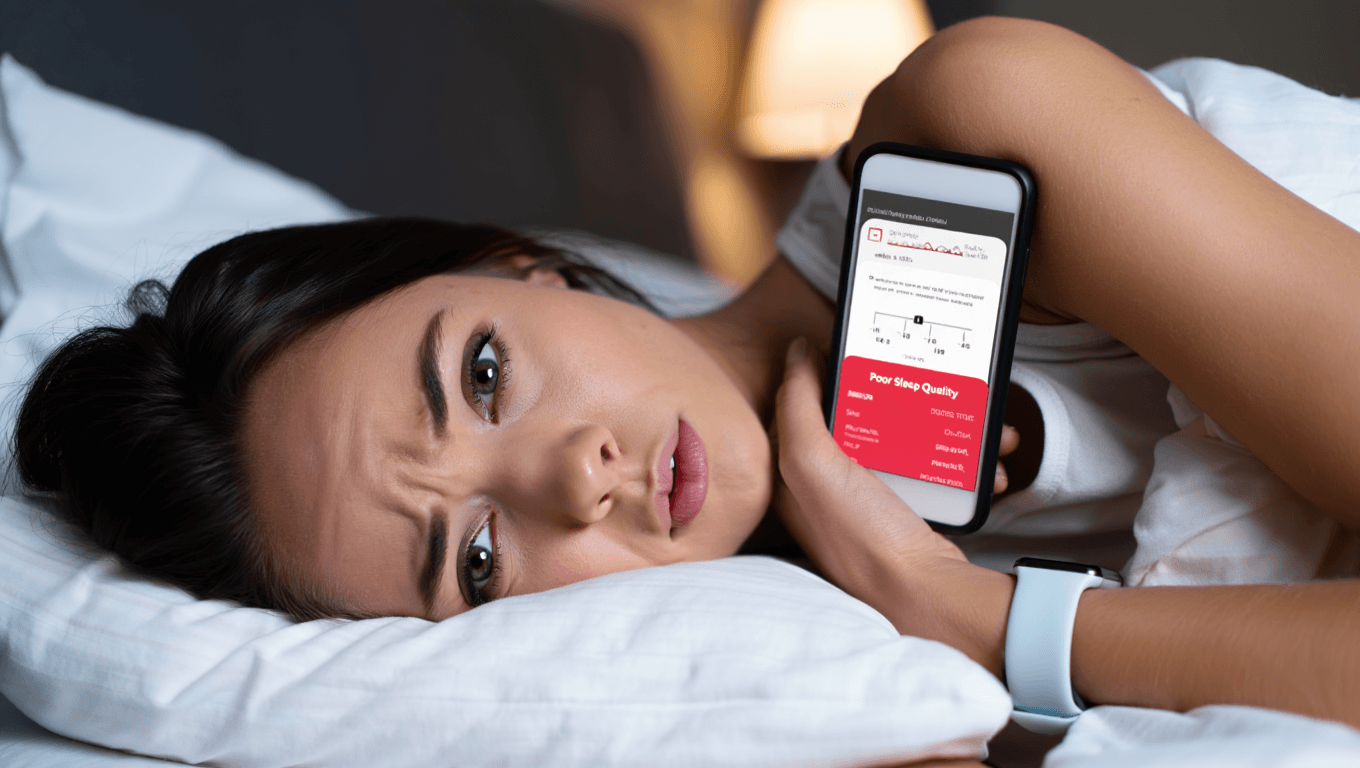
Tracking your sleep with a smartwatch or phone can feel empowering. But for people who struggle to fall or stay asleep, those same devices can add worry, confusion, and a sense of failure that worsens insomnia.
When sleep tracking backfires: the hidden risk for people with insomnia
Many who live with insomnia seek solutions and data. Sleep trackers promise objective answers. Yet the pursuit of nightly metrics can turn into pressure to “perform” better in bed. This pressure may increase wakefulness and make sleep harder to attain. Clinicians and researchers call this phenomenon orthosomnia: an unhealthy obsession with perfect sleep numbers.
How consumer devices actually measure sleep
Most wearables and apps rely on movement, heart rate, and algorithms to infer sleep stages. That approach works well for broad patterns but struggles with fine detail.
Sensors and algorithms: what they capture
- Accelerometers detect motion and can miss quiet wakefulness.
- Heart-rate changes offer clues but are not definitive for sleep stages.
- Machine-learning models fill gaps but vary between brands.
Why accuracy varies
- Consumer devices are tuned for comfort and battery life, not clinical precision.
- Algorithms are trained on limited datasets and may not reflect every sleeper.
- Environmental factors and sleep disorders can skew results.
The gap between data and how you feel
A common source of distress is a mismatch between device reports and personal experience. A tracker may flag fragmented sleep while the sleeper reports feeling rested. Or it may show hours of “light sleep” when the person knows they lay awake for long periods. That mismatch can undermine trust in one’s own sleep cues. It can also fuel repeated checking and nocturnal anxiety.
Why numbers increase sleep anxiety
Sleep is a biological state influenced by mood, stress, and expectations. Tracking can introduce a new variable: performance pressure.
- Nightly scoreboard effect: Seeing a low sleep score can trigger rumination.
- Hyperawareness: Monitoring every minute can make normal awakenings feel catastrophic.
- Feedback loop: Worry about poor metrics leads to more wakefulness, which leads to worse metrics.
Better ways to approach sleep tracking
You don’t need to abandon all tracking. The goal is to avoid short-term fixation and use data to inform healthy choices.
- Track long-term trends rather than nightly scores.
- Limit device checks: review weekly reports, not hourly updates.
- Turn off sleep notifications and detailed breakdowns that trigger worry.
- Use a simple sleep diary to record bedtime, wake time, and daytime function.
- Prioritize sleep habits: consistent schedule, light control, and caffeine limits.
When to choose clinical evaluation over self-monitoring
If tracking worsens anxiety or you see no improvement, seek professional care. A sleep specialist can offer assessment techniques that devices cannot.
- Polysomnography and actigraphy provide clinical-grade measurement.
- Cognitive Behavioral Therapy for Insomnia (CBT-I) is the first-line treatment for chronic insomnia.
- Clinicians help interpret objective data within the context of symptoms.
Practical tips to reduce tracking harm tonight
- Set your tracker to record passively and hide scores on wake.
- Give yourself a “no data” period for a few nights to reset anxiety.
- Focus on daytime functioning as the best indicator of sleep quality.
- Share data with a clinician only when it helps guide treatment.
How to use technology without becoming dependent on it
Technology can be a tool, not a test. Combine gentle self-monitoring with proven behavioral habits. If numbers provoke worry, step back and prioritize rest over metrics. Sleep health improves more often when people reduce pressure, not increase it.
Similar Posts:
- Sleep position can affect heart health and metabolism: what to change
- Coffee: 2-3 cups a day could slash stress and boost mental health
- Oura Ring 5: smarter health and fitness tracking with powerful new sensors
- Menopause linked to spike in new mental health issues: study finds
- Cannabis Improves Sleep for Insomnia Sufferers: New Study Reveals Benefits

Cole is a passionate vegan dessert artist with a knack for turning indulgent classics into plant-based masterpieces. His sweet creations are where flavor meets conscious living.