
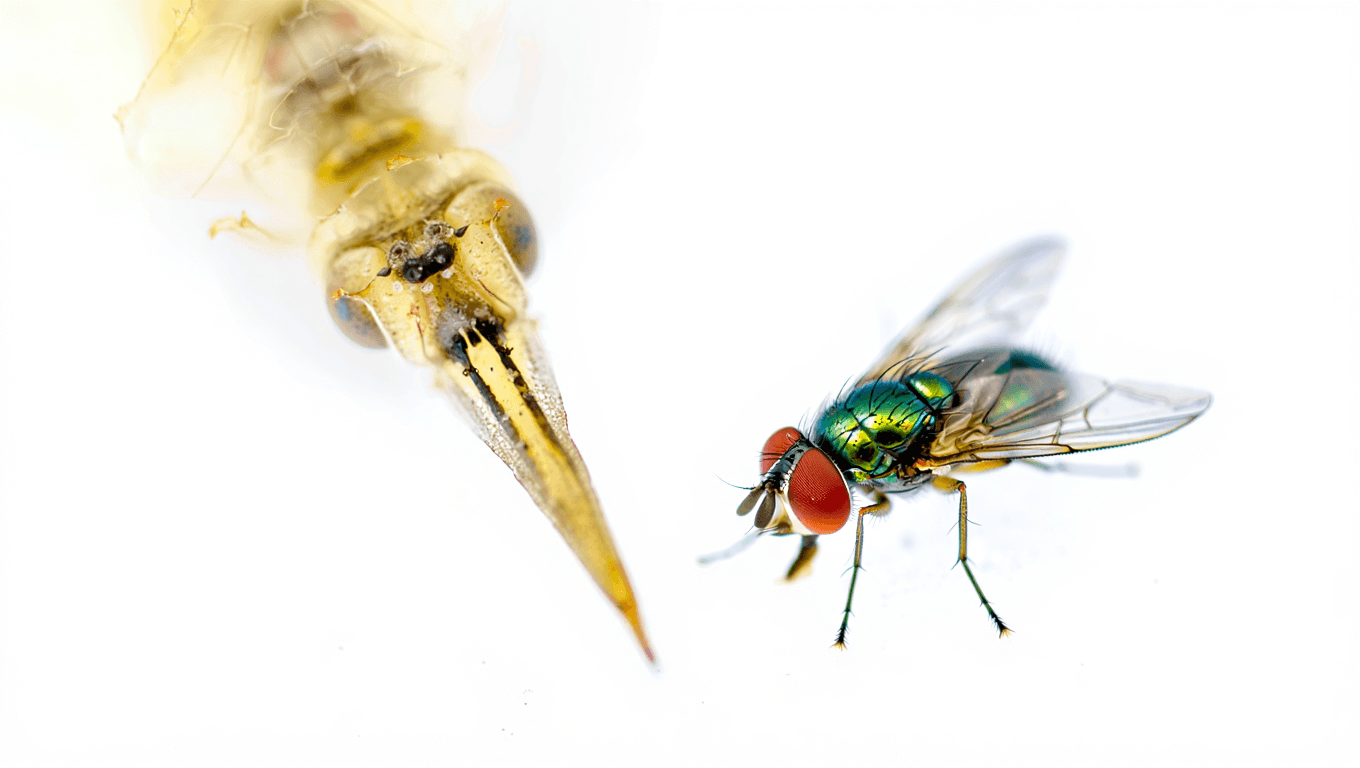
Health officials are raising alarms after renewed attention to the New World screwworm, a parasitic fly whose larvae consume living flesh. The Centers for Disease Control and Prevention (CDC) warns this insect poses a direct threat to animals and, in rare cases, humans. Experts urge awareness, quick action, and strict wound care to limit harm and curb spread.
Understanding the New World screwworm and why it matters
The New World screwworm is a species of fly whose larvae burrow into living tissue. Its scientific name is Cochliomyia hominivorax. Unlike many other maggots, these larvae feed on healthy flesh.
This behavior makes infestations particularly severe for livestock, pets, and vulnerable people. Left untreated, an infestation can cause deep wounds, secondary infections, and serious tissue damage.
How screwworms attack and their life cycle
- Adult flies lay eggs on open wounds, scars, or body orifices.
- Eggs hatch quickly into larvae that immediately begin feeding on living tissue.
- Larvae grow through several stages over days, then drop to the ground to pupate.
- New adults emerge to continue the cycle and find more hosts.
Warm climates speed up the cycle. Areas with many livestock are at higher risk.
Recognizing infestation: symptoms and signs
Early detection improves outcomes. Look for these warning signs:
- Fresh or enlarging wounds that worsen despite care.
- Visible larvae or movement in a wound.
- Foul odor or heavy discharge from a wound.
- Animals showing pain, reluctance to move, or reduced appetite.
- Fever or systemic signs in more severe cases.
Any visible maggots in a wound should prompt immediate veterinary or medical attention.
Where screwworms are found and the public health risk
The New World screwworm is native to parts of the Americas. Past eradication programs reduced its range dramatically. Still, sporadic detections or outbreaks can occur.
When cases appear, the impact is economic and medical. Infestations can devastate herds and burden veterinarians and public health systems. Swift containment is essential to prevent spread.
Prevention steps for farmers, pet owners, and travelers
- Inspect animals daily, especially after transport or veterinary procedures.
- Keep wounds clean and covered until healed.
- Use insect-proof housing and fly control around livestock.
- Report unusual clusters of wounds or maggots to local authorities.
- Travelers should avoid close contact with stray animals in affected areas.
Treatment options and immediate actions
What to do if you suspect an infestation
- Do not attempt prolonged home removal of larvae without guidance.
- Seek veterinary care for animals and medical care for humans promptly.
- Treatment often includes manual removal, wound cleaning, and antibiotics.
- In some cases, surgical debridement or topical agents are required.
Prompt professional treatment reduces tissue loss and complications.
How authorities respond and control methods
Public health and agricultural agencies use surveillance and rapid response to limit outbreaks. Control tools include increased inspection, quarantine, and targeted insect control.
One proven tactic is the sterile insect technique. Releasing sterilized male flies can suppress populations over time. Coordinated efforts between veterinarians and public health teams are crucial.
Guidance from the CDC and when to report cases
The CDC emphasizes awareness, early detection, and reporting. Suspected human or animal cases should be reported to local health departments or veterinary services without delay.
Timely reporting helps trigger containment and protects communities and agriculture from wider impact.
Similar Posts:
- Why eating a fig means you’re also consuming a wasp without realizing it
- This common kitchen ingredient is a powerful natural insecticide
- Nipah virus outbreak: officials warn deadly disease has no cure
- Tesco and Asda milk pulled from shelves: regulator warns shoppers may have reactions
- Barracuda bites 13-year-old in Turks and Caicos: teen recalls seeing blood everywhere

Health advocate and wellness researcher, Dr. Monroe brings clarity to confusing health trends with science-backed advice. Her mission is to help readers live vibrantly, from the inside out.