

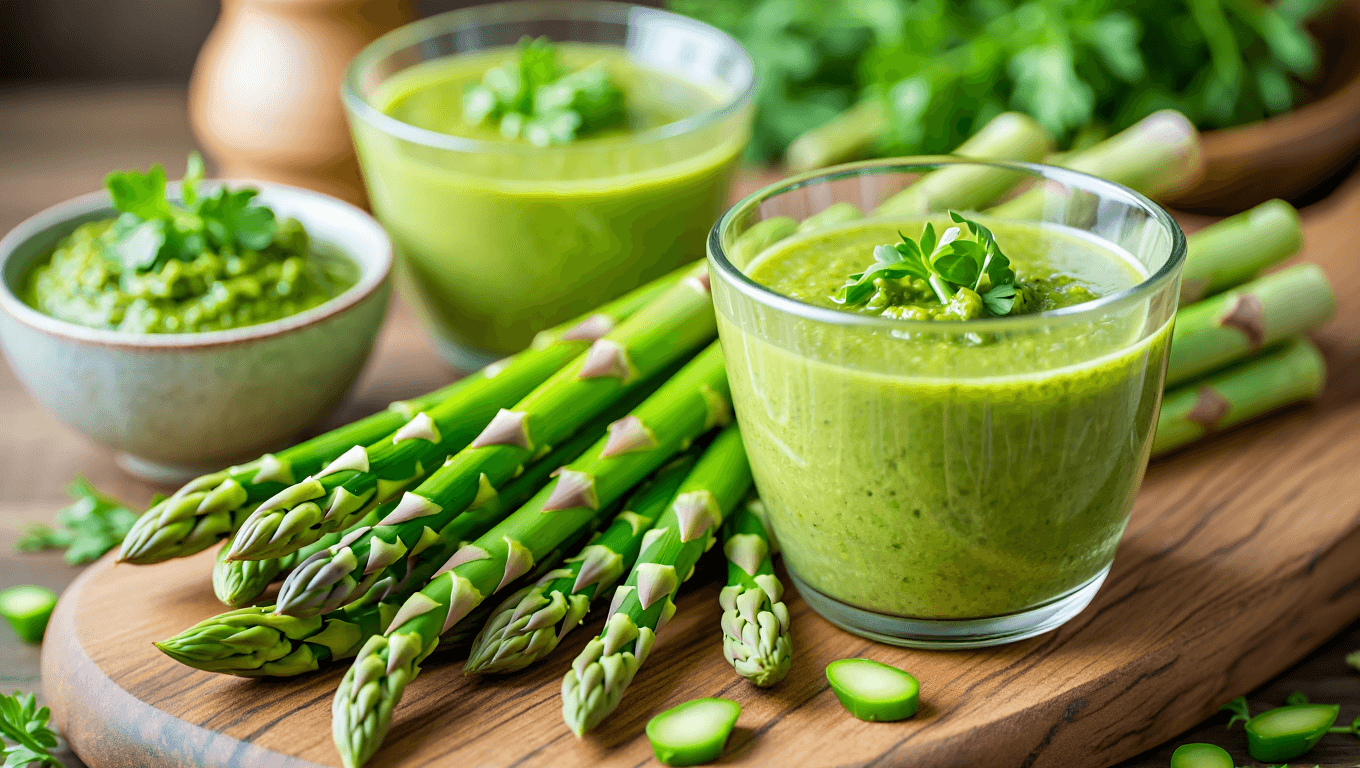
Asparagus stalks are a springtime treat — but those fibrous ends often end up in the bin. Before you toss them, consider simple ways to turn these leftovers into flavorful sauces, soups, spreads, and bakes. Here are practical, tasty ideas to make every part of the asparagus count.
Asparagus-Infused Sauces: Turn Ends into a Creamy Dressing
Boiled asparagus stems make an excellent base for silky sauces. They bring color and vegetal flavor to dressings, béchamels, and pestos.
Basic method
- Trim and wash the stems. Cut into small pieces.
- Boil in salted water until soft. Reserve some cooking liquid.
- Blend with an immersion blender until smooth.
- Pass the puree through a fine sieve for a refined texture.
Tip: Save the strained liquid to adjust consistency or to use as a light stock.
Flavor variations to try
- Salad-style sauce: add crème fraîche, chopped shallot, lemon zest, and chives.
- Béchamel twist: fold the puree into a classic white sauce for lasagna or gratins.
- Asparagus pesto: blend with basil, olive oil, grated cheese, and crushed pistachios.
Chilled Asparagus Soup for Spring Menus
A cold asparagus soup is fresh, elegant, and a clever use of extra stems. It works as a starter or a light lunch.
Quick recipe outline
- Simmer asparagus stems in water or vegetable stock until tender.
- If stems are few, add a potato for body and creaminess.
- Blend until smooth. Pass through a sieve for a velvety finish.
- Stir in a dash of cream or yogurt to taste. Chill before serving.
Garnish ideas:
- Drizzle basil oil or good olive oil.
- Add fresh herbs such as tarragon or chives.
- Scatter small cubes of preserved lemon or crispy prosciutto.
Serving note: A well-strained chilled soup highlights the delicate asparagus flavor and reads beautifully on a spring menu.
Colorful Appetizer Spreads Made from Asparagus Ends
Replace standard dips with a bright asparagus spread. It’s ideal for crudités, toast, or crackers.
How to make it
- Cook the stems until very tender, then purée and pass through a sieve.
- Fold into cream cheese, ricotta, or labneh for a creamy base.
- Season with mint, lemon, salt, and pepper.
Add texture with any of the following:
- Small cucumber dice.
- Chopped hard-boiled egg.
- Minced cornichons for a sharp note.
Waste-free tip: The same purée can be portioned and frozen in ice-cube trays for future snacks.
Savory Flans and Tarts: Enrich Bakes with Asparagus Puree
Pureed asparagus stems bring moisture and a vibrant color to quiches, flans, and savory pies.
Simple flan idea
- Mix strained asparagus purée with beaten eggs and a splash of cream.
- Season with salt, pepper, and grated cheese.
- Pour into ramekins or a tart shell and bake until just set.
Use the same base in a savory tart by adding sautéed aromatics and grated hard cheese before baking.
Why it works: The purée acts as both flavor and binder, keeping the bake moist while stretching expensive asparagus further.
Practical Prep and Storage Tips for Asparagus Ends
Maximize flavor and shelf life by handling ends correctly.
- Trim only what you need before cooking. Keep usable stems for recipes.
- Boil stems in lightly salted water; save the liquid for stocks and sauces.
- Cool cooked stems quickly and freeze portions of purée in airtight containers.
- Label frozen portions with date. Use within three months for best taste.
Kitchen hack: Roast thicker ends before blending to add a nutty, caramelized note to sauces and spreads.
Similar Posts:
- Baked eggs with asparagus: Laurent Mariotte’s quick childhood recipe
- Vegetarian carbonara like in Italy: make the authentic recipe at home
- Irresistible Blueberry Cheesecake Cake: Try This Decadent Dessert Today!
- Stéphanie Le Quellec pasta recipe: simple, effective and smells like spring
- Carrot and parmesan soup after Christmas: the light recipe you need