
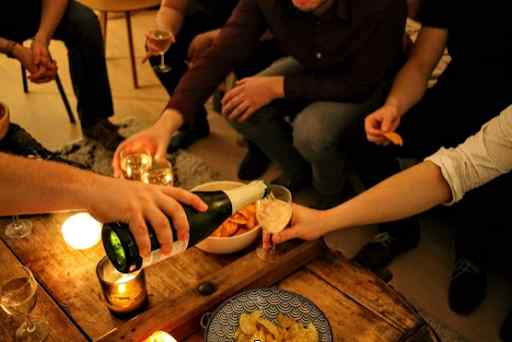
The classic dinner party once came with a fairly intimidating set of expectations. There was a carefully planned menu, a properly laid table, several courses and the slightly stressful question of whether everything would be ready at exactly the right moment. Hosting could be wonderful, but it could also leave the person responsible for dinner spending half the evening in the kitchen.
A more relaxed version of entertaining has gradually taken its place. Friends still gather around food, but the structure is looser and the evening is more likely to move naturally between eating, talking, music and games. That approach fits particularly well with the philosophy already found on Knead to Cook, which has previously recommended informal ideas including large charcuterie boards paired with wine rather than insisting that every gathering needs a complete formal menu. The result is a dinner party that feels less staged and considerably easier to enjoy, for the host as well as the guests.
Start With Food That Does Not Need Constant Attention
One of the easiest ways to make hosting stressful is to choose a menu that requires perfect timing. If several dishes need last minute cooking, the host inevitably spends the most social part of the evening checking ovens, stirring pans and calculating whether everything will reach the table at the right temperature.
A better approach is to choose food that tolerates a little flexibility. Boards of cheeses, vegetables, breads and dips can be assembled before guests arrive, while tarts, salads, roasted vegetables and other dishes can often be prepared largely in advance. Knead to Cook has long featured recipes and entertaining ideas that lend themselves to this style, including informal charcuterie arrangements where guests can help themselves rather than waiting for individually plated courses.
Dessert can follow the same rule. Something that can sit comfortably until people are ready for it is usually more useful than a technically impressive finale that forces everyone to eat at a particular moment.
Let the Entertainment Develop Naturally
A relaxed dinner does not need a scheduled programme once the plates are cleared. Some groups will happily talk for several hours, while others naturally drift towards music, cards, a trivia game or something on television. The useful thing is simply to have a few options available without making anyone feel that participation is compulsory.
Digital entertainment can sit alongside more traditional games, particularly when the gathering consists entirely of adults. Someone might put on a shared playlist, another person may start a party game on a phone, while adults who already enjoy regulated casino entertainment can visit mrq during a quieter part of the evening. MrQ currently offers slots and casino games, including live dealer content, and describes itself as a UK Gambling Commission licensed casino with responsible gambling tools including deposit limits and time off features.
The important thing is not to turn the evening into a series of organised activities. Entertainment works best when it fills natural gaps rather than competing with the conversation. If everyone is still happily sitting around the table an hour after dinner, there is no reason to interrupt simply because another activity was planned.
Serving Platters Can Change the Mood of the Table
The move away from formal entertaining is not just a social media trend. Food & Wine recently highlighted Ina Garten’s advice for stress free hosting, including preparing as much as possible in advance and serving food on platters so guests can help themselves rather than relying on individually arranged plates. Garten’s approach is designed to reduce work for the host while making the meal feel more communal.
That small change can alter the entire atmosphere. Passing a platter around naturally encourages conversation and lets people decide how much they want. It also removes the pressure to make every plate look identical, which is usually one of the least enjoyable parts of feeding a larger group.
Food & Wine has made a similar argument more broadly, suggesting that memorable hospitality is less about creating a perfect tablescape and more about the people gathered around it. That is a useful principle for anyone who finds the idea of hosting appealing but the performance surrounding it exhausting.
Not Everything Has to Be Homemade
Another tradition worth abandoning is the idea that a good host must personally prepare every element of the meal. Guests rarely care whether the bread came from an excellent bakery or whether every dip was made from scratch. They care far more about whether the food tastes good and whether the host actually has time to sit down with them.
Mixing homemade and purchased food can therefore be a sensible strategy. Cook the dishes you genuinely enjoy making, then outsource the parts that create unnecessary work. A good loaf, interesting olives, prepared desserts or a favourite takeaway side can sit comfortably beside something cooked from scratch.
This approach also gives the host more room to focus on one or two standout dishes. Instead of attempting eight complicated recipes, it is often better to make one excellent main course and surround it with easy accompaniments. Food & Wine’s recent collection of low effort dinner party recipes follows much the same philosophy, focusing on dishes requiring relatively little active cooking time.
Drinks Work Better When Guests Have Choices

A formal wine pairing can be wonderful, but it is hardly necessary for every gathering. A small selection usually works better because guests can choose what they actually want rather than feeling obliged to drink whatever has been designated for a particular course.
Wine, sparkling water and one interesting alcohol free option can cover most preferences without turning the kitchen counter into a cocktail bar. If cocktails are part of the plan, choose one that can be prepared in batches rather than making a different drink every few minutes.
The same principle applies to coffee and after dinner drinks. Put the options somewhere accessible and allow the evening to continue at its own pace. The less the host has to keep stopping the conversation to provide individual service, the more relaxed everyone tends to become.
The Table Does Not Need to Look Perfect
A beautiful table can certainly make dinner feel special, but it does not need to resemble a styled photograph. Mixed glasses, mismatched plates and a handful of candles can create considerably more personality than a perfectly coordinated setting.
Again, simplicity is becoming part of contemporary hosting advice. Food & Wine’s recent coverage of Ina Garten recommends keeping table settings uncomplicated, with simple serveware and a restrained approach to decoration rather than filling the table with elaborate details.
It also leaves more room for the food. Large shared dishes are difficult to accommodate when flowers, ornaments and decorative objects occupy half the table. A little visual breathing room makes serving easier and keeps attention where it belongs.
Give People Permission to Stay Put
Older dinner party etiquette sometimes created a clear sequence. Drinks happened in one place, dinner somewhere else and coffee perhaps in another room. Modern gatherings do not need to move quite so efficiently.
If everyone is comfortable at the table, stay there. If the sofa becomes more appealing after dessert, take the conversation with you. The evening should follow the people rather than forcing the people to follow the evening.
This is also where smaller groups often have an advantage. Six people gathered around a kitchen table can create an atmosphere that would be difficult to reproduce in a larger, more carefully orchestrated event. There is time for everyone to speak, food can be passed around easily and nobody has to behave as though they are attending something formal.
A Successful Dinner Party Should Feel Easy Once It Starts
Preparation still matters. Shopping ahead, setting out serving dishes and choosing recipes that can be finished early will make the evening run more smoothly. What has changed is the idea that guests need to see evidence of all that preparation.
The best modern dinner parties often feel almost effortless from the outside. Food appears when people are hungry, drinks are easy to find and entertainment develops only if the group wants it. There is no need to keep pushing the evening towards its next scheduled stage.
That may be the biggest improvement in the less formal dinner party. Hosting stops being a performance and becomes what it was supposed to be in the first place, an excuse to bring people together, feed them well and leave enough space for the evening to become whatever everyone is enjoying most.
Similar Posts:
- After dinner at a friend’s house, she receives a surprising and funny request
- Mediterranean pre-dinner habit cuts meal calories by 10%: dietitian
- Meat for Christmas dinner: pick the perfect cut
- Lose 10 kilos before Christmas: a nutritionist’s method without dieting
- Sorrento’s Hotel Bellevue Syrene: A Timeless Hospitality Gem Between Sky and Sea

Naomi is a clean beauty expert passionate about science-driven skincare and natural remedies. She demystifies ingredients and shares routines that empower readers to glow — naturally.