

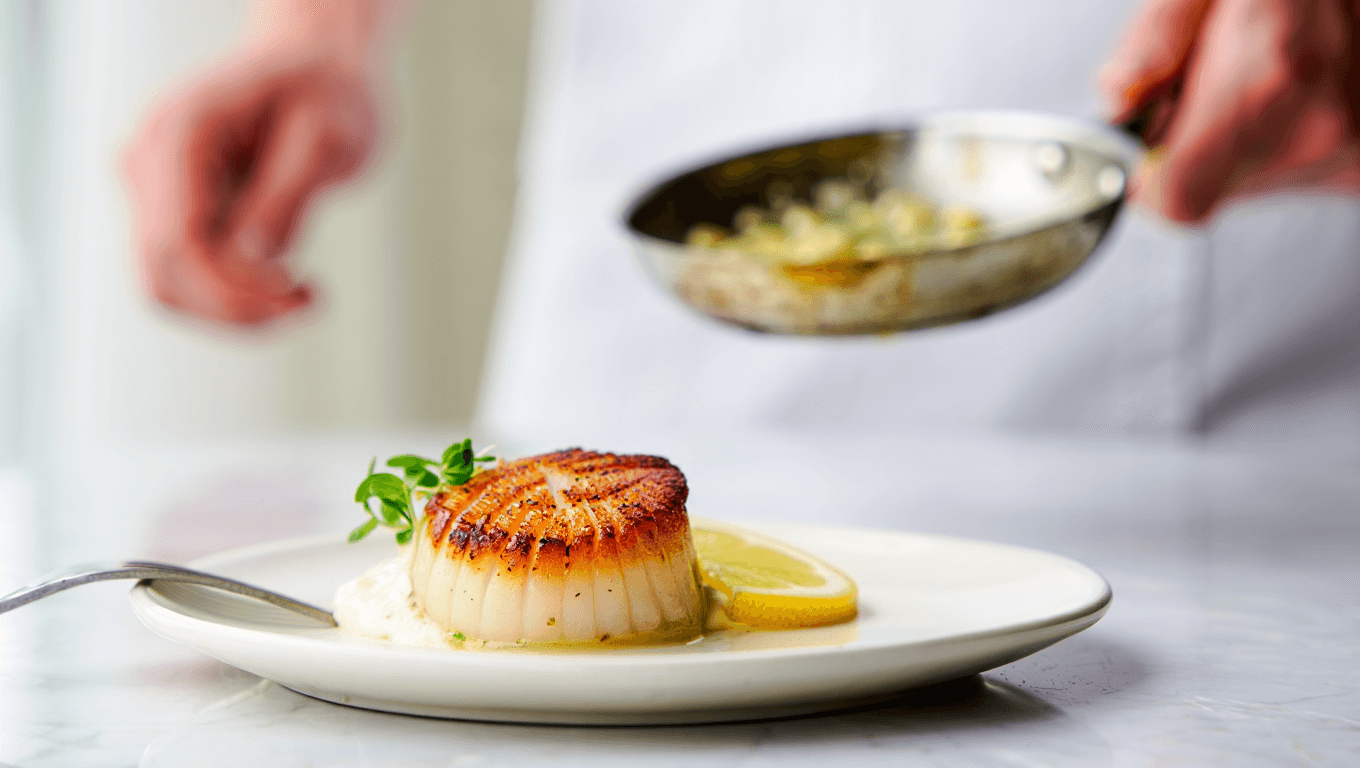
Scallops, known in French as coquilles Saint-Jacques, are a festive favorite that can elevate a holiday table. Their tender flesh and mild sweetness lend themselves to simple preparations and rich sauces. Below you’ll find practical tips and step-by-step methods to cook scallops perfectly for Christmas, New Year’s, or any special dinner.
Picking the best scallops: freshness and value tips
Start with the right scallops to guarantee flavor. Where you buy them changes everything.
- Buy from a trusted fishmonger or reputable market stall.
- Look for shells or shucked scallops with a pearly, slightly translucent color.
- Avoid scallops that look dry, chalky, or discolored.
- Whole shells often mean better freshness and can be opened at home for savings.
- If buying frozen, check packaging date and opt for vacuum-sealed packs.
Tip: You can freeze fresh scallops safely if you don’t plan to cook them right away.
Preparing scallops before cooking: cleaning and drying
Preparation is key to a perfect sear and a clean, fresh taste.
- Bring scallops to refrigerator temperature before cooking to promote even doneness.
- Rinse quickly under cold water to remove sand and grit.
- Pat dry thoroughly with paper towels; moisture prevents browning.
- If frozen, thaw in the fridge for several hours or overnight.
- After thawing, blot again to remove excess liquid for better texture.
Note: Dry scallops caramelize faster and develop a better crust when seared.
Pan-searing scallops: technique for a golden crust
Pan-searing is the most popular method for achieving a caramelized exterior and tender center.
- Use a large nonstick or heavy-bottomed skillet so scallops don’t crowd.
- Heat neutral oil, such as grapeseed or light olive oil, until shimmering but not smoking.
- Season with salt and pepper just before cooking.
- Place scallops flat side down and leave undisturbed for 1–2 minutes per side.
- Add a knob of butter at the end, spooning it over the scallops for flavor.
Key goal: a deep golden color outside and a slightly translucent center. Overcooking makes scallops tough.
Baking and roasting: cook larger batches with ease
Oven cooking suits larger parties and gives consistent results.
- Preheat oven to 210–220°C (410–430°F) for quick, high-heat roasting.
- Place scallops on a lightly oiled tray or parchment paper in a single layer.
- Season simply with salt, pepper, and a drizzle of oil or a small dot of butter.
- Roast for about 5–8 minutes, depending on thickness, until flesh is opaque.
Pro tip: Finish under a hot broiler for 30–60 seconds to enhance browning.
Steaming scallops: gentle cooking for delicate flavor
Steaming preserves moisture and highlights scallop sweetness.
- Bring a pot of water to a simmer in a steamer setup.
- Place scallops in the steamer basket with space between each piece.
- Steam for about 3–4 minutes until scallops are opaque and slightly firm.
- Season after cooking to retain their subtle flavor.
Best for: light preparations with citrus, herbs, or a simple vinaigrette.
Papillote cooking: trapping juices and aromas
Cooking scallops in parchment seals in flavor and makes an elegant single-portion presentation.
- Cut parchment into generous squares for each portion.
- Season scallops and add aromatics: herbs, thin garlic slices, lemon zest, or a splash of white wine.
- Add a small pat of butter or a drizzle of oil to enrich the cooking juices.
- Fold and seal parcels tightly, place on a tray, and bake at 200°C (392°F) for 10–15 minutes.
- Open carefully to release steam just before serving.
Serving idea: Serve each guest their own parcel for a dramatic reveal.
Using a Thermomix: steam mode for consistent results
The Thermomix simplifies steaming while freeing up stovetop space.
- Place seasoned scallops in the Varoma tray, without stacking.
- Fill the mixing bowl with water to the 1-liter mark.
- Set Varoma temperature, speed 1, for about 10 minutes.
- Check doneness: scallops should be opaque and slightly firm.
Remember: Adjust time for thicker scallops to avoid overcooking.
Cooking scallops with a Companion: quick steam program
The Companion robot steamer offers a straightforward hands-off method.
- Place scallops in the steam basket, spaced to allow steam circulation.
- Add water to the main bowl, position the basket, and close the lid.
- Select Program P1 and set around 10 minutes.
- Verify texture; scallops should be opaque and springy.
Tip: Shorten or lengthen the program based on scallop thickness.
Cookeo method: rapid searing then gentle finish
Cookeo can sear and finish scallops quickly, useful for busy cooks.
- Season scallops and choose the “Brown” or “Sear” mode.
- Heat a splash of oil and sear scallops 1–2 minutes per side.
- If needed, finish with a brief pressure or steam cycle, but avoid long cooks.
Warning: Overcooking in multicookers easily hardens scallops; watch the time.
Presentation and pairing ideas for festive menus
How scallops are served can make your dish memorable.
- Pair with citrus elements like yuzu, lemon, or orange for brightness.
- Butter-based sauces, beurre blanc, or light cream sauces complement richness.
- Serve on a bed of purée—celeriac, cauliflower, or parsnip work well.
- Garnish with microgreens, chives, or a few drops of good olive oil.
- Light white wines or Champagne highlight scallop sweetness at the table.
Cooking essentials: freshness, tight timing, and careful drying are the pillars of success.
Similar Posts:
- Scallops for Christmas: cooking, opening, sides to nail them
- Scallops: 8 festive starter recipes to wow at Christmas
- Microwave salmon: quick, foolproof way to cook perfect fillets
- Asparagus cooking mistakes that ruin the taste – and how to avoid them
- Baked eggs with asparagus: Laurent Mariotte’s quick childhood recipe