

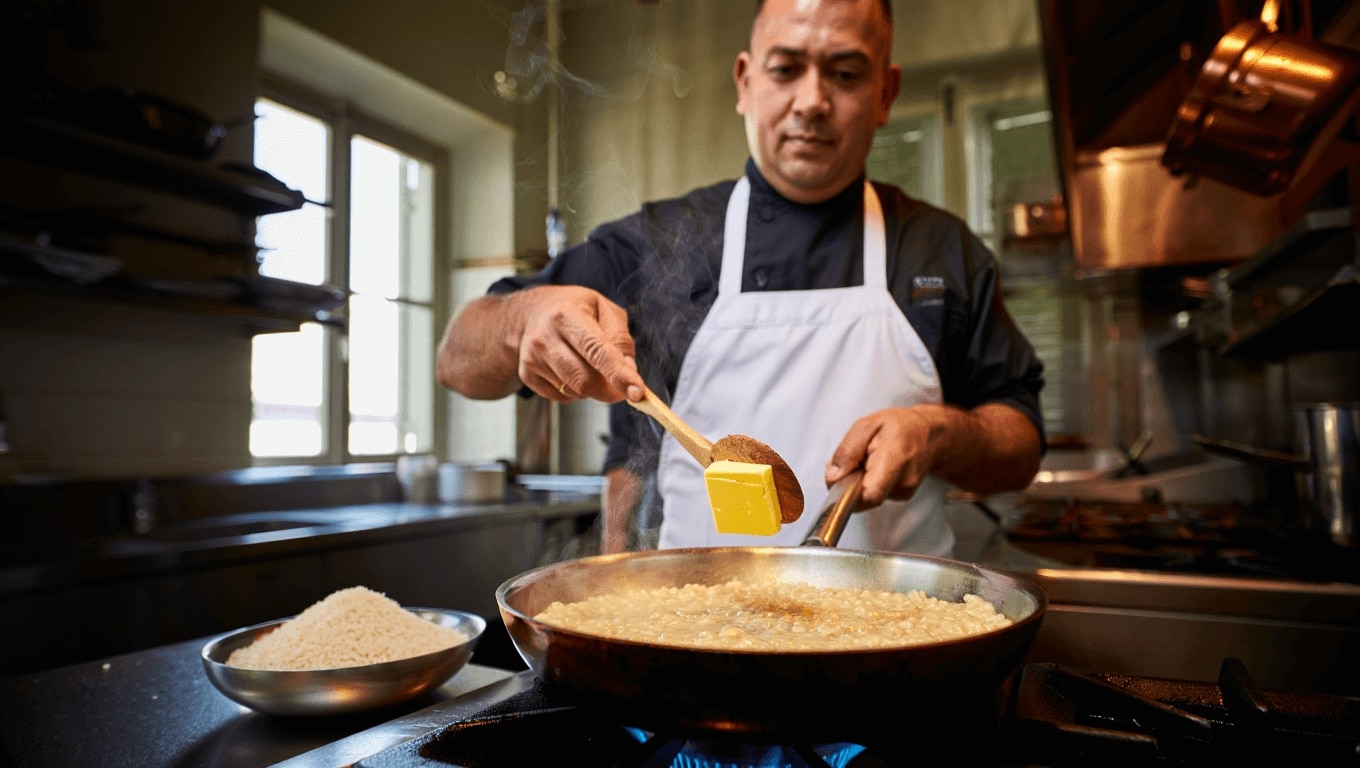
Chef Toni Muzi strips risotto down to a few precise moves that change everything: the right rice, a little dry heat, an onion-scented butter made apart, and a careful finish. His approach reads like a lesson in restraint and technique. Followed closely, it produces a risotto with a deep, rounded flavor and a silk-like creaminess.
Why Carnaroli rice is the go-to for a perfect risotto
For Toni, the foundation is simple: choose the right grain. Carnaroli rice is prized for risotto because each kernel holds liquid without breaking. The texture stays firm while the center cooks through.
Carnaroli versus other short-grain rices
- Carnaroli: higher starch retention, firm bite, ideal for creamy results.
- Arborio: good for fried rice balls like arancini, less forgiving for risotto.
- Vialone Nano and others: useful in some regional recipes, but different mouthfeel.
Using Carnaroli sets up the risotto to bind with fat and cheese at the end. That interplay between grain, butter and parmesan creates the signature texture.
Tostatura: why dry-toasting rice first matters
Before any liquid touches the pan, Toni dry-toasts the rice. This Italian step, known as tostatura, subtly toasts the surface of each grain. It forms a thin barrier and concentrates the rice’s aroma.
He does it in a hot pan with no oil or butter. The grains emit a faint pop. That sound signals the right moment to move on.
How dry-toasting changes cooking behavior
- The toasted pellicle slows rapid absorption, helping an even cook.
- Flavors concentrate without added fat.
- It creates a base that will better accept deglazing and simmering liquids.
After the dry-toast, Toni deglazes with a splash of dry white wine. The wine adds acid and brightness before the gradual additions of liquid begin.
Preparing onion-infused butter for the final emulsion
Toni keeps the onion separate from the grain during cooking. He prepares a butter infused with gently cooked onions ahead of time. This butter becomes the key to a clean texture and rich flavor.
His method: melt butter, add finely sliced onions, and cook very slowly until translucent. Then the mix is strained and chilled. The result is butter carrying pure onion flavor without the soft onion chunks.
Why cool butter meets hot rice
- Add the chilled onion butter off the heat during mantecatura.
- The temperature contrast forces the butter to emulsify into the starch.
- The rice becomes glossy, creamy, and smooth—no pieces of onion to break the bite.
Lastly, freshly grated parmesan is worked in vigorously. That final agitation helps the emulsion hold and produces the classic risotto sheen.
Choosing your liquid: broth or pure water?
Toni belongs to the camp that prefers flavor built from the start. He often uses a hot broth to simmer the rice, spoon by spoon. The stock layers savory depth into each kernel.
At the same time, he acknowledges a modern trend: cooking risotto “to white,” meaning with plain hot water. This method lets the rice speak for itself.
- Broth: richer, fuller aromatics, ideal for strongly flavored risottos.
- Water: cleaner rice flavor, better when ingredients are delicate.
- Tip: keep liquid hot to avoid temperature shocks that stop the simmer.
Step-by-step: a practical risotto routine inspired by Toni Muzi
- Make the onion-infused butter first. Simmer onions in butter on low for 30 minutes. Strain and cool.
- Warm a heavy pan. Add dry Carnaroli rice and toss until grains hiss slightly and take on a pale tint.
- Pour in a dry white wine to deglaze. Let the alcohol evaporate and the acid balance the rice.
- Add the hot stock or water, ladle by ladle. Stir gently and keep the surface simmering.
- When the rice reaches an al dente creaminess, remove the pan from heat.
- Perform the mantecatura: add the chilled onion butter and a generous handful of grated parmesan.
- Stir vigorously to create an emulsion. Adjust seasoning and serve immediately.
Practical tips and common pitfalls to avoid
- Do not overload with butter or cream. Emulsion, not fat, gives silkiness.
- Keep liquids hot to maintain a steady simmer.
- Stir enough to encourage release of starch, but not constantly. Feel the rice.
- Use freshly grated parmesan for better melting and flavor.
- Timing is everything: serve while the risotto is still glossy and moving.
Similar Posts:
- spring vegetable risotto: 8 irresistible twists to ditch the classic
- French onion soup: the timeless classic that never goes out of style
- Ultra-creamy rice pudding: the foolproof method to never get a dry dessert again
- Lentils: 3 cheap, easy recipes you must try
- 10-minute fish blanquette set to dethrone the classic