

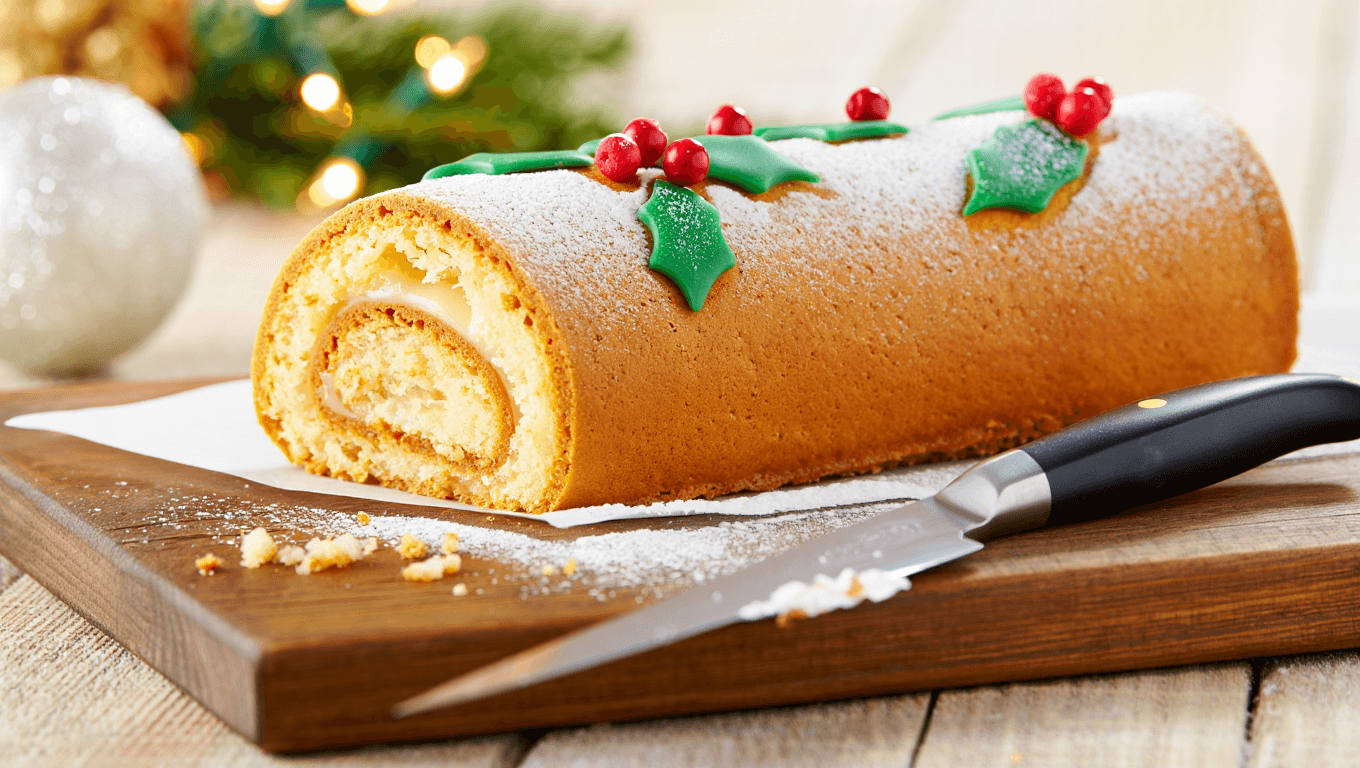
Perfect sponge is the backbone of any spectacular Christmas log. With a few simple tricks you can bake a flexible, trouble-free génoise that won’t crack when rolled. This recipe, inspired by Les Gourmandises de Loubna, gives clear steps and small tricks to help you make a soft, even sponge every time.
Essential ingredients for a fail-proof génoise (sponge cake)
- 5 eggs
- 100 g granulated sugar
- 90 g sifted all-purpose flour
- 2 g baking powder
- 50 ml milk
- 50 ml neutral oil (sunflower or vegetable)
- A pinch of salt
- Vanilla extract or citrus zest for flavor
Step-by-step method to bake and roll a flexible sponge
- Separate egg whites and yolks into two bowls.
- Whisk the egg whites until soft peaks form, adding a spoonful of sugar toward the end.
- Beat the yolks with the remaining sugar, a pinch of salt, and vanilla or zest until pale.
- Pour milk and oil into the yolk mixture and stir until combined.
- Sift in the flour and baking powder, then fold gently to keep the batter airy.
- Gently fold the whipped whites into the yolk batter with a spatula, using upward strokes.
- Line a baking tray with parchment and spread the batter evenly into a thin layer.
- Tap the tray on the counter once to remove air pockets and level the batter.
- Bake at 180°C (356°F) for 18–20 minutes, until the sponge is springy and lightly golden.
- Remove from the oven, peel off the parchment, and trim the edges for a neat rectangle.
- While still warm, roll the sponge in a clean kitchen towel to shape it; unroll to add filling.
Filling choices and assembly tips for a Christmas bûche
- You can fill the sponge with whipped cream, chestnut cream, chocolate ganache, or fruit preserves.
- Spread the filling evenly, leaving a small border to prevent overflow when rolling.
- Re-roll the sponge gently and chill to set before decorating.
Practical tips and troubleshooting for the perfect roll
- Keep the eggs at room temperature. They incorporate more air this way.
- Do not overmix. Overworking the batter deflates the air you just whipped in.
- To keep parchment from sliding, dab a few drops of batter on the tray corners before laying the paper.
- If the cake cracks, fill the seams with extra cream and cover with frosting.
- Allow the rolled sponge to rest in the fridge for at least 30 minutes before decorating.
Tools and timing that help
- Use a flexible spatula for folding and a flat offset spatula for spreading filling.
- A jelly roll pan or rimmed baking sheet gives the best thin, even sponge.
- Plan about 45–60 minutes for the whole process, excluding chilling time.
Similar Posts:
- Black Forest rolled yule log is Christmas 2025’s must-make: simple recipe
- 15-minute raspberry roll: Cyril Lignac’s express recipe
- Chestnut yule log recipe: Laurent Mariotte revives tradition for Christmas
- Mother’s Day cake: our foolproof recipe for the best fraisier
- Banana magic cake made easy: one-bowl, no-fuss dessert