

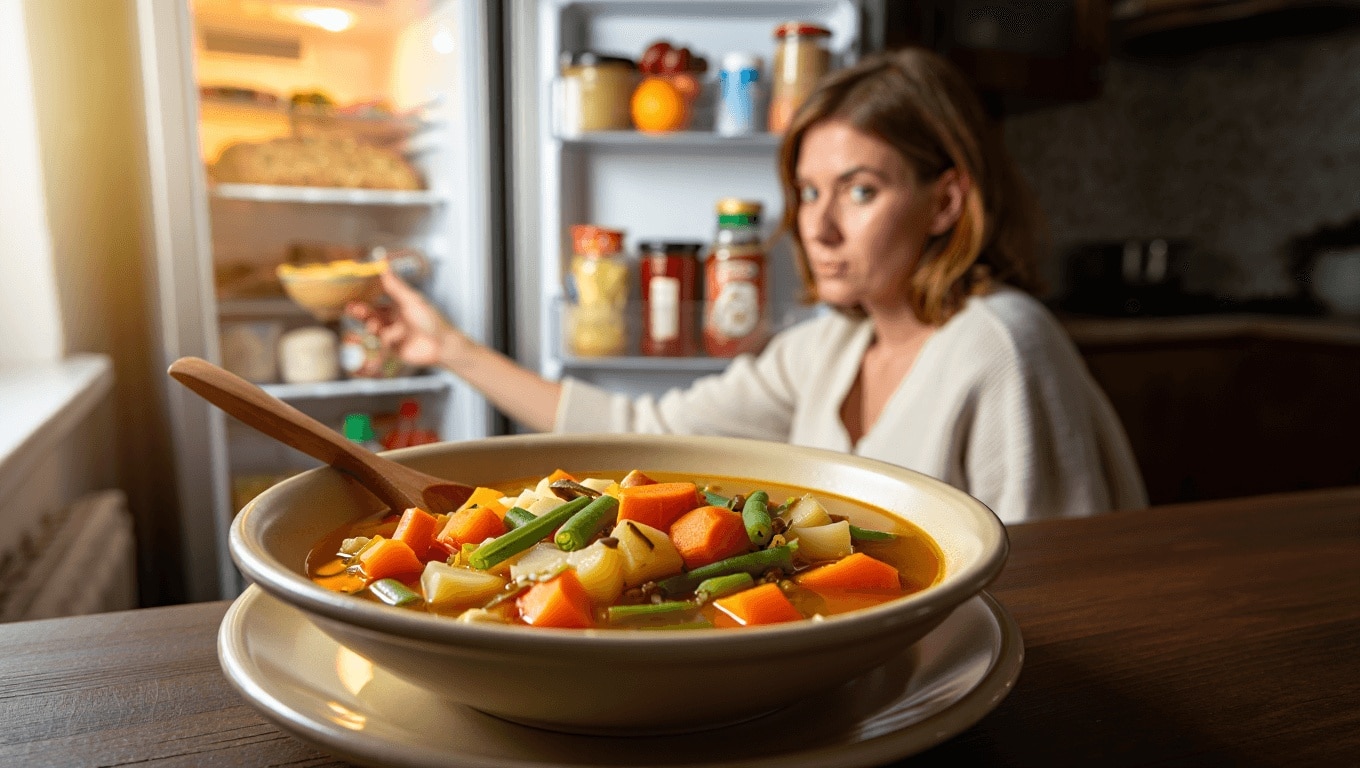
When temperatures drop, a steaming bowl of soup feels like a tiny comfort. But many find that a light vegetable broth at dinner leaves them raiding the fridge by late evening. Nutrition experts say a few simple tweaks can turn that cozy bowl into a satisfying, balanced meal.
Why soup alone often leaves you hungry
Most soups are mostly water and fiber. They hydrate and deliver vitamins. Yet they can lack the calories and nutrients your body needs to stay full.
Fiber slows digestion, but it does not always provide lasting energy. Without enough protein, fats or starches, blood sugar can dip hours after eating.
The practical fix, advised by dietitian Eliott, is to add components that prolong fullness: proteins, carbohydrates and healthy fats.
How to add protein for lasting satiety
Protein slows gastric emptying and boosts the sense of fullness. It also makes soup heartier and more flavorful.
- Cooked lentils or beans mixed into the pot.
- Shredded chicken, turkey, or diced lean ham added just before serving.
- Soft cheeses, Greek yogurt, skyr, or cottage cheese stirred in for creaminess.
- Poached, soft-boiled, or hard-boiled eggs placed on top.
- Tofu cubes or tempeh for a plant-based protein option.
Smart carbohydrate choices to supply steady energy
Adding a source of carbs helps maintain blood glucose and extends the meal’s energy value.
- Croutons or a slice of whole-grain toast on the side.
- Root vegetables like potatoes, sweet potatoes, or squash cooked into the soup.
- Whole grains such as barley, farro, or brown rice stirred in.
- Legumes that pack both carbs and plant protein: chickpeas, red beans, split peas.
Include healthy fats to amplify satisfaction
Fats increase flavor and allow the body to feel full longer. A small amount goes a long way.
- A drizzle of olive oil or walnut oil over the bowl.
- Chopped nuts or seeds for crunch and richness.
- Small cubes of flavorful cheese like cheddar or blue cheese.
- A spoonful of tahini or a swirl of avocado purée.
Simple combinations that turn soup into a complete meal
Combine elements rather than loading a single ingredient. Balance matters more than quantity.
- Vegetable puree + lentils + a piece of whole-grain bread.
- Chicken broth with barley + shredded chicken + a drizzle of olive oil.
- Tomato soup + a poached egg + toasted sourdough slice.
- Curried squash with chickpeas + roasted almonds on top.
Practical tips for everyday dinners
Small habits make this easy to adopt after a long day in the kitchen.
- Prep a batch of cooked grains and legumes to add to any soup.
- Keep jarred roasted peppers, canned beans, or cooked chicken in the fridge.
- Add nuts or seeds at the table to preserve crunch.
- Use dairy or plant yogurts to thicken and boost protein content.
What to prioritize if you want fewer late-night snacks
Start by adding one protein and one fat to your bowl. Then include a small portion of carbs when you need more energy.
Focus on balance rather than eating less. A soup that contains all three macronutrients will satisfy hunger and support sleep-friendly blood sugar levels.
Similar Posts:
- Soup you shouldn’t eat alone: Jimmy Mohamed reveals how to turn it into a full meal
- Boost Your Health with This Easy Cabbage Soup Recipe: Try It Tonight!
- one-pot coquillettes: perfect 30-minute dinner recipe
- Carrot and parmesan soup after Christmas: the light recipe you need
- The one breakfast food you should absolutely avoid in the morning