
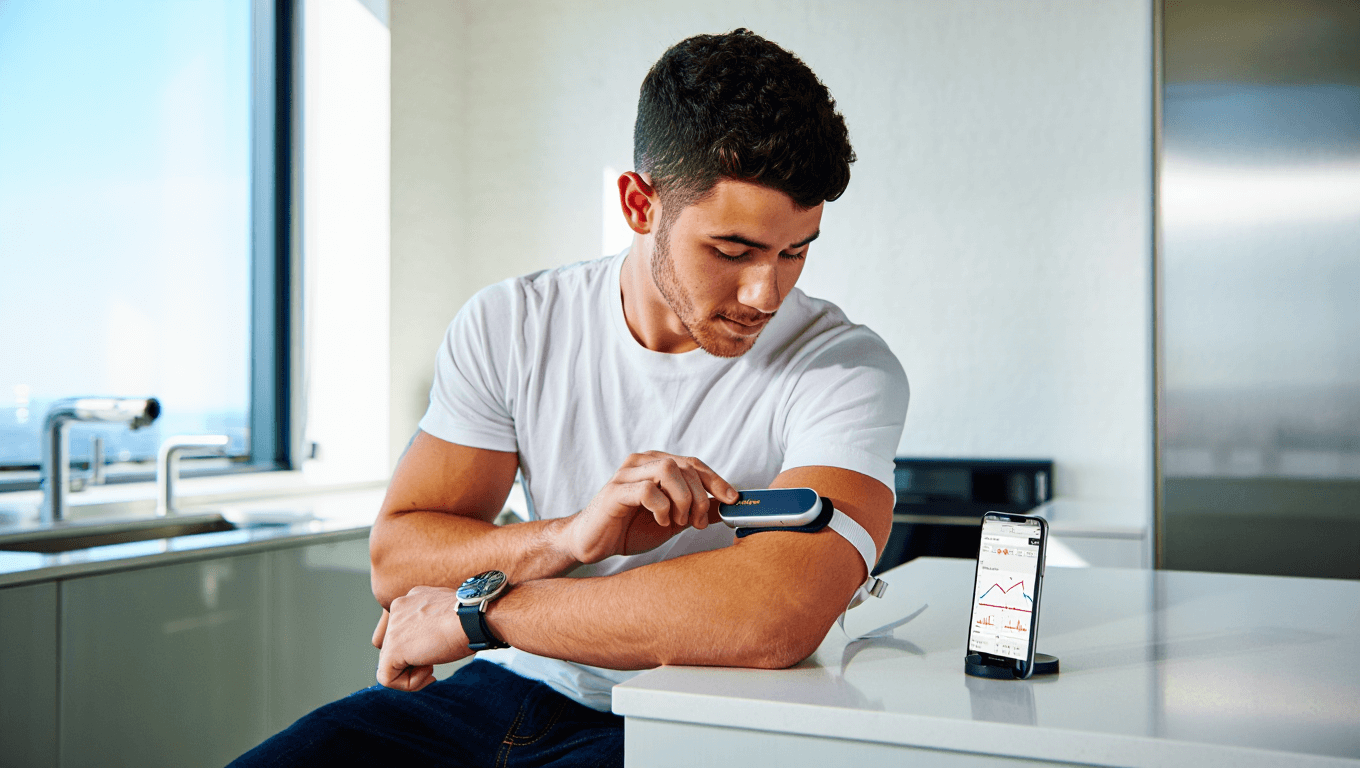
Nick Jonas has lived much of his adult life in the public eye while also managing type 1 diabetes. His approach to care has evolved with new technology and a growing role as an advocate. Fans have watched him adapt, innovate, and speak out as diabetes tools and attitudes changed around him.
From diagnosis to daily routine: the early years
Nick Jonas was diagnosed with type 1 diabetes as a teenager. That diagnosis forced rapid learning about blood sugar and insulin. He had to balance school, music, and a new daily medical routine.
- He learned to count carbs and check glucose regularly.
- Insulin injections were a key part of early management.
- Touring introduced new challenges like irregular meals and sleep.
How diabetes technology reshaped his care
Advances in diabetes tech changed the way Jonas manages his condition. Continuous glucose monitors and insulin delivery systems made real-time control possible. These devices reduced guesswork and gave him more freedom.
Continuous glucose monitors (CGMs)
CGMs track glucose levels around the clock. They send alerts for highs and lows and show trends. For public figures with demanding schedules, CGMs provide a critical safety net.
- Real-time data allows quicker adjustments.
- Remote sharing can keep team members informed.
- Fewer fingersticks means less disruption during rehearsals.
Insulin delivery systems and pumps
Insulin pumps replaced multiple daily injections for many with type 1 diabetes. Pumps can deliver precise doses at set times. They simplify correction doses and basal rates.
- Pumps help maintain steady glucose levels during travel.
- Some systems integrate with CGMs for automated adjustments.
- Portable devices are easier to manage onstage and backstage.
Managing diabetes on tour and on set
Performing artists face unpredictable schedules. Nick Jonas adapted his diabetes care to that lifestyle. He built routines that worked around rehearsals, flights, and late-night shows.
- Packing supplies and backups became standard practice.
- Meal timing and snacks were planned to avoid lows.
- He relied on team members when sleep and travel disrupted routines.
Practical tips he’s shared
Jonas has occasionally discussed practical steps that helped him stay healthy on the road. These include planning meals and always keeping glucose sources close.
- Never travel without extra insulin and batteries.
- Communicate needs to tour staff and managers.
- Schedule glucose checks around performance times.
Public advocacy: using fame to raise awareness
Over the years, Jonas moved from private management to public advocacy. He helped bring visibility to type 1 diabetes. His platform has spotlighted the realities of life with a chronic condition.
- He has supported awareness campaigns and patient communities.
- Public posts helped destigmatize visible devices such as pumps.
- His openness encouraged others to seek modern care solutions.
How lifestyle and mindset have evolved
Beyond gadgets, Jonas’ approach included changes in lifestyle and mental strategies. Nutrition, fitness, and stress management play key roles in long-term control.
- Regular exercise became part of his routine.
- Nutrition choices are tailored to maintain steady glucose.
- Mental resilience and planning reduce emergency situations.
The role of support networks
Family, medical teams, and colleagues make diabetes care sustainable. Jonas’ experience highlights how teamwork eases the burden of self-management.
- Endocrinologists advise on device settings and insulin plans.
- Travel companions can help during low or high episodes.
- Online communities offer tips and emotional support.
What the future holds: tech and access
Diabetes care keeps advancing. Closed-loop systems and smarter sensors are becoming more common. These innovations aim to reduce daily decision-making and improve outcomes.
- Hybrid closed-loop technology automates insulin delivery for many users.
- Smaller, longer-lasting sensors cut maintenance needs.
- Telemedicine expands access to specialist care.
Lessons for fans and people with diabetes
Nick Jonas’ journey shows that effective management blends tech, planning, and advocacy. Fans can draw practical lessons from his public story.
- Stay informed about new devices and treatment options.
- Build routines that fit personal schedules and goals.
- Use public platforms to reduce stigma and share resources.
Key milestones in his two-decade journey
A look back reveals clear shifts in tools and emphasis. The timeline reflects broader trends in diabetes care.
- Early years focused on injections and glucose testing.
- Adoption of insulin pumps and CGMs improved control.
- Growing advocacy and public education efforts followed.
- Integration of modern systems eased daily burdens.
What remains constant
Despite technological leaps, the basic priorities stay the same. Consistency, medical care, and self-awareness remain crucial.
- Frequent glucose monitoring is essential.
- Access to supplies and professional guidance matters.
- Mental and physical health support improves outcomes.
Similar Posts:
- Diabetes: nearly half don’t know they have it
- Drivers with diabetes face £1,000 fine: DVLA issues urgent update
- FDA Approves Groundbreaking Glucose Monitor for Weight Loss: Discover the Key Features!
- type 2 diabetes risk in young adults varies widely: could GLP-1s help?
- FDA-approved inhaled insulin transforms teen’s life with diabetes
Cole is a passionate vegan dessert artist with a knack for turning indulgent classics into plant-based masterpieces. His sweet creations are where flavor meets conscious living.