

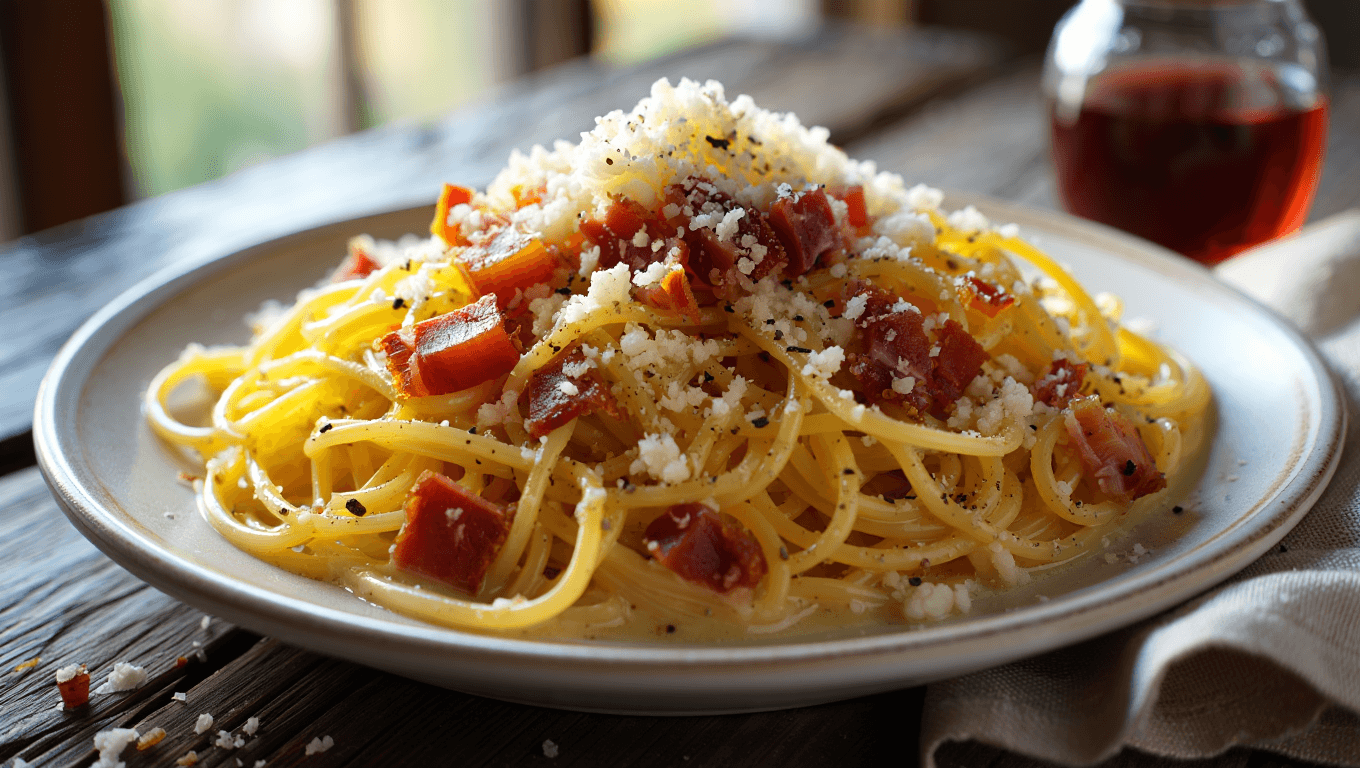
Skip the carbonara debate — this is a different classic. Pasta alla Gricia is a rustic Roman dish built on just a few bold ingredients. Quick to cook and full of flavor, it was born from shepherds who made dinner with what they had. Ready in minutes, it makes a great family meal.
Ingredients for Pasta alla Gricia (serves 4)
- 320 g rigatoni (or a similarly shaped pasta)
- 250 g guanciale, rind trimmed and sliced
- 80 g Pecorino Romano, finely grated
- Freshly cracked black pepper
- Salt for the cooking water
How to cook Gricia step by step
- Grate the Pecorino finely. A microplane works best for a silky finish.
- Trim the guanciale and slice into strips. Remove any overly hard rind.
- Heat a dry pan and render the guanciale until crisp and golden.
- Lift the guanciale out with a slotted spoon. Drain briefly on paper towels.
- Do not wash the pan. It holds the flavorful fat you need next.
- Bring a large pot of water to a boil. Salt it well and add the pasta.
- Save a couple of ladles of the starchy pasta water before draining.
- Return a small ladle of pasta water to the pan with the guanciale fat.
- Toss the drained pasta into the pan and finish cooking it there.
- Gradually add the grated Pecorino while stirring to create a creamy coating.
- If the sauce is too thick, add one or two ladles of pasta water to loosen it.
- Turn off the heat. Fold in the crisp guanciale and season with pepper.
- Plate immediately and serve while still hot.
Tips for a silky, not clumpy, sauce
- Emulsify: Use hot pasta water to bind cheese and fat into a smooth sauce.
- Low heat finish: Turn off the burner before adding cheese to avoid graininess.
- Keep it al dente: Aim for two minutes less than package time, then finish in the pan.
Which pasta shapes work best with Gricia
Short, ridged shapes hold the sauce best. Rigatoni is ideal. Bucatini is an excellent alternative. Avoid very smooth or flat shapes like farfalle. Spaghetti can work, but it won’t trap the sauce as well.
Understanding guanciale and why it’s central
Guanciale comes from pork cheek. It’s cured, seasoned, and aged for weeks. The result is a rich, melting texture and a strong, savory aroma. This fat is the backbone of Gricia and gives the dish its authentic depth.
Substitutes if guanciale is unavailable
- Pancetta: closer in flavor but milder. Use unsmoked if possible.
- Streaky bacon: a last resort. It adds smokiness that alters the classic profile.
Storage and reheating advice
- Store leftovers in an airtight container for up to 2 days.
- Reheat gently in a pan with a splash of water to revive the sauce.
- Avoid microwave reheating, which can make the cheese grainy.
Similar Posts:
- Authentic Carbonara Recipe Revealed: Master This Classic Italian Dish!
- Authentic Carbonara Recipe Unveiled: Discover the Secrets of True Tagliatelle!
- Zucchini spaghetti alla Nerano: Italian summer pasta that’s not bolognese or carbonara
- Classic Italian Spaghetti alla Puttanesca: Simple, Delicious Recipe with Pantry Staples!
- 5 kids, 12 minutes: Elodie Gossuin’s quick recipe to feed the whole family