
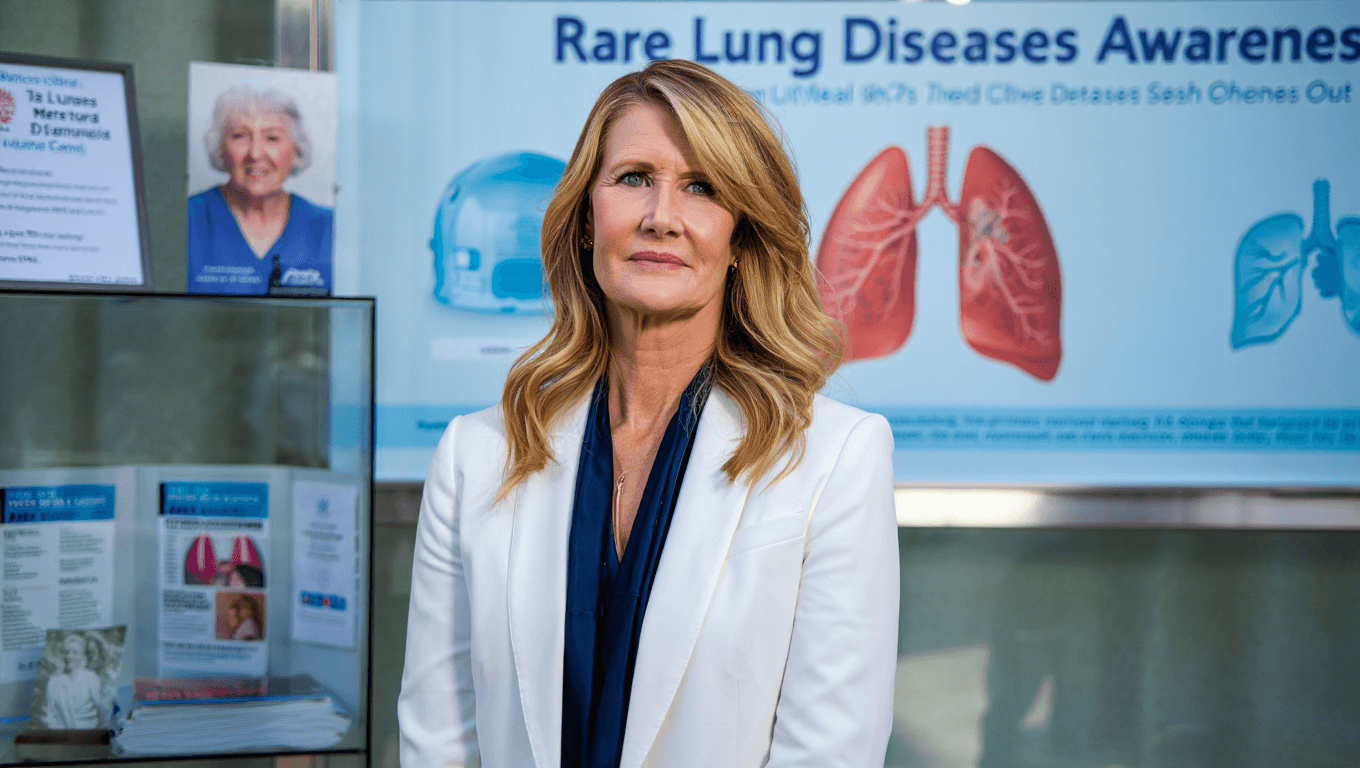
Laura Dern has channeled a deeply personal loss into a public mission, turning private sorrow into sustained work to bring attention and resources to a little-known group of lung illnesses. Her shift from grieving daughter to outspoken advocate has drawn industry attention and mobilized fans, researchers, and policymakers to focus on the gaps in diagnosis, care, and funding for rare pulmonary conditions.
How personal tragedy became a platform for change
Laura Dern’s experience caring for her mother opened a new chapter in her life. What began as private medical visits and family conversations has become a high-profile campaign. Dern has used interviews, social media, and public appearances to explain the emotional and logistical challenges families face when confronting a rare lung disease.
Her message is both simple and urgent: rare lung conditions often go undetected, and timely diagnosis can change outcomes. She stresses the need for better awareness among doctors and the public.
Strategies Dern is using to raise awareness
Dern’s approach mixes storytelling with concrete action. She balances personal testimony with partnerships and practical initiatives.
- Public storytelling: Speaking candidly about her family’s journey to make the reality relatable.
- Collaborations: Working with medical nonprofits and research centers to spotlight unmet needs.
- Fundraising: Hosting benefit events and supporting grants for early-stage research.
- Policy engagement: Meeting with lawmakers to discuss screening and research funding.
These tactics aim to transform empathy into measurable progress. Celebrity visibility helps attract media attention, which in turn brings donations and research interest.
What experts say about rare lung diseases and early detection
Pulmonologists and researchers welcome increased attention. Rare lung diseases encompass many conditions that affect breathing and lung tissue. Experts highlight several challenges:
- Symptoms often mimic common illnesses.
- Specialized diagnostic tests may be limited to major centers.
- Treatment options can lag behind because of scarce research funding.
Clinicians emphasize that awareness campaigns can shorten the time from symptom onset to diagnosis. Earlier diagnosis often opens doors to better symptom management and clinical trials.
How research funding and advocacy connect
When high-profile figures back medical causes, funding pipelines can shift. Dern’s involvement has helped attract donations to targeted research projects. Those funds are being directed to:
- Biomarker studies to improve early detection.
- Clinical trials testing new therapies.
- Programs to expand specialist training and telemedicine access.
Researchers say that steady support, not one-time gifts, is crucial. Long-term investment drives reproducible findings and sustainable patient services.
Stories from families and patient communities
Advocacy work often amplifies voices of those directly affected. Families recount long diagnostic journeys and the relief of finally finding a name for their loved one’s condition. Patient groups provide peer support, practical advice, and lobbying power.
- Support networks can reduce isolation for caregivers.
- Shared resources help families navigate insurance and treatment options.
- Community-led fundraising accelerates local research partnerships.
Dern’s visibility has encouraged more people to share their experiences, which helps researchers collect real-world data.
Practical steps the public can take
Anyone interested in supporting the cause can take practical actions that make a difference.
- Learn the common warning signs of progressive lung disease.
- Support reputable charities that fund research and patient services.
- Advocate for screening and specialist referrals in your local health system.
- Participate in awareness events or volunteer for patient groups.
Small actions at community level can build momentum for policy and funding changes.
Media, message, and momentum
Dern’s efforts illustrate how storytelling and science can work together. Media coverage expands reach, while careful messaging keeps the focus on facts and solutions. Health communicators note the importance of clear calls to action. When celebrities tie personal stories to specific needs — such as research grants or policy reforms — public response tends to be more targeted and sustained.
Next moves: research priorities and policy goals
Advocates and clinicians are pushing several priorities to accelerate progress:
- Improve diagnostic pathways in primary care.
- Increase funding for translational research.
- Expand access to multidisciplinary care teams.
- Support registries and biobanks for rare lung conditions.
These goals aim to close the gap between symptom recognition and effective treatment. Public figures can help keep momentum by maintaining visibility and supporting evidence-based solutions.
Similar Posts:
- Eric Dane dies on 20th anniversary of his Grey’s Anatomy debut as Mark Sloan
- Julianne Moore fights Alzheimer’s: still advocating a decade after Still Alice
- Toddler with rare neuromuscular disease walks for first time after medical breakthrough
- Michael J. Fox and Parkinson’s: what you need to know about his life
- D’Angelo dies of pancreatic cancer: rare disease thrust into spotlight

Cole is a passionate vegan dessert artist with a knack for turning indulgent classics into plant-based masterpieces. His sweet creations are where flavor meets conscious living.