
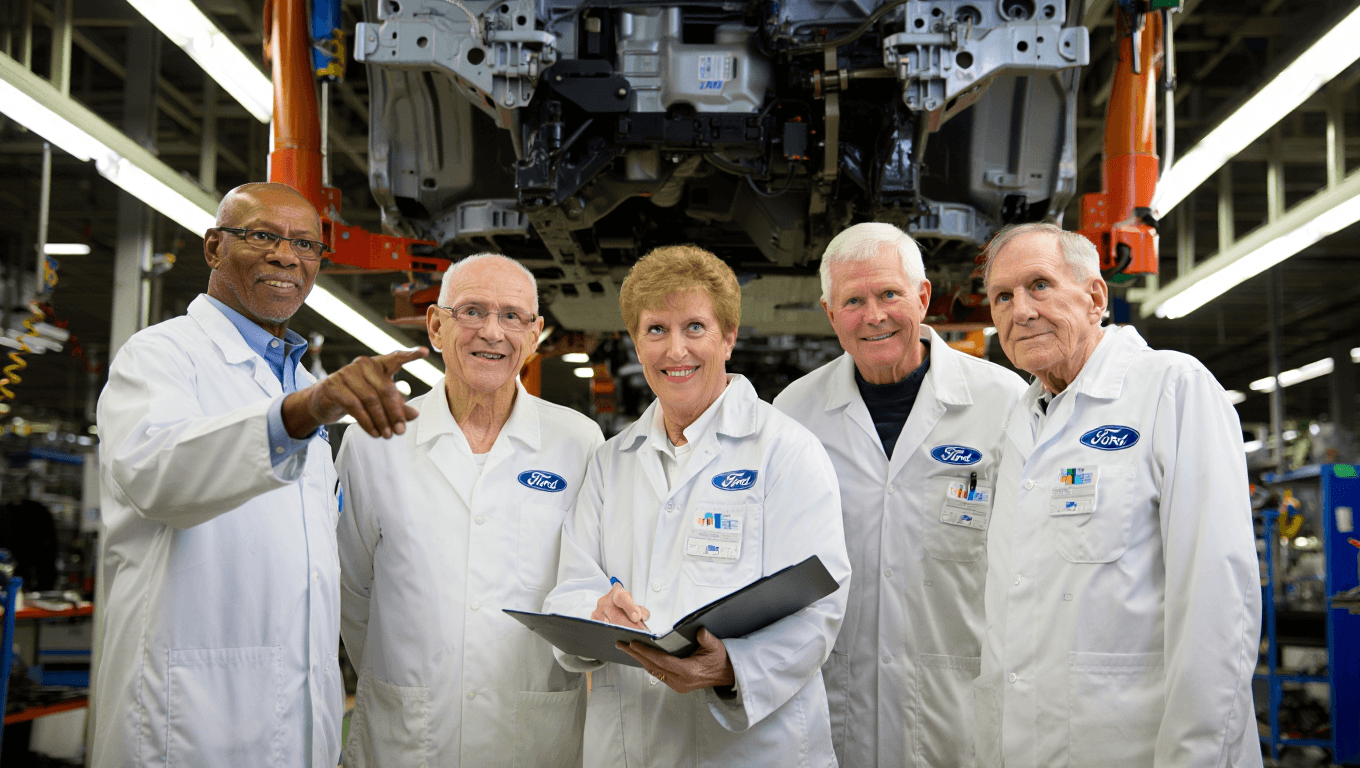
Ford has quietly reversed a years-long shift toward automation, calling hundreds of retired engineers back to work after artificial intelligence systems underperformed in crucial quality checks. The move underscores a wider industry lesson: machine learning can help, but experience often finds what algorithms miss.
Why Ford rehired seasoned engineers to bolster quality control
Facing production issues, the automaker brought more than 300 former engineers out of retirement. These veterans are known inside Ford as the “greybeards.”
Leadership says the experts were asked to identify weak spots that automated systems were failing to catch. Their task is hands-on: probe designs, flag failure points and mentor the teams running AI tools.
Where automation fell short in Ford’s factories
Ford had leaned heavily on AI to perform automated inspections and engineering checks.
- Training data gaps left algorithms blind to some recurring faults.
- Systems lacked the nuance that comes from decades of product-cycle experience.
- Integration of AI into decision-making sometimes ignored older engineers’ tacit knowledge.
In short, the tools were powerful but incomplete. Human judgment remained essential to spot subtle issues before parts reached assembly lines.
Comments from Ford’s engineering leadership
Company executives acknowledged they had underestimated the value of long-tenured staff.
Ford’s engineering leadership said AI is a valuable asset, but only when trained on the right information and used alongside seasoned practitioners. They admitted to having relied too much on automation at the expense of institutional know-how.
How the greybeards operate on the production floor
The returning specialists do several things:
- Review designs and identify potential failure modes early.
- Work with quality teams to tighten tolerances and testing protocols.
- Train younger engineers and provide context that algorithms can’t capture.
- Serve as a human check on automated inspection outputs.
These experts often hunt for problems before a single part reaches final assembly.
The results: quality gains and industry recognition
The timing of the recall coincided with a notable improvement in Ford’s quality metrics.
Ford climbed to the top position among mainstream manufacturers in a leading US industry study for initial product quality. It was the company’s highest rank in 15 years.
Executives attributed the leap partly to a “significant talent refresh” that combined returning veterans with updated processes.
What other carmakers can learn about AI and expertise
Ford’s experience offers lessons for the wider auto sector.
- AI works best as an assistant, not a replacement, for experienced engineers.
- Training data must reflect real-world failure scenarios, including rare events.
- Institutional memory matters when interpreting sensor outputs or design trade-offs.
- Bridging generations of staff can accelerate learning for both humans and machines.
Combining machine speed with veteran insight appears to be the fastest route to more reliable vehicles.
How Ford plans to balance tech and talent going forward
The company says it will continue deploying AI, but with closer collaboration between algorithms and seasoned staff.
- Integrate human feedback loops into AI training.
- Keep retirees involved as consultants and mentors.
- Invest in richer datasets that capture nuanced failure patterns.
For now, Ford’s pivot shows a practical approach: use automation to scale routine tasks, but rely on experience to preserve quality.
Similar Posts:
- Ford cuts 1,000 jobs at EV plant: demand well below forecasts
- White Van Drivers Alert: Criminals Target Your Tools, Risking Huge Losses!
- Iconic car brand unveils best of British HQ to preserve engineering excellence
- Most reliable used cars in the UK: Mini, Ford, Toyota and more
- Tesla UK sales plunge 57% as Elon Musk is blamed: BYD overtakes

Naomi is a clean beauty expert passionate about science-driven skincare and natural remedies. She demystifies ingredients and shares routines that empower readers to glow — naturally.