
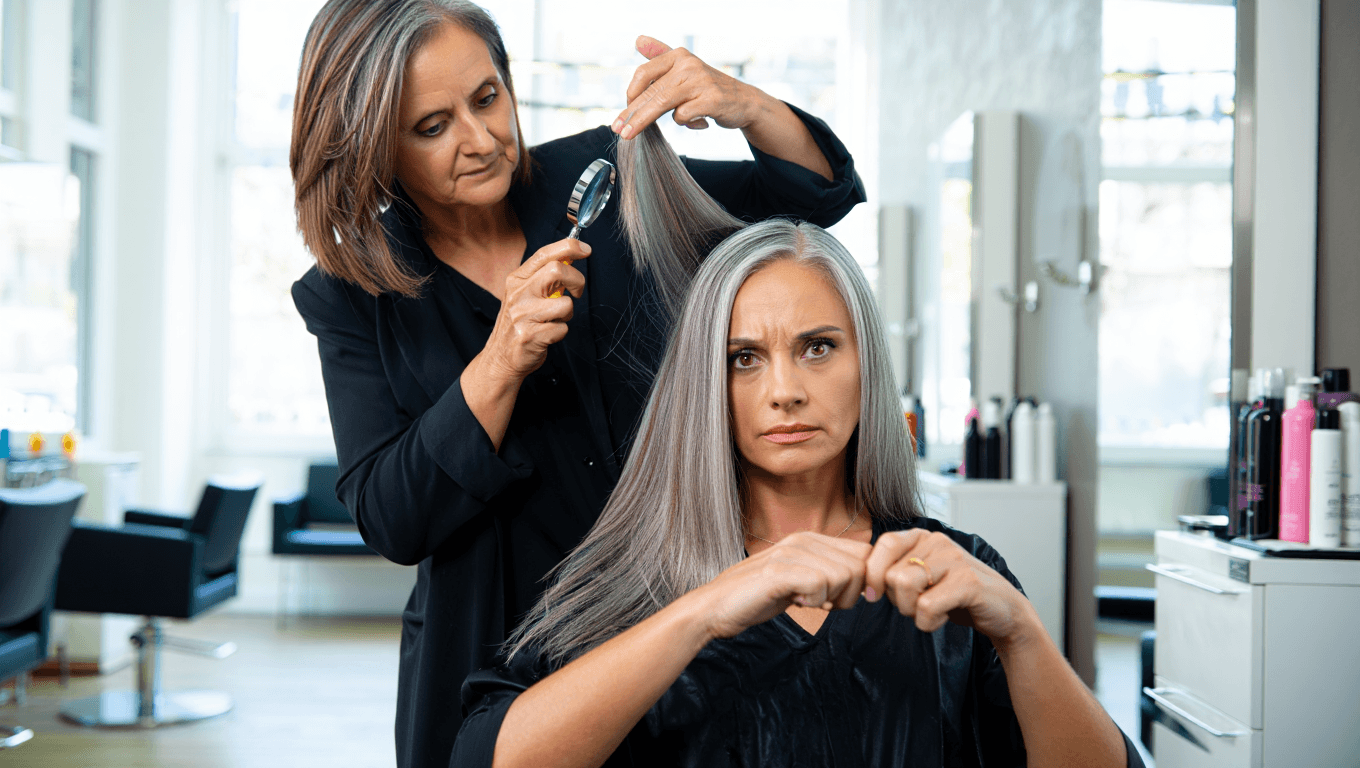
Your hair colour can change how people see your age. A smart shade can brighten the skin, soften lines and give a fresher appearance. Choosing the wrong tone can do the opposite, so knowing what flatters your face as it changes is essential.
How shade and tone reshape your appearance
Colour affects light and shadow on the face. Dark tones can deepen shadows and make hollows more visible. Very light, flat shades can wash the complexion.
Small adjustments in tone often make a bigger difference than dramatic colour shifts. Subtle depth and warmth can lift features and create the look of healthier skin.
Professional colour guidance: why it helps
Image consultants and experienced colourists work beyond trends. They assess skin undertone, the natural depth of your hair and how light interacts with your facial structure.
According to Lizzie Parsons, who runs an image consultancy, many clients simply need tailored advice rather than a drastic makeover. Working with a specialist helps avoid shades that drain or age you.
Managing grey hair without looking patchy
Grey can be striking and modern, but the transition can feel uneven as it grows in. During that phase, the hair may look patchy or flat.
- Use products formulated for grey or silver hair to maintain shine and tone.
- Consider a new haircut to complement the texture and pattern of greying hair.
- Ask your colourist about blended techniques that make regrowth less noticeable.
Healthy, well-maintained grey hair can be a powerful style choice. The key is to control texture and colour transitions so the look appears intentional.
Colour techniques that create a youthful effect
Instead of one solid block of colour, try methods that add dimension and light around the face.
- Face-framing highlights to brighten the complexion.
- Warm brunettes that reduce shadowing around hollows.
- Dimensional blondes with lowlights to avoid a flat, washed-out look.
- Soft, blended tones rather than stark lines between shades.
These approaches help create movement and a more natural finish that flatters changing skin and bone structure.
Pick cuts that work with changing facial features
Hair is in dialogue with your face. As features evolve, the same haircut may no longer be complementary.
Heavy, one-length styles can drag the face down. Layers, precise shaping and strategic volume can lift the jawline and reduce the appearance of sagging skin.
- Avoid overly long, blunt cuts without face-shaping layers.
- Ask for texture that adds lightness around the face.
- Regular trims keep the shape and prevent weight from pulling features down.
How to find the right shade for your skin
Start by identifying whether your skin reads warm or cool. That helps determine the undertones that will enhance your natural glow.
Colour analysis can reveal whether you carry lighter or deeper tones best. Matching shade to undertone and depth often outperforms following trends.
- Cool undertones suit ash and neutral shades with subtle brightness.
- Warm undertones often benefit from golden, honey or caramel tones.
- When in doubt, test small, face-near highlights before committing to full colour.
Similar Posts:
- Anti-ageing haircuts that take years off: chic, sophisticated styles for short, mid and long hair
- Over-50s makeup rules: essential tips to look younger and feel your best
- Emily Blunt’s volumizing mascara used by Kate Hudson and Cher: under $30
- Scarlett Johansson’s sleeveless top: try the easy summer outfit trend from $15
- Over 50: stop wearing the dated, frumpy outfit doing you no favours and try these flattering swaps

Naomi is a clean beauty expert passionate about science-driven skincare and natural remedies. She demystifies ingredients and shares routines that empower readers to glow — naturally.