
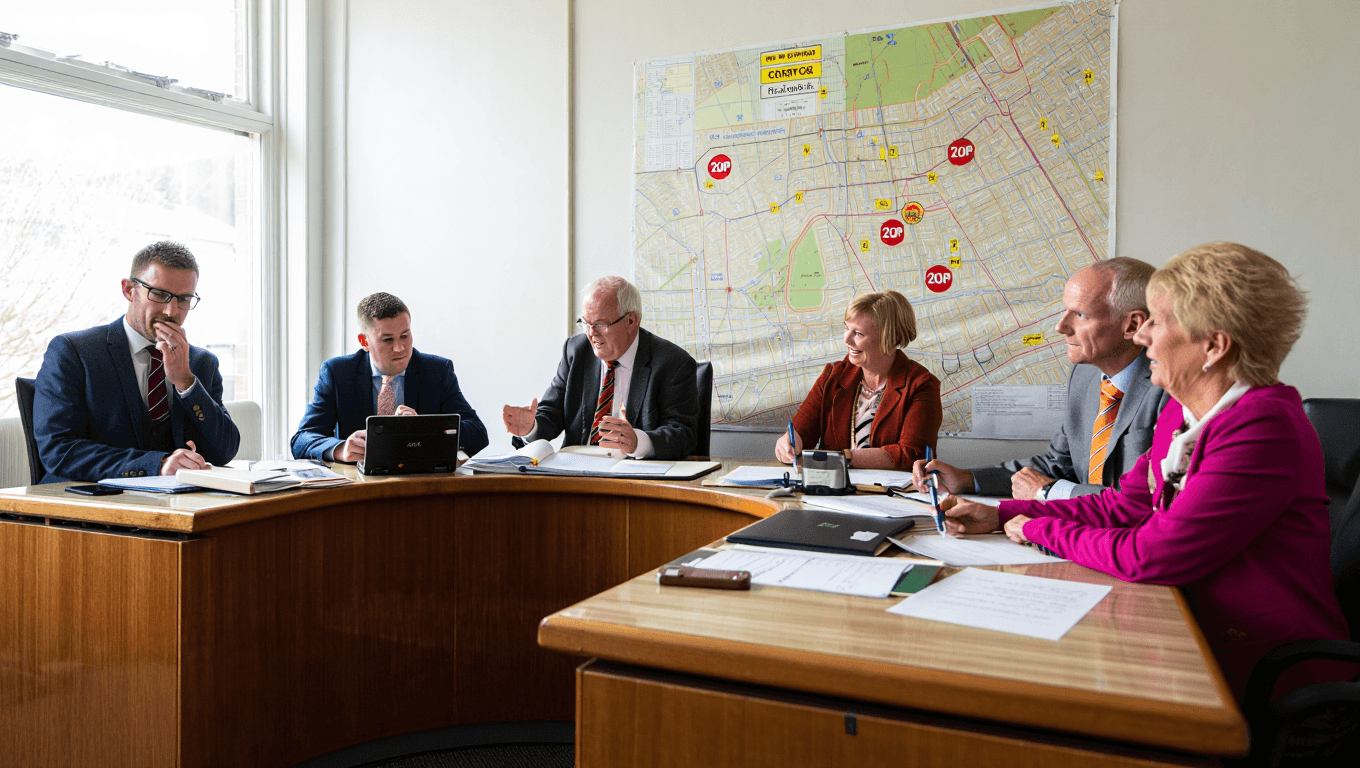
Fife Council has voted to advance plans that would bring widespread 20mph speed limits to parts of North East Fife and introduce fresh parking controls in another village. The proposals now move to a public consultation stage, giving locals a chance to review maps and comment before any rules are confirmed.
Where the 20mph limits would be introduced
Councillors agreed to push forward measures aimed at lowering speeds in several communities. The scheme targets smaller settlements where residents and road users have reported safety concerns.
- Largoward — new 20mph zones proposed to reduce vehicle speeds through the village.
- Boarhills — 20mph limits suggested for the U059 and Old Edinburgh roads after complaints about speeding.
- Tayport — an expansion of the town’s current 20mph network to create more consistent coverage.
In Tayport, the extended limits would cover sections including B946 Albert Street and B945 Queen Street up to the southern edge of the play park, as well as Glebe Place.
New parking rules planned for Pitlessie
The council also backed proposals to clamp down on obstructive parking in Pitlessie. Local roads have reportedly been narrowed by parked vehicles, causing delivery issues and restricted visibility at junctions.
- No waiting at any time beside the Pitlessie Inn car park and its delivery entrance.
- A further no waiting strip on Cupar Road, opposite The Wynd junction, to prevent blocking access.
The aim is to improve access for delivery vehicles and restore clear sightlines on busy sections of the village roads.
Council rationale: safety, accessibility and traffic flow
Officials say the package of changes is part of a wider effort to boost road safety and make local journeys easier for drivers, pedestrians and businesses. The measures are framed as steps toward more consistent speed limits and smoother movement.
- Reduce collision risk by slowing traffic in residential and high-pedestrian areas.
- Improve visibility at junctions and loading areas for deliveries.
- Create a coherent speed-limit network within towns and villages.
How the public consultation will work
Although councillors supported the proposals, they must first be published as Traffic Regulation Orders. This opens a formal consultation window.
- Detailed maps and documentation will be made available for local review.
- Residents can submit comments and objections during the consultation period.
- The council will consider responses before making any final decisions.
Area convener Jonny Tepp urged people to take part, saying the consultation gives local residents a real opportunity to shape the outcome.
What residents should check and how to respond
Locals will be able to inspect the full proposals once the TROs are published. Key points to look for include exact boundary lines, signage plans, and any exemptions for loading or disabled parking.
- Review the proposed maps to see if your street is affected.
- Note proposed locations for “no waiting” restrictions.
- Prepare specific comments or evidence if you support or oppose any change.
- Watch the council website for consultation deadlines and submission details.
Timing and what comes next
With committee approval secured, the next step is publication of the Traffic Regulation Orders. After the consultation closes, the council will assess feedback and decide whether to implement the new speed limits and parking controls.
No final decisions have been made yet; public input will influence the outcome.
Similar Posts:
- New 20mph Speed Limit Proposal: Thousands of Motorists Affected by Major Road Changes!
- 20mph limits launch despite inconclusive safety reports: drivers furious
- HGVs face crackdown: petition demands tougher enforcement of road rules for large vehicles
- Drivers hit with new size-based charges: bigger petrol and diesel cars risk paying more
- Speed limit changes: urgent road safety campaign targets drivers

Naomi is a clean beauty expert passionate about science-driven skincare and natural remedies. She demystifies ingredients and shares routines that empower readers to glow — naturally.